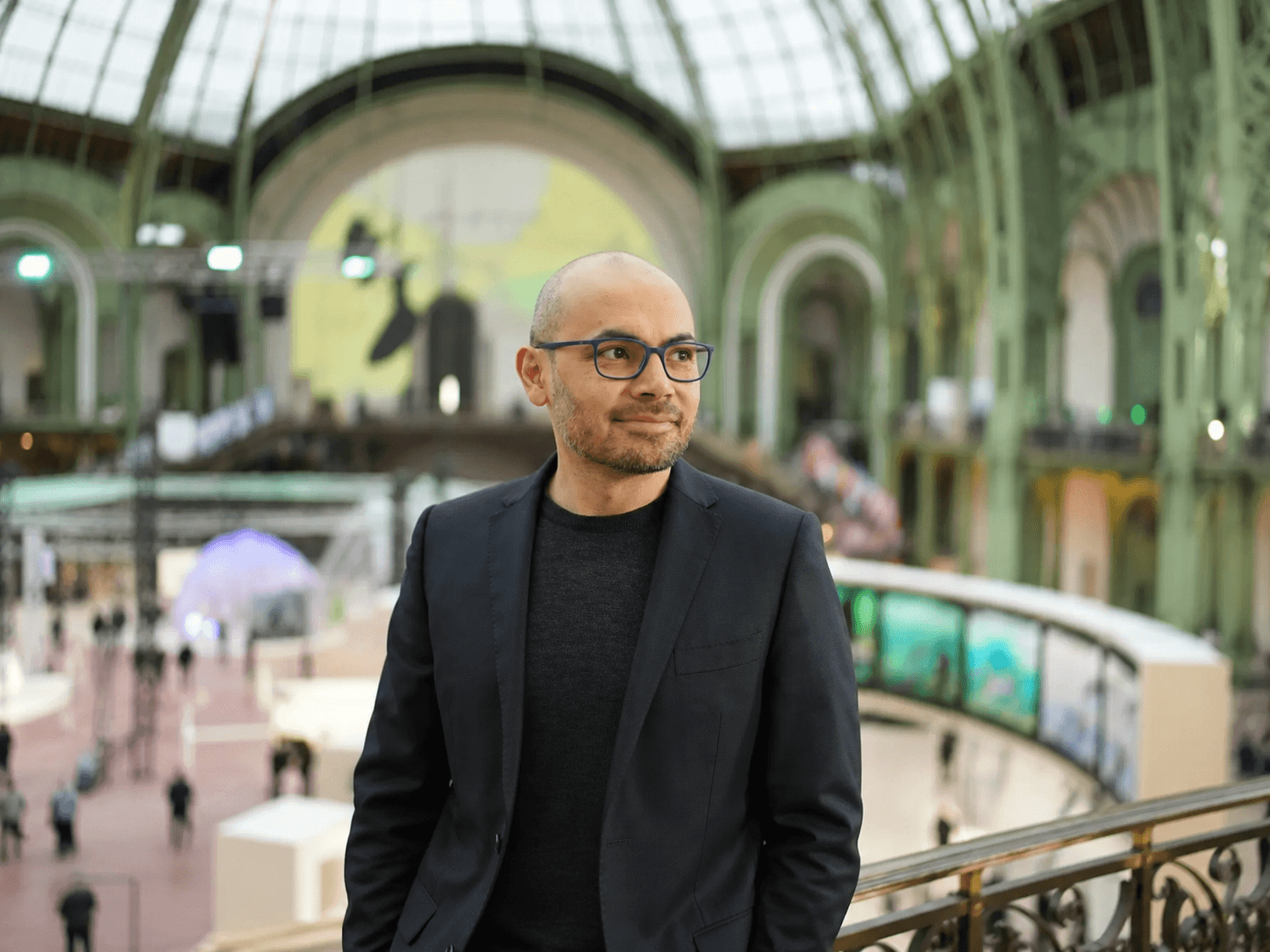
Google is restructuring the top of its AI organization. Sundar Pichai announced on August 5, 2026 that Demis Hassabis will step out of the Google DeepMind CEO role to become chair of DeepMind and chief scientist of Alphabet, while Koray Kavukcuoglu, previously DeepMind's chief technology officer, takes over day-to-day AI leadership as SVP of DeepMind reporting directly to Pichai. In a separate move, Jeff Dean — Google's 30th employee and DeepMind's chief scientist — is leaving with fellow veteran Sanjay Ghemawat to launch a new AI research outfit called Discovery Loop, with Google as a founding investor.
The moves reshuffle three of the most senior technical roles at Google in a single day. Hassabis, who has run DeepMind since Google's 2014 acquisition of the London lab and consolidated Google's research organizations under it in 2023, hands operational control to Kavukcuoglu, a longtime lieutenant who will also retain his title as Google's chief AI architect. Hassabis is not exiting the AI race — he keeps the DeepMind chair, adds the Alphabet chief scientist role, and continues to lead Isomorphic Labs, Alphabet's AI drug discovery subsidiary.
In a note to staff, Hassabis framed the shift around biomedical research as the payoff for a decade of model scaling.
Key facts
- 01Demis Hassabis is moving from Google DeepMind CEO to DeepMind chair and Alphabet chief scientist, effective August 5, 2026.
- 02Koray Kavukcuoglu, previously DeepMind CTO, becomes SVP of DeepMind and reports directly to Sundar Pichai.
- 03Jeff Dean, Google's 30th employee, is leaving with Sanjay Ghemawat to found Discovery Loop, an AI-focused public benefit corporation.
- 04Google is a founding investor in Discovery Loop, which aims to automate research in machine learning, science, and engineering.
- 05Hassabis will continue leading Isomorphic Labs, Alphabet's AI drug discovery arm, alongside his new roles.
He added that he will "continue to work closely with Sundar on strategic and global AGI matters" and advise Kavukcuoglu and other DeepMind leads. The framing suggests Hassabis is trading breadth for depth — offloading the management overhead of running one of the world's largest AI research organizations to concentrate on Isomorphic and the scientific-application side of Alphabet's AI strategy.
The Jeff Dean departure is the more surprising piece. Dean has been at Google since 1999 and helped design essentially every generation of the company's core infrastructure, from MapReduce and Bigtable to TensorFlow and the Pathways system underlying Gemini. He and Ghemawat, another long-tenured Google Fellow, are forming Discovery Loop as a public benefit corporation focused on automating engineering and scientific research using AI. Google is putting money in as a founding investor rather than trying to keep them in-house.
Discovery Loop's stated pitch is that AI systems should be built to run the research loop itself — generating hypotheses, running experiments, and iterating on results in machine learning, science, and engineering domains.
“Our mission is straightforward: we are building AI solutions that can automatically solve important problems in machine learning, science, and engineering.”— Jeff Dean, Discovery Loop co-founder and former Google DeepMind chief scientist
The structural signal is that Google is willing to spin its most senior researchers into external vehicles rather than lose them entirely. That mirrors what happened when Noam Shazeer left to start Character.AI before Google eventually pulled him back in a 2024 licensing deal, and it echoes the broader pattern of frontier-lab talent leaving to start narrower, better-funded ventures.
For Kavukcuoglu, the promotion consolidates the operational AI stack under one executive who reports to Pichai without the intermediate layer Hassabis represented. That likely accelerates decision-making on model deployment, Gemini roadmap, and the tighter integration between DeepMind research and Google's product organization — which was the whole point of the 2023 consolidation. Kavukcuoglu has been closer to the applied engineering side of DeepMind for years, having led the research engineering group before becoming CTO.
The counterweight is continuity risk. DeepMind has just lost its chief scientist and its CEO in the same announcement, even if Hassabis stays connected as chair. Discovery Loop will compete for talent — Dean and Ghemawat between them can hire aggressively from Google's own bench, and "founding investor" status gives Google a look at the work but no operational control. Isomorphic Labs also now takes more of Hassabis's attention at a moment when it is scaling clinical partnerships, which could stretch him thin.
Google's AI organization has moved fast in 2026, following the recent Google Cloud revenue jump to $24.8B on 82% growth that validated the aggressive infrastructure spend. This reshuffle is the leadership counterpart to that operational scale-up: less about hiring for the frontier and more about who runs the machine day-to-day, who represents the science externally, and who is trusted to spin out adjacent bets. Pichai is betting that separating those three roles — operations under Kavukcuoglu, scientific vision under Hassabis, and moonshot research under Dean's external vehicle — is a better structure than the consolidated model that carried Google through the Gemini era.

Working on something we should cover, or seeing a story we missed? Send leads, documents, or feedback to hello@aichatdaily.com. For sensitive tips, see our secure tips page for Signal and PGP options.
Spotted an error? Email hello@aichatdaily.com with the URL and the issue, or read our full corrections policy.