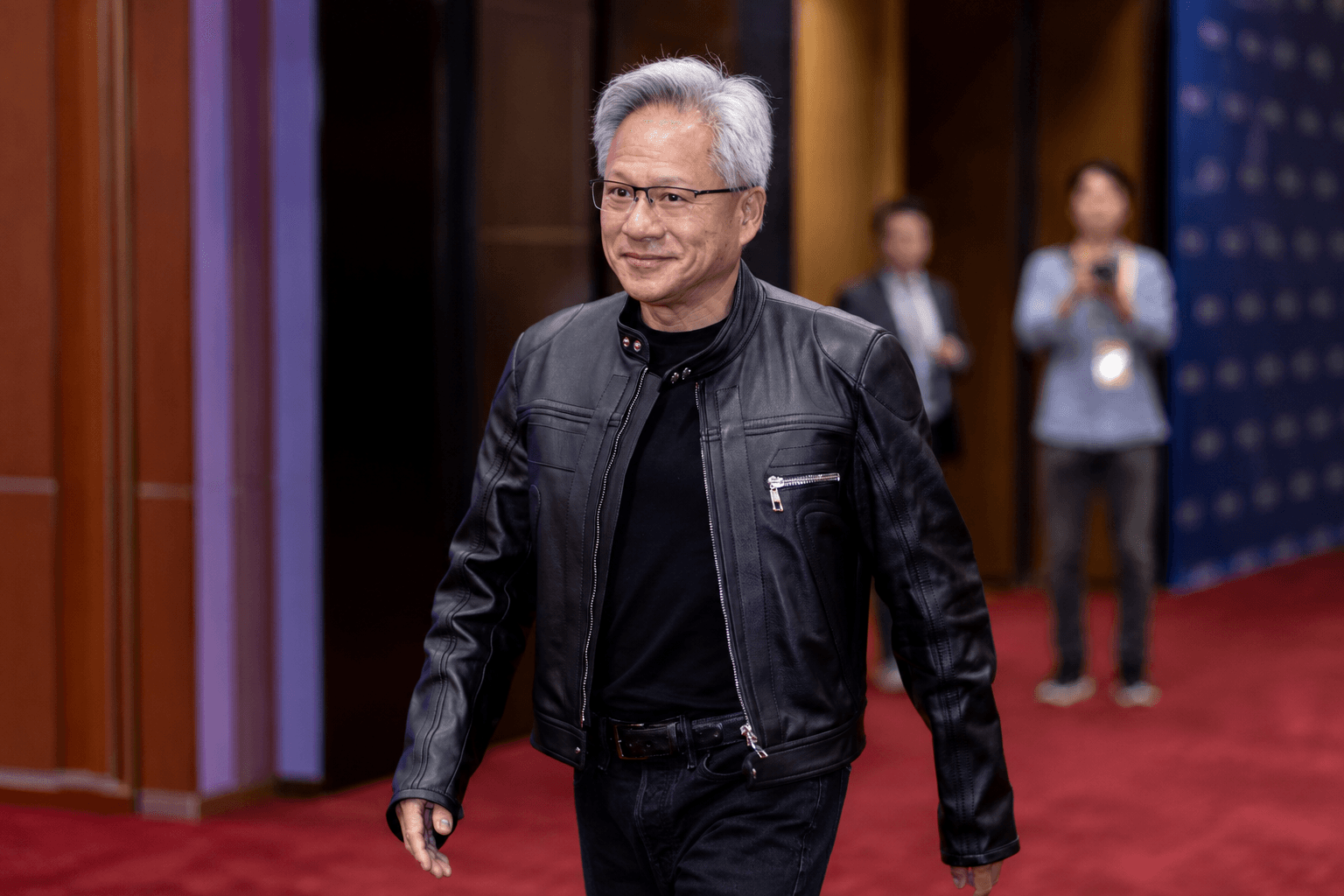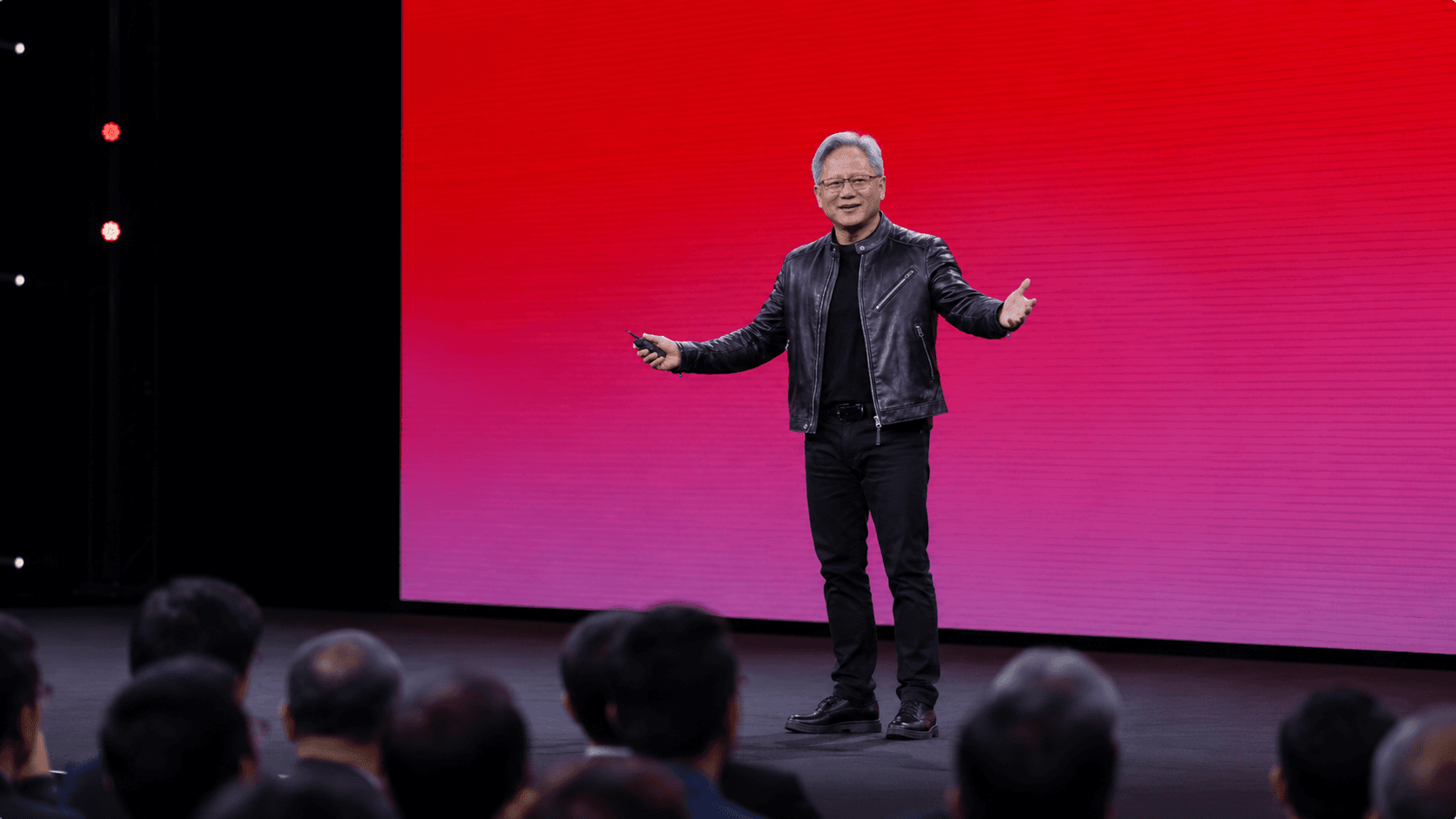
Nvidia CEO Jensen Huang spent July 15 and 16 in Tokyo and left with commitments spanning Japan's entire industrial base: a national AI factory, a robotics coalition of 44 domestic firms, and a deeper role in Toyota's stack. Tokyo is putting up 1 trillion yen ($6.2 billion) over five years to fund Noetra, a sovereign physical-AI effort with SoftBank, Sony, NEC and Honda at the core. The hardware underneath it all comes from Nvidia.
The centerpiece is what Nvidia calls a Vera Rubin AI factory, a 140-megawatt data center packed with 13,750 Vera CPUs and 27,500 Rubin GPUs, expected to launch in 2028. Noetra will oversee construction and operate the site, which Nvidia is billing as the world's first national AI infrastructure. The scale is designed to train foundation models into the trillions of parameters.
Noetra's model roadmap runs in three stages. A reasoning model heavy on Japanese-language capability starts in fiscal 2026, an omni-modal version handling text, images, video and audio arrives by 2028, and a Real-world Native AI built to run robots is targeted for 2030, with phased releases to outside developers.
Key facts
- 01Tokyo is committing 1 trillion yen ($6.2 billion) over five years to Noetra, a 44-firm domestic AI coalition anchored by SoftBank, Sony, NEC and Honda.
- 02Nvidia will supply 13,750 Vera CPUs and 27,500 Rubin GPUs for a 140-megawatt AI factory expected to launch in 2028.
- 03Japan targets 10 million AI-equipped robots across 18 sectors by 2040, backed by $65 billion in public and private physical-AI investment.
- 04Fanuc, Yaskawa, Kawasaki Heavy, Fujitsu, Hitachi, Kubota and Honda R&D signed on to build on Nvidia's Cosmos models, including the new Jetson Thor-based Cosmos 3 Edge.
- 05Toyota extends Nvidia's Drive platform, committed at CES in January 2025, into manufacturing simulations and in-vehicle software.
The robotics side of the visit drew in most of Japan's industrial roster. Fanuc, Yaskawa, Kawasaki Heavy, Fujitsu, Hitachi, NEC, Sony, SoftBank, Kubota and the robotics group AIRoA all committed to build on Nvidia's Cosmos models, an open-model effort Nvidia launched in May with a handful of global AI labs. Nvidia used the trip to unveil Cosmos 3 Edge, a version that runs on its Jetson Thor chips inside the machines themselves. Honda R&D and Omron are already building on the tools.
Huang framed the pitch directly at Japan's manufacturing heritage. Some coalition members are already testing a shared control system, and Nvidia is positioning Cosmos as the default substrate for the country's factory-floor AI.
Toyota's role sits alongside the coalition rather than inside it. The automaker committed its next-generation vehicles to Nvidia's Drive platform at CES in January 2025, and the newer work extends Nvidia into Toyota's manufacturing simulations, in-vehicle software, and traffic-reading systems. Toyota is sticking with advanced driver assistance rather than the more autonomous approach pursued by Waymo and Tesla.
The strategic logic for Tokyo is demographic as much as industrial. Japan wants 10 million AI-equipped robots deployed across 18 sectors by 2040 to offset a shrinking workforce, backed by $65 billion in combined public and private physical-AI investment. The government's AI Robotics Strategy, released in March, targets more than 30% of a global AI robotics market that Tokyo values at roughly 20 trillion yen ($133 billion) by 2040.
The sovereignty question is doing real work here. Japan does not want to run its factories on American or Chinese foundation models, so METI is funding a domestic one — but the compute to train it still comes from Nvidia silicon. Huang appeared on July 16 alongside trade minister Ryosei Akazawa at the government's physical-AI launch, with Prime Minister Sanae Takaichi joining by video. The Takaichi administration has made AI and semiconductors central to a growth plan chasing 370 trillion yen ($2.3 trillion) in public and private investment by 2040.
The pattern is familiar. Huang ran the same playbook weeks earlier with a keynote in Taiwan and last fall with a 50,000-GPU deal in Seoul. Each stop trades national industrial buy-in for Nvidia's position as the default compute layer. Thirty years ago a $5 million Sega investment helped keep a near-bankrupt Nvidia solvent; the relationship with Japan's industrial base has come back around at a very different scale.
The risk for Tokyo is that a sovereign-AI narrative built on foreign chips is only partially sovereign. If US export policy shifts or if Rubin supply slips against a 2028 deadline, Noetra's schedule slips with it. There is also no guarantee that domestically trained foundation models built on Japanese manufacturing data will outcompete general-purpose models from OpenAI, Anthropic or Chinese labs at the tasks Japanese factories actually need.
For Nvidia, the Japan deal locks in the physical-AI thesis at a national scale that even hyperscaler contracts cannot match. Every major Japanese robotics and automotive OEM now has a reason to standardize on Cosmos and Jetson Thor, which pulls Nvidia further up the stack from GPU vendor to industrial operating system. The economics of that position — recurring software, edge inference chips, simulation tools — are stickier than one-time data-center buildouts, and Huang spent two days making sure the entire supply chain understood that.

Working on something we should cover, or seeing a story we missed? Send leads, documents, or feedback to hello@aichatdaily.com. For sensitive tips, see our secure tips page for Signal and PGP options.
Spotted an error? Email hello@aichatdaily.com with the URL and the issue, or read our full corrections policy.