Nvidia laid out concrete results from its AI Nations program this week, pointing to deployments in France, India and Brazil that turn sovereign AI infrastructure into measurable civic output. In France, agents from ThinkDeep running on Nvidia's platform cut document search times at the Ministry of Economy and Finance from two days to two minutes, saving 2 million euros across 10,000 employees. India's Sarvam platform, running entirely on domestic Nvidia GPUs, now handles the country's 22 official languages. In Brazil, Widelabs' Nvidia-accelerated system serves more than 8 million citizens across nearly 500 municipalities.
The pitch behind AI Nations, which Nvidia launched in 2019, is that every country wants its own compute, its own data pipelines, and its own foundation models rather than routing citizen queries through American hyperscalers. That has become easier to sell in the era of generative AI, where governments are watching hundreds of millions of people become dependent on models built and trained abroad. Nvidia's framing calls the resulting facilities AI factories — data centers built around its full-stack accelerated computing platform.
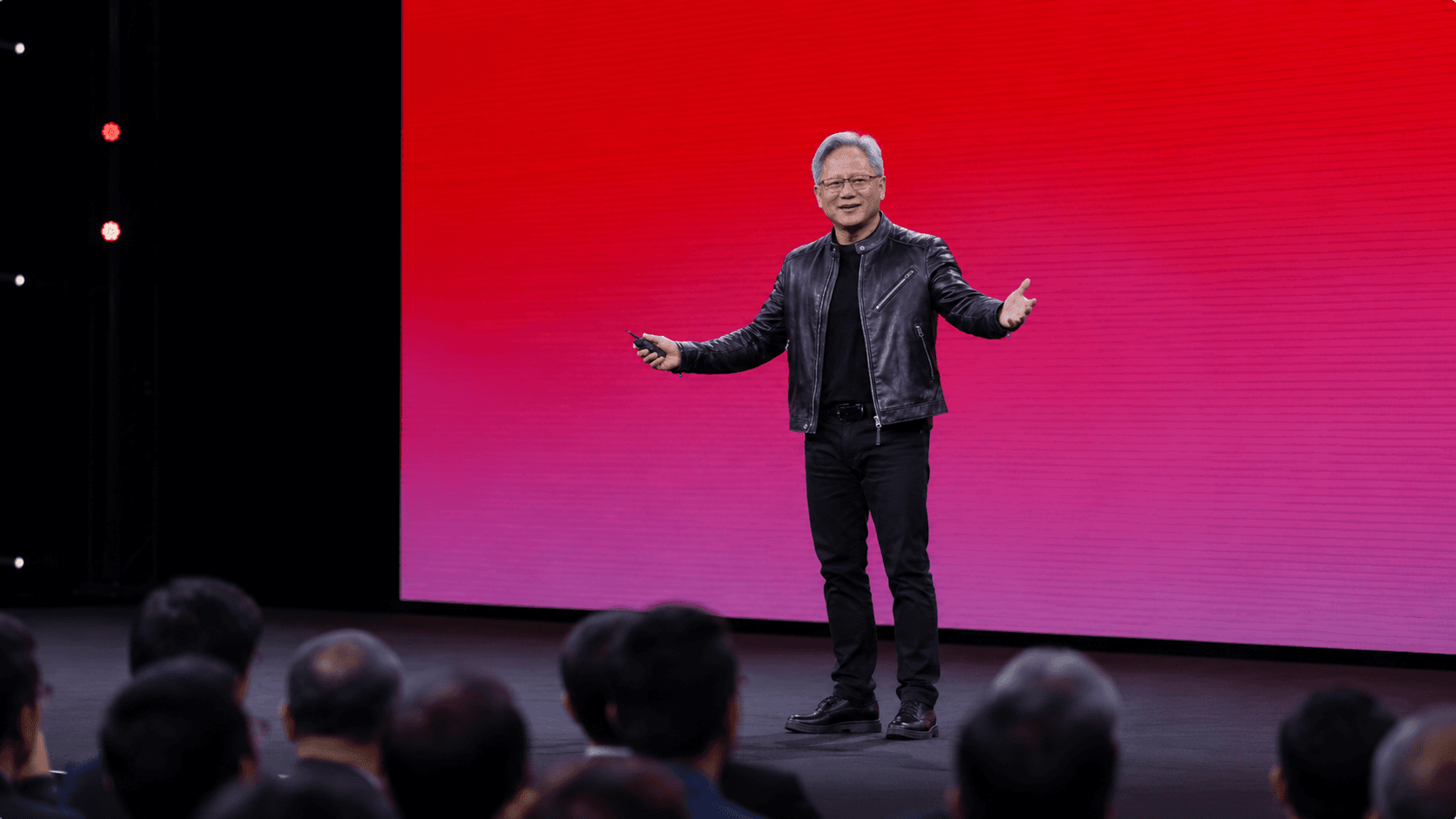
Nvidia founder and CEO Jensen Huang has been consistent on the point in recent months.
“The AI factory will become the bedrock of modern economies across the world.”— Jensen Huang, Nvidia founder and CEO
Key facts
- 01France's Ministry of Economy and Finance cut document search times from two days to two minutes using ThinkDeep agents on Nvidia infrastructure.
- 02The French deployment saved 2 million euros across 10,000 employees.
- 03India's Sarvam platform runs on domestic Nvidia GPUs and serves the country's 22 official languages.
- 04Widelabs' deployment in Brazil serves more than 8 million citizens across nearly 500 municipalities.
- 05Nvidia's AI Nations initiative has been running since 2019 to build sovereign AI ecosystems.
The French case is the sharpest illustration of the value proposition. ThinkDeep's agents process millions of documents and data sources for civil servants who previously spent days hunting through archives. Compressing that to minutes across a 10,000-person workforce produces the 2 million euros in savings Nvidia cites, and does so on in-country infrastructure the ministry controls directly. The energy-efficiency angle matters here too — smaller inference runs on tuned domestic hardware beat sending queries out to a foreign cloud.
Sarvam's work in India goes at a different problem: reach. India has 22 official languages and hundreds of dialects, and most frontier models built in San Francisco treat that reality as an afterthought. Sarvam trains multilingual models and voice agents on Nvidia GPUs held on Indian soil, letting government and enterprise services address citizens in their own languages while keeping data, compute and governance inside national borders. The addressable population runs to the hundreds of millions.
In Latin America, Widelabs is running justice-system workloads for the Public Ministry of Rio Grande do Sul. The system streamlines internal investigations and makes justice records searchable for the state's 8 million residents spread across nearly 500 municipalities. That combination — accelerated compute plus locally trained models plus a public-sector customer with a discrete legal mandate — is the template Nvidia is pushing to other governments considering similar builds.
The economics of sovereign AI are increasingly the pitch Nvidia leads with when it visits capitals. Governments are told they can procure and operate AI clouds through state telcos or utilities, or sponsor local partners to run shared public-private compute. Either way, the GPUs are Nvidia's, the software stack is Nvidia's, and the maintenance relationship extends over years. The company frames five ingredients of a national AI strategy — the imperative, workforce, models, ecosystem, and factories — but the factories are where the revenue lives.
The counterweight is that sovereign AI is expensive, and not every country running an AI Nations pilot will produce the kind of hard ROI France is showing. Training foundation models on local data at competitive quality still requires clusters that cost hundreds of millions of dollars, and smaller economies will struggle to justify the capex without co-investment from state telcos or industrial partners. There's also the durability question — a model fine-tuned for a national workflow in 2026 needs continuous refresh as frontier capabilities move, and Nvidia's roadmap is the pacing element.
For Nvidia, the strategic value of AI Nations is that it locks in demand outside the hyperscaler concentration risk. Roughly half the company's data center revenue currently flows from a handful of US cloud buyers; every sovereign factory it seeds is a customer that will keep buying GPUs on a government procurement cycle rather than a hyperscaler capex cycle. The Berlin GTC event on October 20-22 will be the next milestone to watch for how many more national deployments Nvidia can point to by year-end.

Working on something we should cover, or seeing a story we missed? Send leads, documents, or feedback to hello@aichatdaily.com. For sensitive tips, see our secure tips page for Signal and PGP options.
Spotted an error? Email hello@aichatdaily.com with the URL and the issue, or read our full corrections policy.