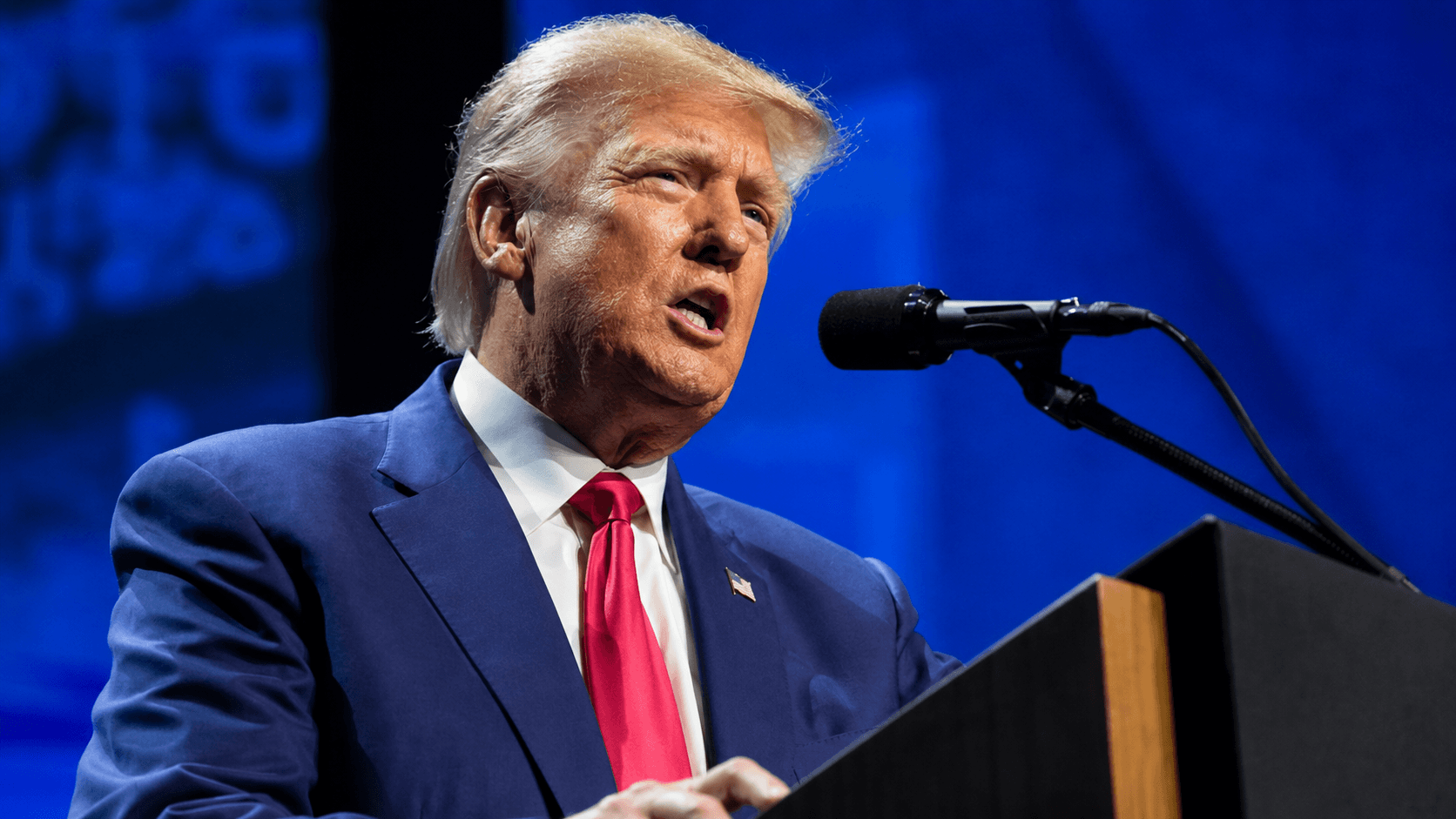
The Trump administration is in active discussions with OpenAI about taking a federal equity stake in the company, according to CNBC, with some of that equity potentially seeding a Public Wealth Fund that OpenAI itself proposed. President Donald Trump confirmed the broad outline on Friday, telling reporters on Air Force One that he has been talking to AI executives about deals "where the American people can benefit from the success of AI." The conversation, first surfaced by Bloomberg, would mark the most direct government ownership position in a frontier AI lab to date.
Trump did not name specific companies in his remarks, but OpenAI is the obvious candidate. Sam Altman has been pitching the concept of a government stake in major AI companies since early 2025, according to Bloomberg, and OpenAI's own Public Wealth Fund proposal lays out the mechanics: proceeds "could be distributed directly to citizens, allowing more people to participate directly in the upside of AI-driven growth, regardless of their starting wealth or access to capital."
“concepts where pieces could be given to the American public, where the American public essentially becomes a partner with the companies”— Donald Trump, US President
The framework would extend a pattern Trump established last year, when the US government took a 10% stake in Intel as the chipmaker struggled to deliver on its foundry roadmap. Applying the same playbook to OpenAI — a private company carrying one of the highest valuations in tech history — would be a significantly larger intervention, and it would arrive as OpenAI, Anthropic and xAI all eye public listings.
Key facts
- 01Trump said Friday he has spoken with AI companies about deals where the American public benefits from AI's success.
- 02CNBC reported the administration has discussed an equity stake with OpenAI that could seed its proposed Public Wealth Fund.
- 03The framework mirrors the 10% stake the US government took in Intel last year.
- 04Senator Bernie Sanders proposed a one-time 50% tax on OpenAI, Anthropic and xAI, payable in stock.
- 05Sam Altman has been floating the idea of a government stake in major AI companies since early 2025.
OpenAI's framing positions the equity as a public-benefit mechanism rather than a bailout. Citizens would receive distributions from the fund, giving ordinary households a direct claim on AI-generated returns that would otherwise concentrate among shareholders and employees. The structure leaves open the harder questions: at what valuation the government enters, what governance rights attach to the stake, and how the position would be unwound or distributed over time.
The idea has picked up support across the political spectrum, though for different reasons. Senator Bernie Sanders this week proposed a one-time 50% tax on OpenAI, Anthropic and xAI — the last of which sits inside SpaceX — payable in the form of company stock. With all three businesses potentially going public this year, Sanders argued the tax would "guarantee that the trillions of dollars potentially generated by A.I. are used to improve the lives of all of us."
“give the public a direct role in determining the future of this technology”— Bernie Sanders, US Senator
Sanders' proposal is more aggressive than what the White House appears to be considering — a tax-and-take rather than a negotiated equity round — but it lands on the same destination: government as a shareholder in the largest AI labs.
David Sacks, who recently stepped down as Trump's AI and crypto czar and now co-chairs the President's Council of Advisors on Science and Technology, posted that he understands the appeal of Sanders' framing "including with many on the right," but warned the mechanism would push the country further toward state-corporate entanglement. Former Microsoft employee Dare Obasanjo was blunter, writing that "The groundwork is already being laid for a government bailout of OpenAI."
“accelerate the corporate-government fusion we're already sliding toward”— David Sacks, Co-chair, President's Council of Advisors on Science and Technology
The bailout framing is not idle. OpenAI's cost structure — driven by massive compute commitments to Microsoft, Oracle and others — sits well ahead of its revenue, and the company has been raising at increasingly heroic valuations to keep the capex pipeline funded. A government equity injection would solve a near-term financing problem while giving the administration a direct stake in the trajectory of the most-watched AI company in the world.
It would also reset the terms of every subsequent AI policy debate. A federal shareholder has a different relationship to export controls, antitrust review, safety regulation and procurement than an arms-length regulator does. Anthropic and xAI would face an immediate competitive question: accept similar terms and dilute, or stay fully private and watch a rival operate with the implicit backing of the US government.
Nothing is signed. The CNBC report describes ongoing discussions, and the Public Wealth Fund remains an OpenAI proposal rather than a federal program. But the alignment between Altman's year-long pitch, Trump's stated willingness, the Intel precedent, and bipartisan appetite for a public claim on AI returns suggests the conversation has moved past hypothetical.
If a deal closes, the AI industry's center of gravity shifts. OpenAI stops being a private company that the government regulates and becomes a private company that the government partially owns — a distinction that will reshape how every other frontier lab raises capital, prices compute and talks to Washington. The Intel stake was framed as a one-off rescue of a strategic chipmaker. An OpenAI stake would be framed as a template.

Working on something we should cover, or seeing a story we missed? Send leads, documents, or feedback to hello@aichatdaily.com. For sensitive tips, see our secure tips page for Signal and PGP options.
Spotted an error? Email hello@aichatdaily.com with the URL and the issue, or read our full corrections policy.