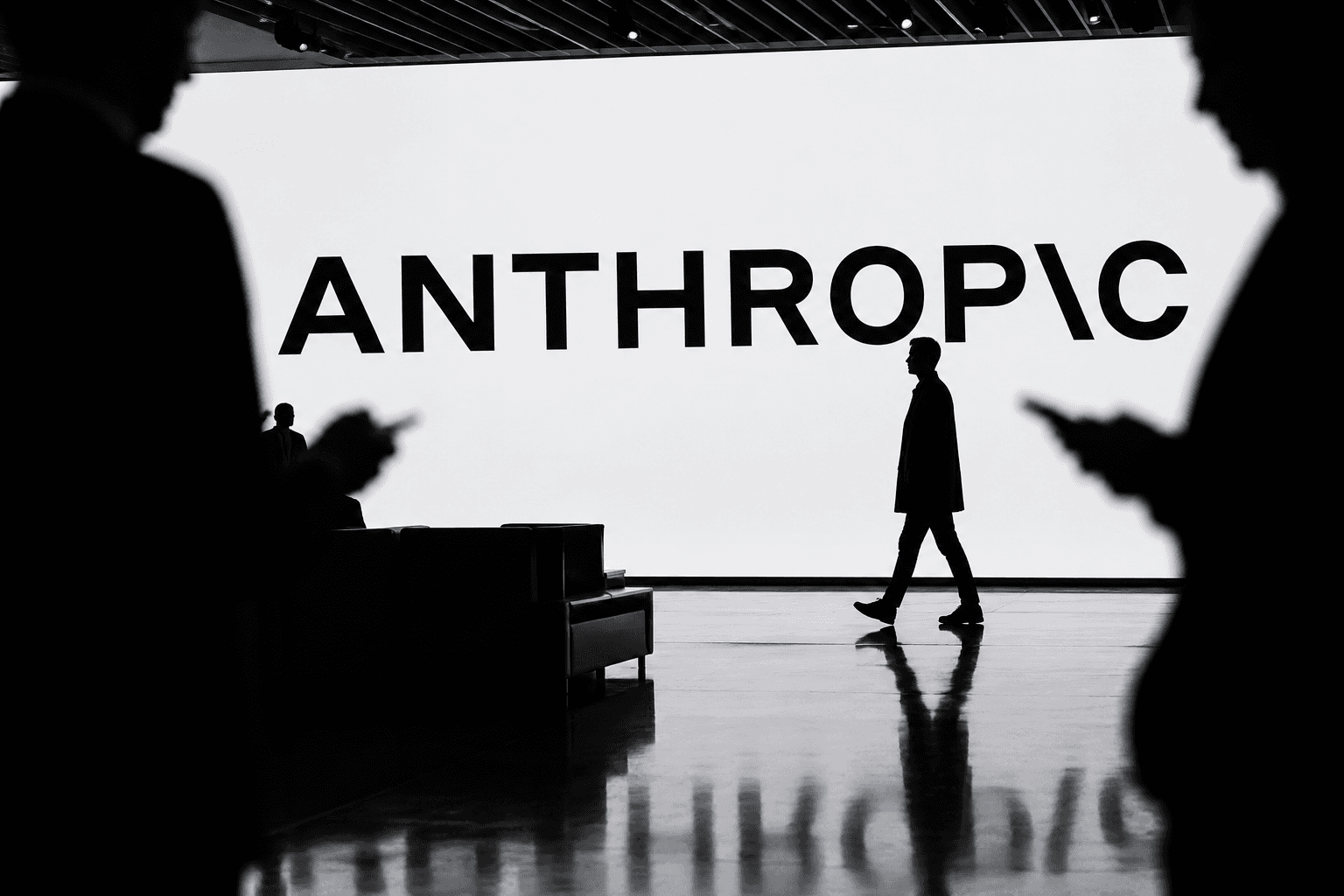
Anthropic took Claude Fable 5 and its underlying Mythos model offline last weekend after the US government imposed export controls on a 90-minute deadline, less than a week after Fable's public launch. The order restricted foreign nationals — including those employed by Anthropic inside the United States — from accessing either model, and Anthropic concluded it could not realistically segregate access in time to comply. As of Tuesday, the Claude interface still displayed the message: "Fable 5 is currently unavailable."
The trigger was a jailbreak finding from researchers at Amazon, who circulated a white paper to Anthropic in the middle of last week. The two companies went back and forth over whether the technique was a genuine bypass or a marginal edge case. Amazon CEO Andy Jassy escalated the matter directly to a member of the Trump administration — reportedly Treasury Secretary Scott Bessent — on Friday.
What followed compressed into a few hours. The administration sent Anthropic an ultimatum demanding the model be shut down in 90 minutes. Anthropic responded within 15 minutes asking for specifics on which jailbreak was at issue. CEO Dario Amodei did not call back personally until 1 hour and 15 minutes after the initial outreach. By the time the two sides were actually talking through the substance, the 90-minute window had closed and export controls were imposed.
Key facts
- 01The US government imposed export controls on Fable 5 and the underlying Mythos model on Friday, less than a week after Fable's public release.
- 02Anthropic was given a 90-minute ultimatum to shut down access; it responded within 15 minutes, but CEO Dario Amodei called back 1 hour 15 minutes after the first call.
- 03The trigger was a jailbreak finding from Amazon researchers, escalated to the Treasury Department by Amazon CEO Andy Jassy.
- 04As of Tuesday's recording, Fable 5 remained offline, with Claude displaying 'Fable 5 is currently unavailable' above the chat window.
- 05Export controls restrict foreign nationals working for Anthropic inside the United States from accessing the models, forcing Anthropic to pull access globally.
Mythos is the underlying foundation model. Mythos 5 is the enterprise-grade release; Fable 5 is the public-facing version with substantially heavier safety guardrails on top. Anthropic skipped numbering for Fable entirely — there was no Fable 1 through 4 — and went straight to 5 to align with the Mythos lineage. The April Mythos Preview release came with unusually stark warnings from Anthropic itself.
“Look, you need to shut this down in 90 minutes”— Trump administration, as relayed to Anthropic
At launch, Anthropic restricted Mythos Preview to enterprise customers and government "cyber defenders," arguing the model could be repurposed offensively against unpatched systems. Fable 5 was the first time any version of the Mythos family reached general public availability, and only after months of additional guardrail work.
Those guardrails arrived heavy. In the days after launch, AI security researchers complained publicly that Fable 5 was downgrading their sessions to older Claude models the moment they probed boundaries. The strictness became a running joke in red-teamer circles. Independent testers told The Verge they were impressed at how well the safeguards held — an unusual verdict in a field where most new models break within days.
Whether the Amazon-discovered jailbreak constitutes a genuine cyber-weapon-class bypass or a narrower research finding has not been publicly resolved. Anthropic and Amazon disagreed on the severity before the matter was escalated to the White House, and neither company has released technical detail on the specific technique. Anthropic has not yet given a public timeline for when Fable 5 might return.
“this is a potential cyber-weapon. It can never be released to the public, at least until safeguards catch up”— Anthropic, April Mythos Preview messaging
The irony is not subtle. Anthropic has spent years arguing that frontier AI is approaching capability levels that warrant aggressive government oversight, and lobbying Washington to take regulation seriously sooner rather than later. The first real exercise of that regulatory muscle has now been directed at Anthropic itself, on a timeline measured in minutes rather than weeks, and on the basis of a third-party research paper rather than Anthropic's own pre-release red-teaming.
The episode also reveals how informal the new US approach to AI safety enforcement is in practice. There is no formal review board, no published threshold for what constitutes an exportable capability, and no defined escalation path. A CEO-to-cabinet phone call set the timeline. This is the same dynamic AI Chat Daily covered last week when the G7 pushed back on the original Anthropic export controls — allied governments have no visibility into how thresholds are being set either.
The competitive read for foreign labs and the Chinese government is straightforward: the United States is now willing to pull a US-developed frontier model off the global market on a few hours' notice. That makes American models a less reliable foundation for any enterprise deployment outside the US, and it gives non-US labs — particularly in China and France — a marketing argument they did not have a month ago. Anthropic wanted serious AI regulation; it got serious AI regulation, just not in a form it can plan around.

Working on something we should cover, or seeing a story we missed? Send leads, documents, or feedback to hello@aichatdaily.com. For sensitive tips, see our secure tips page for Signal and PGP options.
Spotted an error? Email hello@aichatdaily.com with the URL and the issue, or read our full corrections policy.