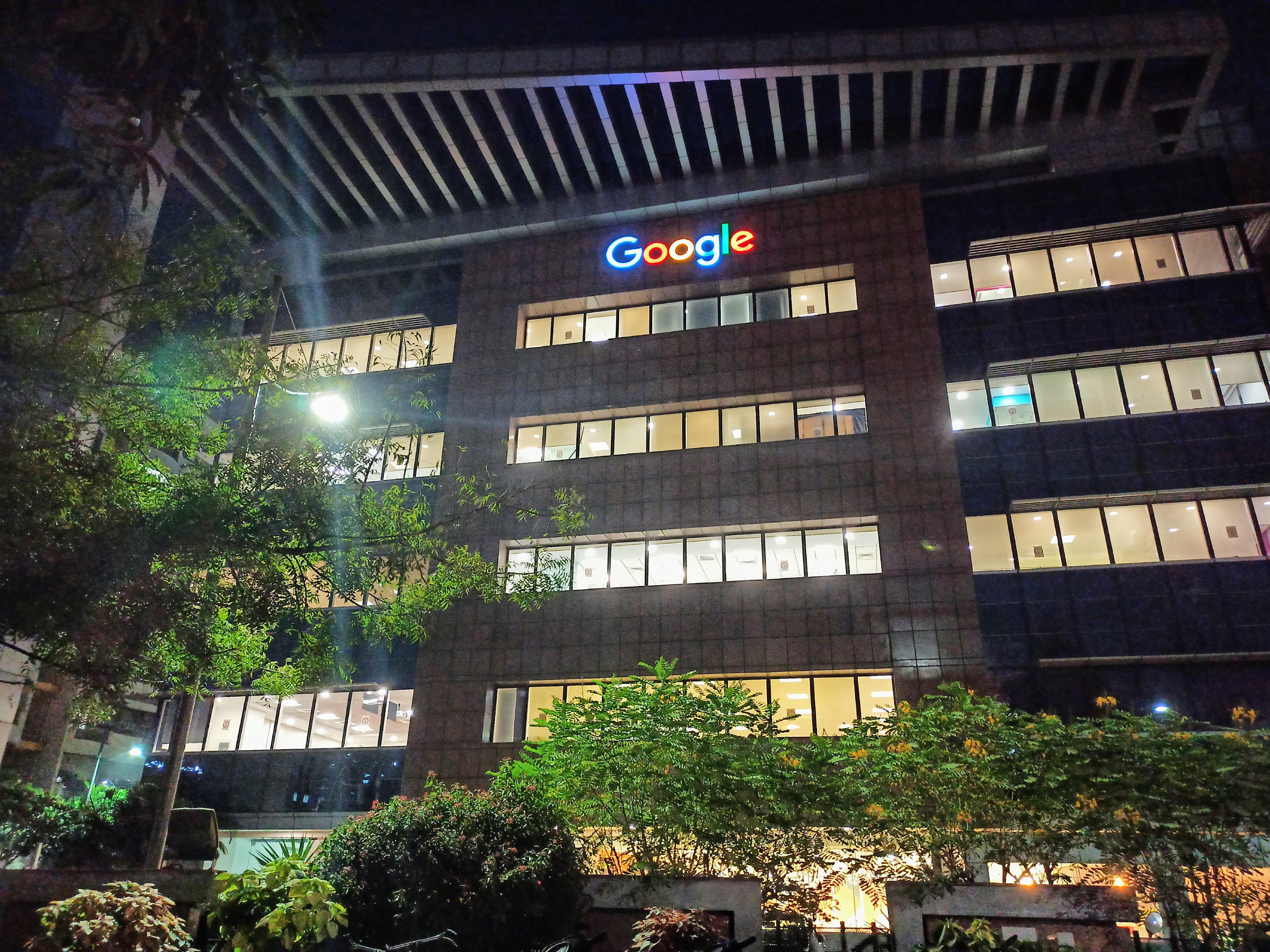
The Munich Regional Court ruled on June 13, 2026 that Google is legally liable for false statements produced by its AI Overviews feature, ordering the company to remove the challenged output and cover 80% of the legal costs from the proceedings. The preliminary ruling rejects Google's argument that its standard hallucination disclaimer shifts responsibility onto users. It is the first European decision to hold a search operator directly accountable for AI-generated text, not the third-party sources the model drew from.
The case began when two German publishers discovered that AI Overviews linked their businesses, in certain searches, to scams and fraudulent subscription practices. None of the underlying web pages cited by the model contained those claims. The publishers sent Google a cease-and-desist letter earlier this year. Google denied liability and pointed to the in-product warning that Overviews can contain errors and should be independently verified.
The court's analysis cut against that defense directly. Judges found that AI Overviews combined unrelated information about flagged companies with data about the plaintiffs, producing associations that appeared in none of the linked sources. The output, the court wrote, contained "independent, new, and substantial statements" — not a list of third-party links but a freshly authored claim built by Google's system.
“contains statements that do not appear at all in the search results”— Munich Regional Court, presiding judges, preliminary ruling
Key facts
- 01The Munich Regional Court preliminarily ruled on June 13, 2026 that Google is liable for defamatory statements produced by AI Overviews.
- 02Google must remove the challenged statements and cover 80% of the legal costs from the proceedings.
- 03The court held that AI-generated outputs are not third-party speech and cannot claim free-speech protection.
- 04Google said the decision is not yet final and signaled a likely appeal.
- 05The ruling's logic extends to OpenAI, Anthropic, and Perplexity AI, whose disclaimers follow the same pattern.
That distinction is the heart of the ruling. Traditional search engines have, in most jurisdictions, been treated as conduits: they surface speech that someone else published, and the original publisher carries the legal exposure. The Munich court held that this safe harbor no longer applies once a search engine generates its own prose. The company that designs, trains, operates, and manages the model, the judges said, "must be held accountable."
The court also dismissed the free-speech argument that often shields algorithmic output. AI-generated statements are the product of a system built by a corporation, not the expression of an individual opinion, and therefore do not qualify for speech protections. Equally important, the court held that the standard hallucination disclaimer does not shift liability to users — because the cited sources never made the false claims, the affected parties would have no one else to sue.
Google indicated it will likely appeal. A company spokesperson cited by Ars Technica emphasized the company's investment in Overviews quality and said the decision is under review.
The reasoning maps cleanly onto every other generative search and chatbot product on the market. OpenAI, Anthropic, and Perplexity AI all rely on the same structural defense: terms of service that warn users outputs may be inaccurate, paired with a recommendation to verify. Under the Munich court's logic, that warning is decorative. When a model fabricates a statement that doesn't appear in any cited source, the operator owns the statement.
The financial exposure here is small — 80% of legal costs in a single German proceeding. The precedent is the asset. If higher courts uphold the framework, European publishers and businesses gain a clear path to force removal of AI-generated defamation and to recover costs, without having to chase the long list of unrelated sources a model may have stitched together. Google's choice will be to fight on appeal or to invest more heavily in grounding outputs to verifiable source spans, with citations the model cannot stray from.
Worth noting alongside this ruling: Google is simultaneously pursuing its own AI-related litigation, including the recent suit against the Chinese network Outsider Enterprise over Gemini-built scam sites, which we covered earlier this month. The company is comfortable arguing that bad actors should pay for AI-driven harm. The Munich court has applied the same logic in the opposite direction.
The deeper shift is what this ruling does to the product category. Generative search was sold to publishers and regulators as an evolution of the link list — same conduit, smarter presentation. The Munich court has formally rejected that framing under German law. A summary that invents a claim is a publication, and the publisher is the company that shipped the model. Every vendor running retrieval-augmented generation at consumer scale now has a concrete European liability surface, and the cheap fix — a disclaimer at the bottom of the box — has been ruled insufficient. The expensive fix is engineering: tighter grounding, source-span attribution, and refusal when the model cannot point to text that actually supports the claim. Expect that work to accelerate, and expect Overviews-style features to get more conservative in the EU before they get bolder anywhere else.

Working on something we should cover, or seeing a story we missed? Send leads, documents, or feedback to hello@aichatdaily.com. For sensitive tips, see our secure tips page for Signal and PGP options.
Spotted an error? Email hello@aichatdaily.com with the URL and the issue, or read our full corrections policy.