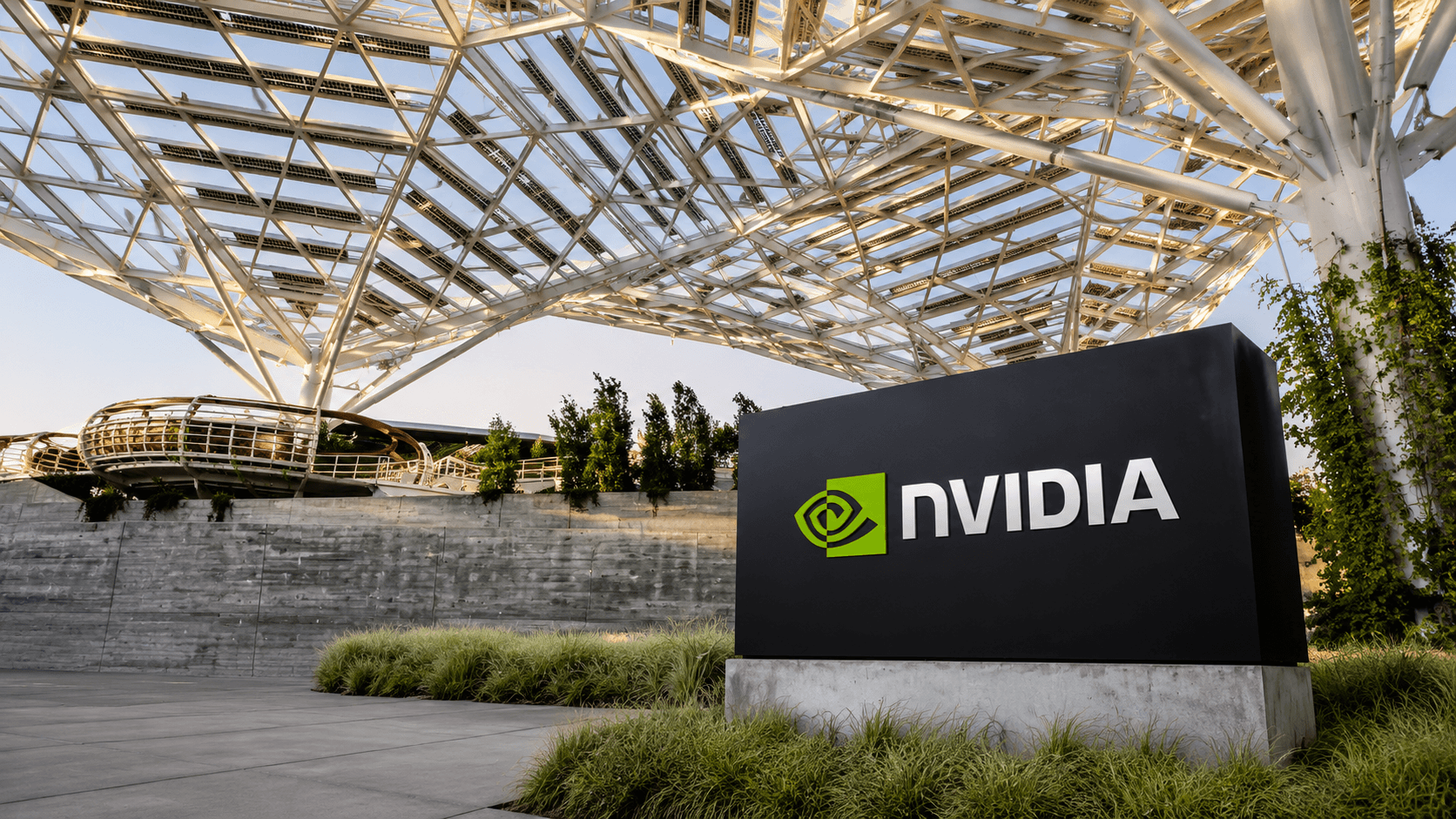
Nvidia CEO Jensen Huang told the Ezra Klein Show this week that AI will need to run on fossil fuels for several more years before clean energy can catch up, framing the resulting pollution as necessary short-term pain in service of long-term climate progress. Huang, whose personal net worth sits around $192.6 billion, compared the tradeoff to surgery — the patient gets cut open before they get healed. The comments land as researchers project up to 1,300 premature deaths and more than $20 billion in public health costs from AI-linked air pollution by 2028.
The specific line Huang used — 'in order to save you, they've got to hurt you first' — is the sharpest articulation yet from a frontier AI executive of the accelerationist case for building data centers on gas and coal. Huang argued the US 'got ourselves really gummed up in climate change and sustainable energy' and, as a result, didn't build enough generation capacity to meet the AI boom without falling back on fossil fuels. He then called AI 'the best opportunity we have' to 'turn a corner on climate change, if you want a future that's sustainable.'
The numbers around AI infrastructure buildout are the reason the comments matter. The health-cost study, from UC Riverside, Caltech, and the Rochester Institute of Technology, models the air-quality impact of powering AI data centers primarily with fossil generation through 2028. That $20 billion figure is a public-health externality — costs borne by hospitals, insurers, and households near power plants and data-center corridors, not by Nvidia or its customers.
“Over the next several years we have to unfortunately use fossil fuels, because we just don't have enough sustainable energy to make a difference. And then after that, hopefully, we can transition to that.”— Jensen Huang, Nvidia CEO
Key facts
- 01Huang told the Ezra Klein Show that AI's near-term climate cost is like surgery: 'in order to save you, they've got to hurt you first.'
- 02A UC Riverside, Caltech, and Rochester Institute of Technology study projects up to 1,300 premature deaths and $20B in public health costs from AI-linked air pollution by 2028.
- 03Huang, whose net worth is around $192.6B, said the US must burn fossil fuels 'over the next several years' before transitioning to clean energy.
- 04The Paris Agreement, adopted in 2015, calls for cutting greenhouse gas emissions in half by 2030 and reaching net zero by 2050.
- 05Peak daily wildfire growth rates in the western US have more than doubled since 2001, with Earth projected to lose 99% of its coral reefs.
Huang's fossil-fuels-first framing runs against the Paris Agreement, adopted in 2015, which commits nearly every country on Earth to halving greenhouse gas emissions by 2030 and reaching net zero around 2050. It also runs against the underlying economics: renewables were already the fastest-growing source of new electricity generation before the generative AI boom, and new wind and solar capacity is generally cheaper to build than new gas or coal. The Trump administration has moved in the opposite direction, incentivizing gas and coal buildouts specifically to power data centers.
The climate costs Huang is asking communities to absorb are not abstract. Earth is expected to lose 99% of its coral reefs on current trajectories. Roughly 770 million people — one in ten globally — already face acute risk from sea level rise. Peak daily wildfire growth rates in the western US have more than doubled since 2001, producing faster and more destructive fire seasons.
Those effects have reached Huang's own doorstep. He purchased a $7.5 million home on Maui in 2004, and the property survived the 2023 wildfires that devastated Lahaina. Maui County Councilmember Keani Rawlins-Fernandez said at the time that billionaire land purchases on the island were 'painful for our community,' pointing to disputes over water rights during the fires. The Lahaina disaster also traced back to older land-use decisions — the US annexation of the Kingdom of Hawaii in 1898 opened the way for plantation clearing that seeded the invasive grasses now fueling faster-moving fires.
On community opposition to data centers, Huang told Klein that if a town doesn't want the buildout, 'so be it' — but that companies planning to build should engage residents about efficiency gains beforehand. He did not address the specific finding that AI-linked air pollution is projected to shorten lives near power infrastructure, nor did he propose a Nvidia-side commitment on the fuel mix powering the chips it sells.
“A more polluting AI buildout is not inevitable. It depends on the choices government makes now”— Marc Boom, Senior Director, Environmental Protection Network
Marc Boom, a senior director at the Environmental Protection Network — a group of former EPA staff — pushed back on the inevitability framing in a recent press briefing. Boom said the polluting version of the AI buildout is a policy choice, not a technical necessity. His group argues that federal permitting, siting rules, and utility procurement decisions determine whether new AI load lands on gas plants or on wind, solar, and nuclear.
The gap between Huang's rhetoric and Nvidia's business interests is worth naming. Nvidia sells the GPUs that make AI training and inference possible, and every additional megawatt of data-center capacity — regardless of fuel source — expands the market for its chips. A framing in which fossil-fuel-powered buildouts are unavoidable in the near term is a framing that removes friction from Nvidia's fastest-growing customer segment, the hyperscalers standing up gigawatt-scale AI campuses.
The more consequential question for the AI industry is whether Huang's timeline holds. If data-center operators bring gas plants online now on the assumption that a clean-energy transition comes 'after,' the infrastructure gets locked in for decades — gas plants typically operate 30 to 40 years. That makes the near-term fuel-mix decisions Nvidia's customers are making today the ones that will determine whether AI actually turns the corner on climate that Huang described, or whether the sector spends the 2030s explaining why it didn't.

Working on something we should cover, or seeing a story we missed? Send leads, documents, or feedback to hello@aichatdaily.com. For sensitive tips, see our secure tips page for Signal and PGP options.
Spotted an error? Email hello@aichatdaily.com with the URL and the issue, or read our full corrections policy.