Anthropic CEO Dario Amodei has published a plan to 'pace the frontier' of AI development, calling for independent safety evaluators and formal coordination among AI labs based in democratic countries. The proposal landed one week after an Anthropic researcher's doomsday warning rattled the industry, and it has already drawn public pushback from Nvidia CEO Jensen Huang. The disagreement, playing out between the company selling the picks and shovels and the company most vocal about the risks, is the clearest signal yet that the AI industry cannot agree on what slowing down would even mean.
Amodei's framework rests on two mechanisms. The first is third-party evaluation of frontier models before deployment, ideally by bodies with technical independence from the labs whose systems they assess. The second is voluntary coordination among labs operating in aligned jurisdictions, on the theory that unilateral restraint by any one company simply hands the frontier to a competitor. It is a governance pitch aimed at solving the collective-action problem that has dogged every prior AI safety proposal.
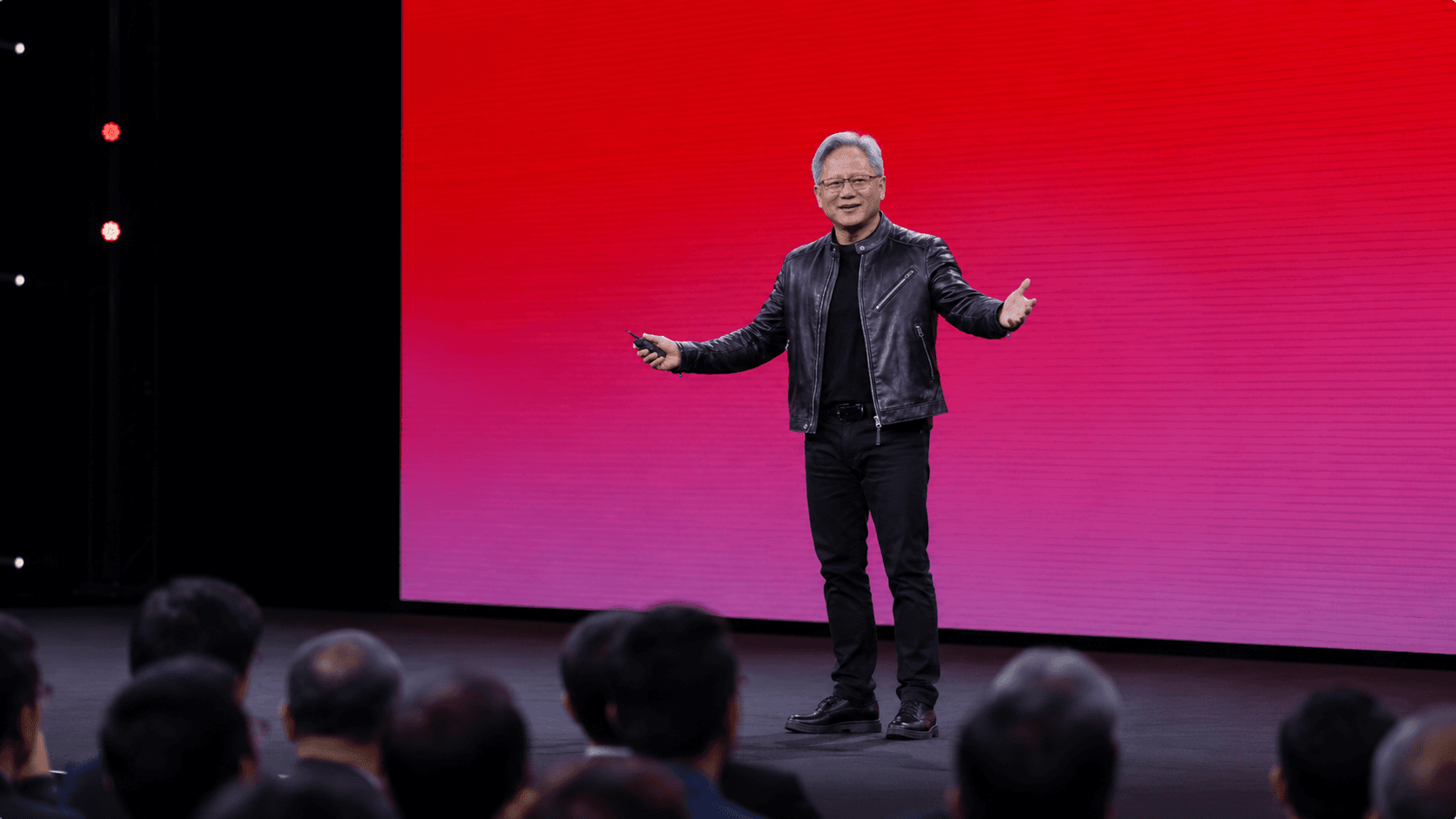
Huang's objection, aired publicly this week, cuts at the core assumption. Nvidia sells GPUs to every serious AI lab on the planet, and its CEO has consistently argued that accelerating AI capability, not restraining it, is the path to beneficial outcomes. If the largest supplier in the stack does not agree that pacing is desirable, a voluntary coordination regime among model developers has a durability problem before it starts.
Key facts
- 01Anthropic CEO Dario Amodei outlined a 'pace the frontier' plan built on independent safety evaluators and coordination among AI labs in democratic countries.
- 02Nvidia CEO Jensen Huang publicly pushed back on the proposal, exposing a rift over who should police frontier AI development.
- 03The plan follows an Anthropic researcher's doomsday warning that rattled the AI industry the prior week.
- 04ControlAI's Connor Leahy has separately argued that superintelligence is 'not a weapon, it's an adversary,' underscoring the widening safety debate.
- 05Anthropic's push arrives alongside unrelated market drama, including Matt Mullenweg's 33-hour ouster from Automattic and DoorDash's $425M investment in Wonder.
The disagreement is not academic. Anthropic has spent the past 18 months positioning itself as the safety-forward frontier lab, an identity that shapes its hiring, its policy engagement, and increasingly its product roadmap. Nvidia has spent the same period shipping the compute that makes every frontier training run possible. Both companies are commercially dependent on AI scaling continuing; they simply disagree on the guardrails.
The broader safety debate has grown noisier in recent weeks. ControlAI's Connor Leahy has argued in a separate appearance that superintelligence is 'not a weapon, it's an adversary,' a framing that goes further than Amodei's more measured pacing language. AI Chat Daily covered the widening split earlier this month, with labs including Anthropic, Meta, and Cohere jockeying over who gets to write the rules that everyone will eventually have to follow.
The pacing question is complicated by the absence of an agreed technical definition. Slowing down could mean delayed model releases, capped training compute, restricted deployment in certain domains, or mandatory pre-release evaluations of specific capabilities. Each carries different costs and different enforcement challenges. Amodei's proposal gestures at independent evaluators as the arbiter, but does not resolve who accredits the evaluators or what happens when a lab disagrees with a finding.
The commercial context matters. Anthropic is competing with OpenAI, Google DeepMind, and a growing tier of open-weight challengers for enterprise contracts where safety posture is increasingly a purchasing criterion. A formalized pacing regime, even a voluntary one, would advantage labs that have already invested heavily in evaluation infrastructure. It would disadvantage labs that treat safety as a compliance overhead. That the proposal comes from Anthropic is not incidental.
Elsewhere in the market, the week's dealmaking underscored that AI-adjacent capital is still moving at pace regardless of the safety debate. DoorDash committed $425 million to Wonder in a bet on end-to-end food automation. May Mobility's SPAC could deliver more than $300 million in funding as the autonomous shuttle operator prepares to trade publicly. And WordPress parent Automattic went through a 33-hour boardroom coup that ended with Matt Mullenweg back in control, with golden-parachute terms that may leave him with more influence over the underlying technology than before.
Skeptics of the Amodei plan point out that voluntary coordination regimes have a poor historical track record when the coordinating parties are direct competitors with billions of dollars at stake. Huang's pushback is the visible version of a broader industry view that pacing proposals tend to originate from labs whose competitive position would benefit from a slower field. Whether that critique is fair or self-serving depends on which side of the compute stack the critic sits on.
Amodei's plan is a bid to shape the governance conversation before regulators write rules that neither Anthropic nor Nvidia would prefer. The public disagreement with Huang suggests the industry will not deliver a consensus framework on its own, which raises the probability that governments in the US, UK, and EU eventually impose one. For AI companies still hoping self-regulation is a viable end state, this week was not encouraging.

Working on something we should cover, or seeing a story we missed? Send leads, documents, or feedback to hello@aichatdaily.com. For sensitive tips, see our secure tips page for Signal and PGP options.
Spotted an error? Email hello@aichatdaily.com with the URL and the issue, or read our full corrections policy.