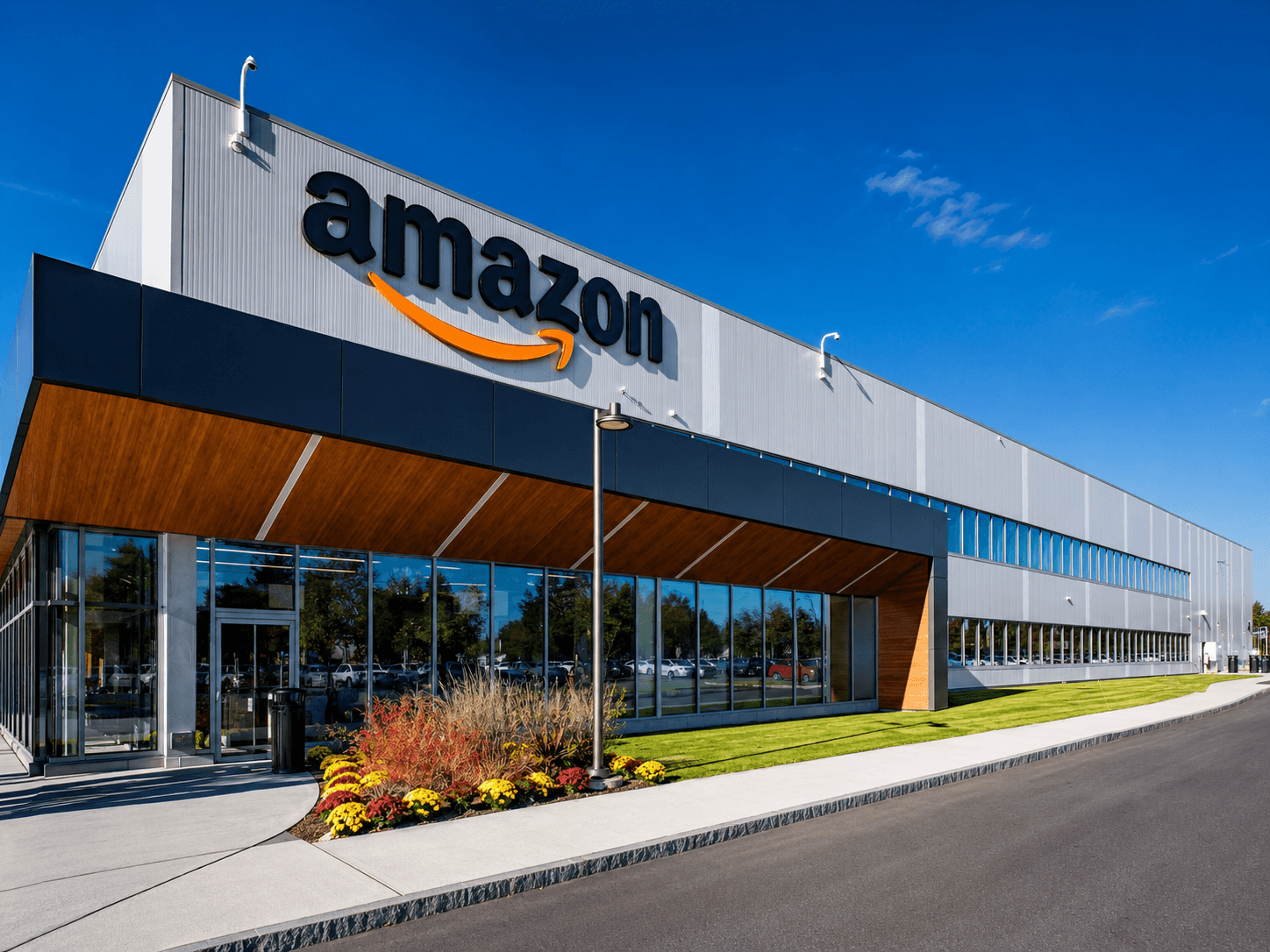
Amazon will invest an additional $13 billion in India through 2030 to expand its AI and cloud footprint, CEO Andy Jassy said Thursday after meeting Prime Minister Narendra Modi in New Delhi. The money will fund Amazon Web Services data center capacity in Mumbai and Hyderabad, the country's two anchor cloud regions. The pledge brings Amazon's cumulative India investment commitments to $48 billion.
The $13 billion is Amazon's third major India commitment in as many years. In 2023, after an earlier Jassy-Modi meeting, the company said it would spend $15 billion by 2030, with $12.7 billion of that earmarked for AWS. In December 2025, Amazon piled on a further $35 billion. The pattern — new commitment, new meeting, larger number — has compressed from years to months as Indian compute demand has accelerated.
Amazon did not break out how the $48 billion total splits between capital and operating spend, or between cloud, retail, and logistics. Long-term technology-investment headlines from hyperscalers typically bundle both, which makes the gross number useful for political optics and less useful for modeling actual data center buildout.
Key facts
- 01Amazon will invest an additional $13 billion in India through 2030 to expand AI and cloud capacity.
- 02The new commitment lifts Amazon's total India investment pledges to $48 billion.
- 03AWS will use the funds to expand data center capacity in Mumbai and Hyderabad.
- 04Microsoft pledged $17.5B in India by 2029; Google pledged $15B in October.
- 05Amazon plans 20+ new fulfillment centers and 100+ last-mile stations in India this year.
The competitive context is what matters. Microsoft said in December it would invest $17.5 billion in India by 2029, and Google followed in October with a $15 billion commitment to build AI hub and data center infrastructure in the country. Amazon's $13 billion increment slots into that race and is the largest of the three on a cumulative basis, though direct comparisons are loose given different time windows and reporting conventions.
Non-hyperscaler capital is showing up in size too. Australia's AirTrunk, Canada Pension Plan Investment Board's CPP Investments, Reliance Industries, and Adani Group have all committed billions to Indian data center projects. New Delhi is actively pulling that money in, offering tax exemptions for foreign cloud providers on services sold overseas when the workloads run from Indian facilities — a structural incentive to put compute on Indian soil rather than route it through Singapore or the Middle East.
The bet underneath all of this is that India becomes a major hub for the compute powering AI products, both for its own domestic market and as an export platform. India has the developer base, the English-language enterprise market, the policy tailwinds, and — increasingly — the power grid investment to host frontier-scale training and inference clusters. Whether grid and water capacity actually keep pace with the announced gigawatts is the open question every hyperscaler in the region is quietly modeling.
Amazon paired the cloud pledge with a domestic retail and logistics push. The company plans to open more than 20 fulfillment centers and over 100 last-mile delivery stations in India this year. It also detailed plans this week to expand its quick-commerce service, Amazon Now, to more than 300 cities and towns. That is a defensive move against entrenched local players: Eternal-owned Blinkit, Swiggy's Instamart, Zepto, and Walmart-owned Flipkart, which said earlier this week it plans 1,500 micro-fulfillment centers across India by the end of 2026.
The skepticism worth flagging is execution. Headline investment numbers from hyperscalers in emerging markets have a history of being deployed slower than announced, particularly when local power transmission, land acquisition, and water permitting hit reality. The $48 billion figure stretches across multiple years and multiple business lines, and Amazon has not committed to a specific megawatt buildout or a region-by-region timeline. The 2030 horizon also gives plenty of room to reshape the spend if Indian demand undershoots.
What this changes for the AI cloud market is the geographic center of gravity. Three of the largest US hyperscalers have now publicly anchored multi-year, double-digit-billion buildouts in India inside a 12-month window. For Indian AI startups, that means cheaper, closer inference capacity and a real chance to train mid-size models domestically without renting capacity in Virginia or Dublin. For AWS specifically, it locks in regional dominance against Microsoft and Google in a market where switching costs compound fast once enterprise workloads land. The cumulative $48 billion is a political number; the Mumbai and Hyderabad megawatts are the real one to watch.

Working on something we should cover, or seeing a story we missed? Send leads, documents, or feedback to hello@aichatdaily.com. For sensitive tips, see our secure tips page for Signal and PGP options.
Spotted an error? Email hello@aichatdaily.com with the URL and the issue, or read our full corrections policy.