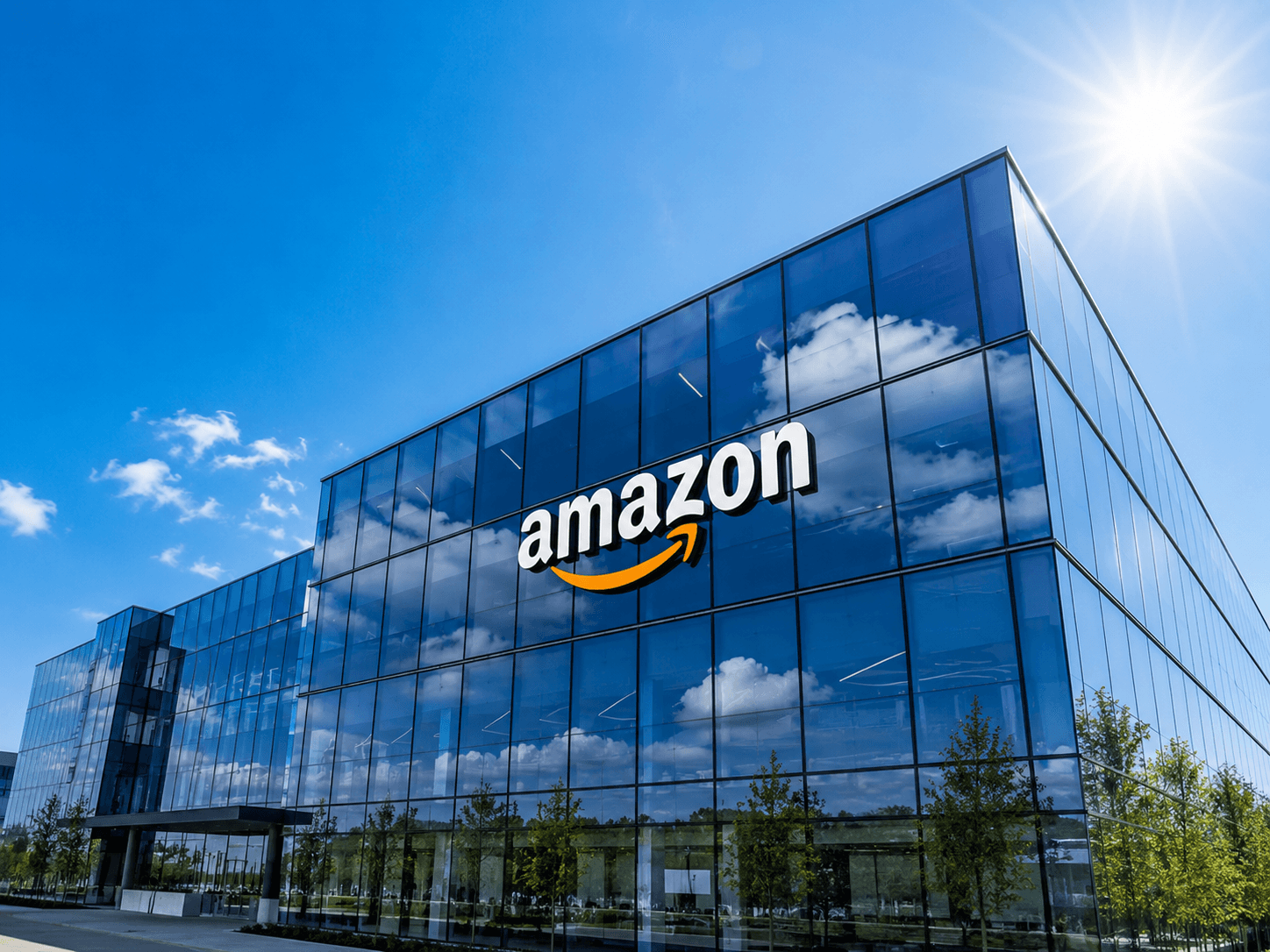
Amazon is financing a new gas-fired power plant in Pecos County, Texas that holds a state permit to emit up to 33 million tons of CO2 per year — a ceiling higher than any coal plant currently operating in the United States. The plant, called GW Ranch, will run 35 natural-gas turbines delivering 7.65 gigawatts of electricity, and at least initially will not connect to the Texas grid at all. Its output is earmarked for a single Amazon data center in West Texas, built to serve the company's AI compute demand.
Amazon has confirmed the purchase of the site and a power-purchase arrangement with GW Ranch. The scale of the permit — tracked by the data-center monitoring service Cleanview — is what makes the project notable. Power plants rarely emit at their permitted ceiling, but a 33-million-ton allowance sets the regulatory envelope well above the dirtiest existing coal generation in the country.
The 7.65 GW figure is the operative number for anyone modeling AI infrastructure buildout. A single hyperscale data-center campus consuming multi-gigawatt loads was a rounding error five years ago; it is now the design target. Dedicating that entire output to one Amazon site, off-grid, tells the market that AWS is willing to become a vertically integrated power operator rather than wait for ERCOT interconnect queues.
Key facts
- 01GW Ranch, a gas plant in Pecos County, Texas, holds a permit to emit up to 33 million tons of CO2 per year — more than the largest US coal plant.
- 02The site's 35 natural-gas turbines will deliver 7.65 gigawatts of electricity, initially dedicated to a single Amazon data center rather than the Texas grid.
- 03Amazon has confirmed it purchased the site and will buy power from GW Ranch to feed its new West Texas AI compute buildout.
- 04Amazon's data centers used 2.5 billion gallons of water last year, and the company's emissions have risen for several consecutive years.
- 05Jeff Bezos pledged in 2019 to make Amazon carbon neutral by 2040 — a target now in tension with AI-driven power demand.
The strategy is not unique to Amazon. Meta and Google have moved into direct power procurement and, in some cases, self-generation, turning to gas, coal, and other non-renewable sources as AI training and inference workloads outpace what utilities can deliver on grid-scale timelines. The industry-wide shift toward on-site gas is the fastest-executable answer to a compute buildout that cannot wait a decade for new transmission.
It also cuts against Amazon's stated climate posture. Jeff Bezos pledged in 2019 to make the company carbon neutral by 2040 under the Climate Pledge initiative. Amazon's emissions have climbed for several consecutive years, driven by the same AI demand curve now motivating GW Ranch. The company's data centers used 2.5 billion gallons of water last year — a separate resource line that scales with cooling load.
Amazon spokeswoman Margaret Callahan told the New York Times that the company's commitment to the Climate Pledge remains intact even as the operating environment has changed. The framing — commitment unchanged, world changed — is the one every hyperscaler is now converging on as gas builds accelerate.
The regulatory backdrop matters here. The Trump administration has moved to lift restrictions on polluting power plants, and Texas air-permitting has been comparatively permissive for new gas capacity. A permit ceiling of 33 million tons reflects both the physical scale of a 7.65 GW plant and a jurisdiction willing to write the ceiling high. Whether GW Ranch runs anywhere near that number depends on utilization, turbine efficiency, and how hard Amazon pushes the adjacent data center.
One caveat: permitted emissions are not actual emissions. Combined-cycle gas turbines run cleaner than coal per megawatt-hour, and a modern facility rarely operates at nameplate output year-round. The realistic annual emissions figure for GW Ranch will likely land well below the ceiling. But the ceiling itself is the regulatory precedent, and it sets the range within which the operator has room to run.
The AI market implication is that the constraint on hyperscale compute is no longer chips or capital — it is watts, and watts are being sourced from whatever generation can be built fastest. Renewables plus storage cannot be procured on a two-year window at 7.65 GW scale in West Texas; gas can. Every hyperscaler in the country is running the same math, which means the emissions trajectory of the AI industry over the next five years is a function of gas-turbine order books, not of corporate sustainability pledges. Amazon's 2040 carbon-neutral target now depends on offsets, retirements, or a technology shift that doesn't yet exist at price.

Working on something we should cover, or seeing a story we missed? Send leads, documents, or feedback to hello@aichatdaily.com. For sensitive tips, see our secure tips page for Signal and PGP options.
Spotted an error? Email hello@aichatdaily.com with the URL and the issue, or read our full corrections policy.