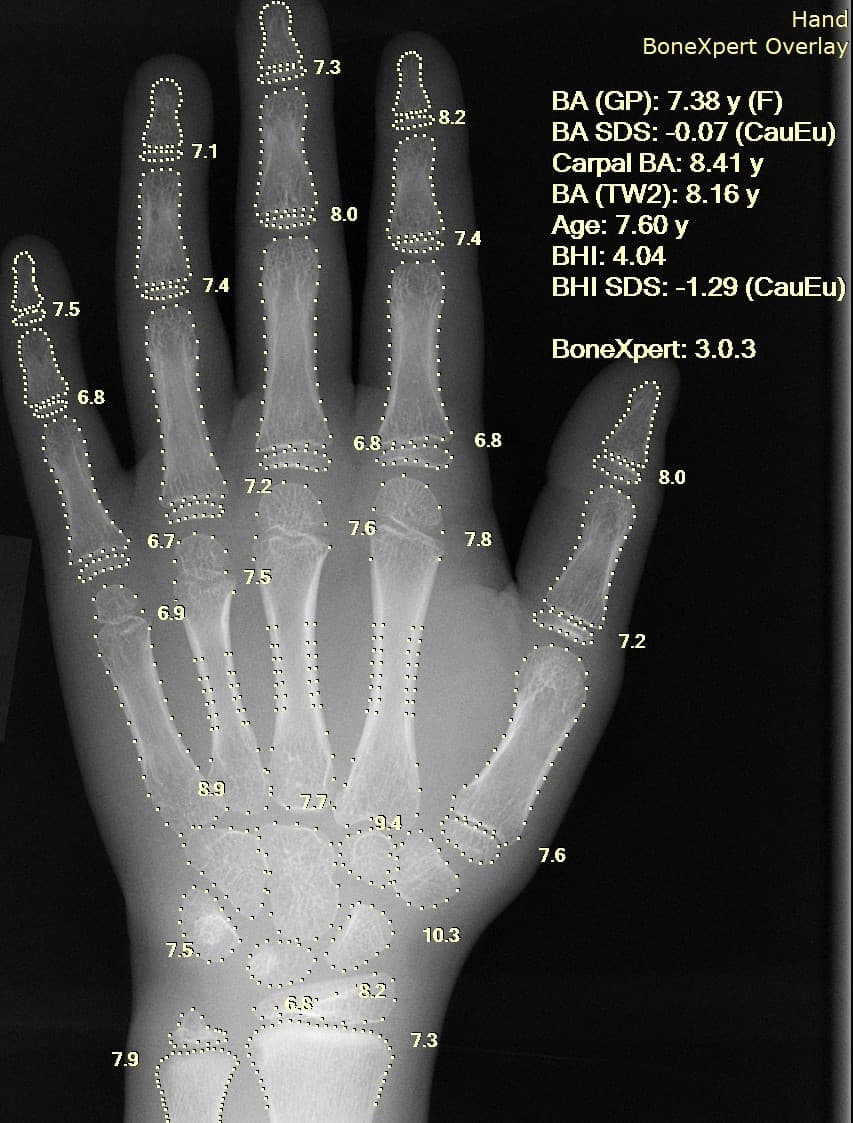
BioticsAI cleared the FDA in January for an AI copilot that helps sonographers detect fetal abnormalities, ending a multi-year regulatory slog and opening the door to hospital deployments. Co-founder and CEO Robhy Bustami told TechCrunch's Build Mode podcast the team built an early, functioning version of the product for under $100,000 — a figure that is almost unheard-of in medical devices, where a single clinical study can cost more than that.
The startup first surfaced publicly in 2023, when it won TechCrunch Startup Battlefield. That win provided early investor visibility, and the company spent the intervening years stitching together clinical validation, regulatory submissions, and hospital partnerships rather than chasing user growth. The FDA clearance is the gate that turns a research project into a sellable device.
Misdiagnosis rates in fetal ultrasound remain stubbornly high, and that is the wedge BioticsAI is targeting. The product reads alongside the clinician during a scan, flagging anomalies in real time. Reproductive health is the entry point; Bustami said the company plans to expand into broader areas of the field once obstetrics deployments are running.
Key facts
- 01BioticsAI received FDA approval in January for its AI copilot that flags fetal abnormalities on ultrasound.
- 02The team built an early functioning version of the product for under $100,000, unusual in medical devices.
- 03BioticsAI won TechCrunch Startup Battlefield in 2023, which seeded its early visibility with investors.
- 04Founder Robhy Bustami detailed the regulatory path on Build Mode, hosted by Isabelle Johannessen.
- 05Next phase: hospital rollout and expansion beyond obstetrics into broader reproductive health.
Bustami's framing of the FDA path is more pragmatic than most founders manage. From day one, the team treated regulatory strategy as a parallel workstream, not a final hurdle, integrating clinical validation and product development into a single process. Pre-submission meetings with regulators, he said, helped align study design before the team ever filed paperwork.
“BioticsAI built a working version of its fetal-ultrasound AI for under $100,000, won Startup Battlefield in 2023, and cleared the FDA in January.”— Jaeden Schafer
"The FDA process itself is often viewed as a black box, but founders don't have to navigate it blindly," Bustami said. The implication is that the opacity is partly self-inflicted: founders who avoid early conversations with the agency end up redoing studies they could have scoped correctly the first time.
Keeping a team motivated during multi-year regulatory cycles is its own problem. Most startups optimize for weekly shipping cadence; medical-device startups optimize for milestones that arrive years apart. Bustami said the answer was cultural alignment across engineers, clinicians, and researchers, plus surfacing every interim win — a completed clinical study, a new hospital partnership — to the whole company.
"Making sure everyone is completely aligned, even if it's outside of their technical scope, constantly seeing wins on the R&D side, from clinical studies to new healthcare partnerships," he said. It is a quieter operating model than the move-fast playbook most software founders inherit, and it tracks with the regulatory reality.
BioticsAI's story lands at a moment when AI in healthcare is getting renewed attention from both technologists and investors. Google DeepMind recently unveiled an AI co-clinician aimed at medical reasoning, and Reid Hoffman has gone as far as arguing that doctors who do not consult AI for second opinions are bordering on malpractice — coverage AI Chat Daily ran in recent days. Those are framing arguments. BioticsAI is one of the few startups with the FDA paperwork to actually deploy.
The skeptic's case is straightforward. FDA clearance is necessary but not sufficient — hospital procurement cycles are slow, ultrasound workflows vary by institution, and reimbursement coding for AI-assisted scans is still unsettled. A clearance in January does not guarantee meaningful revenue by year-end, and the company has not disclosed deployment numbers or pricing. Investors who underwrote the regulatory risk now underwrite the commercial one.
Still, the capital efficiency on display is the part worth dwelling on. Building a clinically validated, FDA-cleared device starting from a sub-$100,000 prototype is a counter-narrative to the prevailing assumption that healthcare AI requires nine-figure war chests before a first patient is scanned. If BioticsAI converts its clearance into hospital contracts at any reasonable pace, it becomes a template — proof that disciplined founders can ship regulated AI products without first raising a mega-round, and a reminder that the bottleneck in medical AI is rigor, not compute.

Working on something we should cover, or seeing a story we missed? Send leads, documents, or feedback to hello@aichatdaily.com. For sensitive tips, see our secure tips page for Signal and PGP options.
Spotted an error? Email hello@aichatdaily.com with the URL and the issue, or read our full corrections policy.