Google will pay SpaceX $920 million a month for access to roughly 110,000 Nvidia GPUs housed in SpaceX-run data centers, under a 32-month contract disclosed in a regulatory filing on Friday. The deal runs from October 2026 through June 2029 and lands one week before SpaceX is expected to begin trading on the Nasdaq at a targeted valuation of $1.75 trillion, in what would be the largest IPO in history. Google's parent Alphabet, which first invested in SpaceX at a $12 billion valuation in 2015, is set to see its stake balloon to more than $100 billion after the offering.
The agreement covers approximately 110,000 Nvidia graphics processing units along with CPUs, memory and related components, with capacity ramping up through September 2026 at a reduced fee. If SpaceX fails to deliver the committed GPU count by September 30, 2026, Google can terminate immediately after a one-month grace period or accept the smaller pool at a lower rate. After December 31, 2026, either side can walk with 90 days' notice.
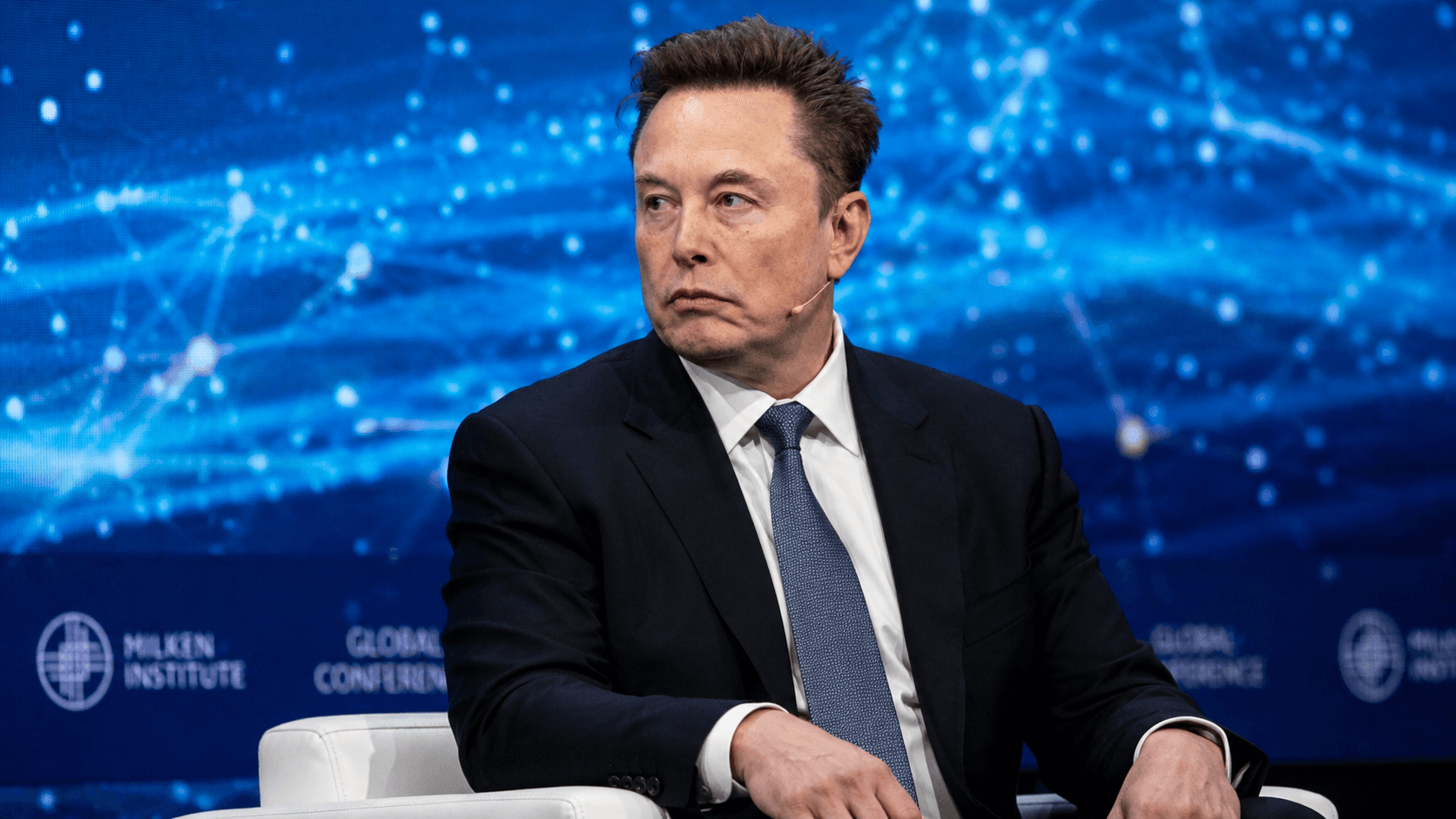
It is the second giant compute lease SpaceX has signed since absorbing xAI in a February 2026 merger that valued the combined entity at $1.25 trillion. In late May, Anthropic agreed to pay $1.25 billion a month through 2029 for the entire compute footprint of Colossus 1, the Memphis data center xAI originally built for its own Grok model. Google's contract is roughly half the size of Anthropic's by monthly spend, and SpaceX did not name which facility the search company will draw from. Elon Musk has previously said Colossus 2 will be reserved for xAI's own training runs.
Key facts
- 01Google will pay SpaceX $920 million per month from October 2026 through June 2029 — a 32-month deal disclosed in a Friday SEC filing.
- 02The contract covers roughly 110,000 Nvidia GPUs plus CPUs, memory and related components in SpaceX-operated data centers.
- 03It is SpaceX's second mega compute deal, after Anthropic's $1.25 billion-a-month agreement for the full Colossus 1 site in Memphis.
- 04SpaceX is set to IPO on the Nasdaq next week at a targeted $1.75 trillion valuation, raising around $75 billion.
- 05Alphabet's stake in SpaceX, first taken at a $12 billion valuation in 2015, is expected to be worth more than $100 billion after the IPO.
The optics are unusual. SpaceX's IPO prospectus explicitly names Google as a competitor in both connectivity, where Starlink goes up against Google's fiber business, and in AI, where Grok is positioned against Gemini, ChatGPT, Claude and Meta's Llama. The same prospectus is now leaning on a Google check to demonstrate that SpaceX's AI infrastructure can generate real third-party revenue.
Those numbers matter because the underlying AI business is bleeding. SpaceX reported $10.1 billion in capital expenditures in the first quarter of 2026, more than double the year-earlier figure, with $7.7 billion of that going to AI. The AI segment posted a $2.5 billion operating loss on $818 million of revenue in the same quarter. Locking in $920 million a month from Google — and $1.25 billion a month from Anthropic — converts some of that capex into contracted revenue ahead of the IPO roadshow.
“We believe our compute infrastructure and related strategy provides us with substantial flexibility in how we allocate and monetize capacity”— SpaceX, IPO filing, compute service agreements section
For Google, the deal is a stopgap. Alphabet has already guided 2026 capital expenditures to $180 billion to $190 billion, up from a prior range of $175 billion to $185 billion, and CFO commentary this week pointed to a further significant increase in 2027. To finance the buildout, Alphabet announced an $85 billion stock sale this week, including a $10 billion investment from Berkshire Hathaway, framed around "unprecedented customer demand."
The Google statement on Friday tied the SpaceX contract directly to capacity pressure on Gemini Enterprise, the company's agent platform.
Renting from SpaceX puts Google in the same posture as Microsoft renting from CoreWeave: the hyperscaler with the largest in-house fleet of AI accelerators is still going outside for bridge capacity. It also pulls SpaceX into direct competition with the neocloud tier — CoreWeave and Nebius — whose shares sold off Friday in a broader tech rout before recovering somewhat on the news. A trillion-dollar landlord with an existing Nvidia allocation is a different kind of competitor than a venture-backed GPU rental shop.
The arrangement is not without risk for either side. SpaceX has to actually deliver 110,000 GPUs in working data centers by the end of September 2026, a tight schedule given the segment's existing losses and the parallel obligation to keep Anthropic's Colossus 1 footprint full. Google retains the right to walk with 90 days' notice after this year, which means the $920 million monthly run rate is contracted, not guaranteed, beyond early 2027. And the competitive overlap — SpaceX naming Google as a rival on the same pages that book Google as a customer — is a tension the prospectus discloses but does not resolve.
The Google–SpaceX deal cements a pattern that has now repeated three times in six weeks: Anthropic to SpaceX, Alphabet's $85 billion equity raise, and now Google to SpaceX. The frontier-model economy is being financed by a small number of very large, multi-year compute contracts that move tens of billions of dollars between a handful of counterparties, several of whom compete with each other on the application layer. For SpaceX, the IPO pitch is now legible — it is not just a launch company or a satellite operator but a contracted AI landlord with $26 billion of forward Google revenue and a far larger Anthropic book on top. Whether Grok ever catches Gemini or Claude is, for the purposes of next week's offering, almost beside the point.

Working on something we should cover, or seeing a story we missed? Send leads, documents, or feedback to hello@aichatdaily.com. For sensitive tips, see our secure tips page for Signal and PGP options.
Spotted an error? Email hello@aichatdaily.com with the URL and the issue, or read our full corrections policy.