Emerald AI, Google and Nvidia launched the AI Energy Management Alliance on September 16, 2026, a coalition of 18 companies pushing US utilities and regulators to give AI data centers faster grid connections in exchange for flexible power use. Founding members include Anthropic, utility National Grid, and power producers AES and NRG. The pitch is direct: a new US data center currently waits a decade or more for a grid connection, and flexibility is the way to shorten that queue.
The math the alliance is selling rests on one figure. The US grid runs at roughly 50% utilization on average because utilities must size capacity for the year's hottest afternoons. If AI data centers agree to ease consumption during those peak hours, the country could unlock 100GW of headroom on existing infrastructure without new transmission builds. The Brattle Group estimates that each 10% gain in grid utilization translates to about a 3.4% rate cut for consumers.
“By flexibly consuming energy, AI data centers could become good citizens of the power grid, protecting energy affordability and reducing the risk of blackouts for communities”— Varun Sivaram, Founder of Emerald AI
Flexibility in this context means a data center can shift computing workloads, discharge on-site storage, run paired generation, or curtail draw when the grid signals stress. Google already operates a demand-response portfolio of roughly a gigawatt across its US fleet. Emerald AI and Nvidia have completed six global demonstrations of flexible data center operation.
Key facts
- 01The AI Energy Management Alliance launched September 16, 2026 with 18 member companies including Anthropic, National Grid, AES and NRG.
- 02Founders Emerald AI, Google and Nvidia estimate flexible data centers could unlock 100GW on the existing US grid, which runs at 50% utilization on average.
- 03Nvidia, Digital Realty and Emerald AI will switch on a nearly 100MW power-flexible AI factory in Virginia later this year.
- 04Brattle Group estimates each 10% gain in grid utilization lowers electricity rates by about 3.4%.
- 05US data centers currently wait a decade or more for a grid connection under existing interconnection processes.
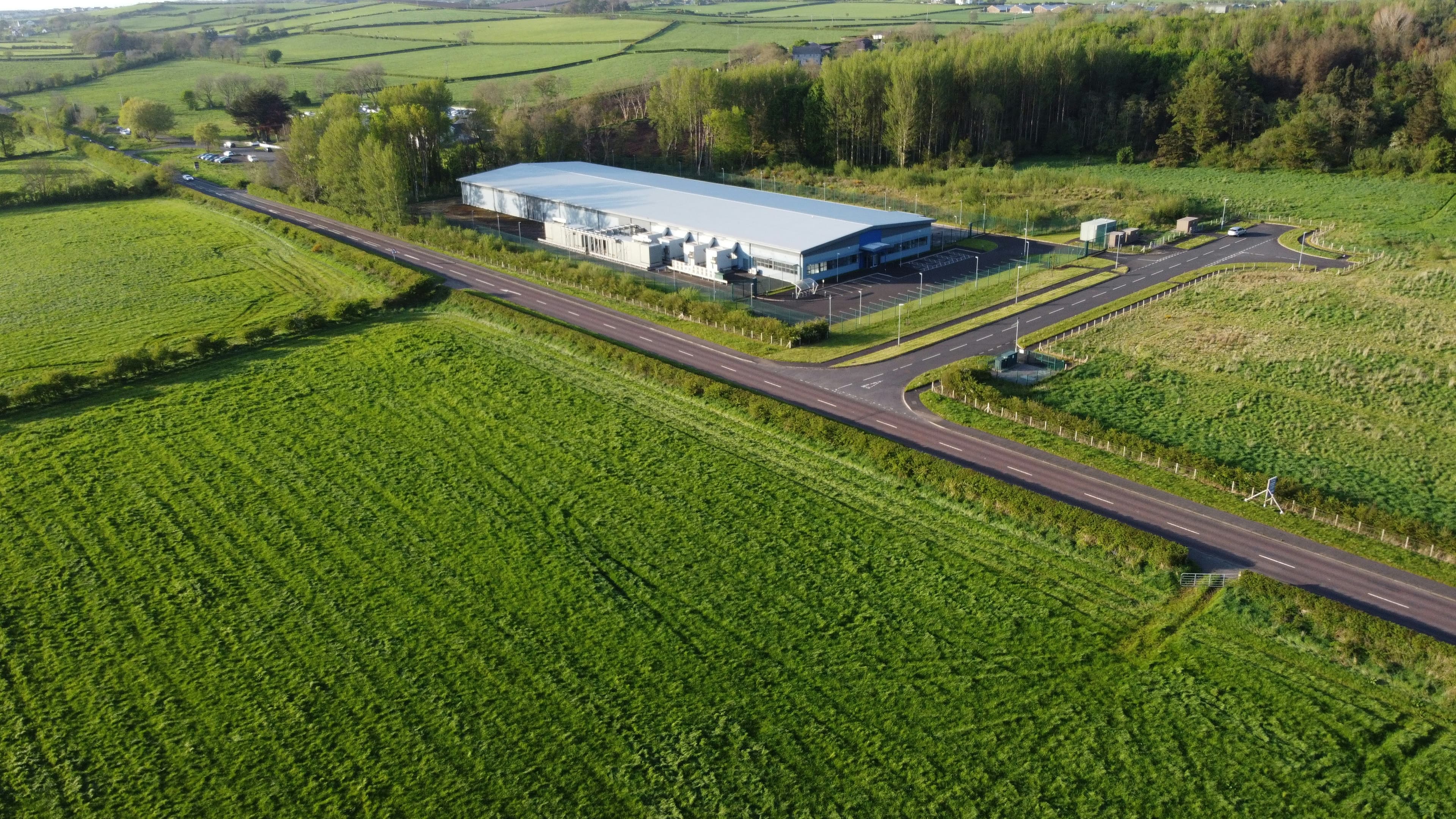
The most concrete proof point arrives later this year in Virginia, where Nvidia, Digital Realty and Emerald AI will switch on what they describe as the world's first power-flexible AI factory at nearly 100 megawatts. The site is designed to demonstrate that an AI training and inference facility can act as a controllable load rather than drawing constant 24/7 power. If it works at that scale, the interconnection argument gets much easier to make to utilities and state commissioners.
AEMA is deliberately technology-neutral. Its framework focuses on measurable service — response speed, duration, predictability, behavior during a grid emergency — rather than mandating specific batteries, generators or workload-shifting software. The alliance's stated principles include defining ride-through and curtailment obligations before interconnection, standardizing performance metrics and operational data sharing, and creating faster risk-adjusted pathways for customers making verifiable flexibility commitments.
“if data centers change how they operate to support the communities that host them, they should be rewarded with faster access to power”— Varun Sivaram, Founder of Emerald AI
The regulatory backdrop is already shifting in this direction. In June, the Federal Energy Regulatory Commission directed the six regional grid operators it oversees to accommodate large customers willing to limit their draw in return for faster connections. The Texas grid operator is finalizing rules to let controllable data centers connect sooner, and Silicon Valley Power, a California municipal utility, has launched the nation's first flexible-load interconnection program.
The alternative is already visible. Data center developers unable to get grid power are building off-grid campuses with their own generation — a path that raises AI compute costs and pulls turbines and transformers away from the public grid, ultimately pushing rates higher for everyone else. Emerald AI founder Varun Sivaram argues that behind-the-meter builds also strip utilities of the anchor customers whose revenue could fund system upgrades.
The counterweight is execution. Standardizing flexibility commitments across regional grid operators, utility tariff structures, and hyperscaler workload schedulers is a coordination problem the US power sector has struggled with for decades. And curtailing AI training runs at peak grid hours has a real opportunity cost — a paused training job is a delayed model release. The alliance has not published numbers on how often flexible sites would be asked to curtail or by how much.
For the AI industry, this is a bet that the power constraint on scaling — now widely acknowledged as the binding one — gets solved partly through smarter operations rather than only through new generation. If AEMA persuades FERC and state regulators to institutionalize faster interconnection for flexible loads, the companies that already have demand-response tooling and geographically distributed fleets — Google and Nvidia's hyperscaler customers among them — gain a structural advantage over new entrants trying to secure firm power the traditional way. The alliance is also positioning its members as the reasonable counterparty in a fight over data-center siting that has grown politically ugly in Virginia, Ohio and beyond, and that framing may matter as much as the technical standards it eventually publishes.

Working on something we should cover, or seeing a story we missed? Send leads, documents, or feedback to hello@aichatdaily.com. For sensitive tips, see our secure tips page for Signal and PGP options.
Spotted an error? Email hello@aichatdaily.com with the URL and the issue, or read our full corrections policy.