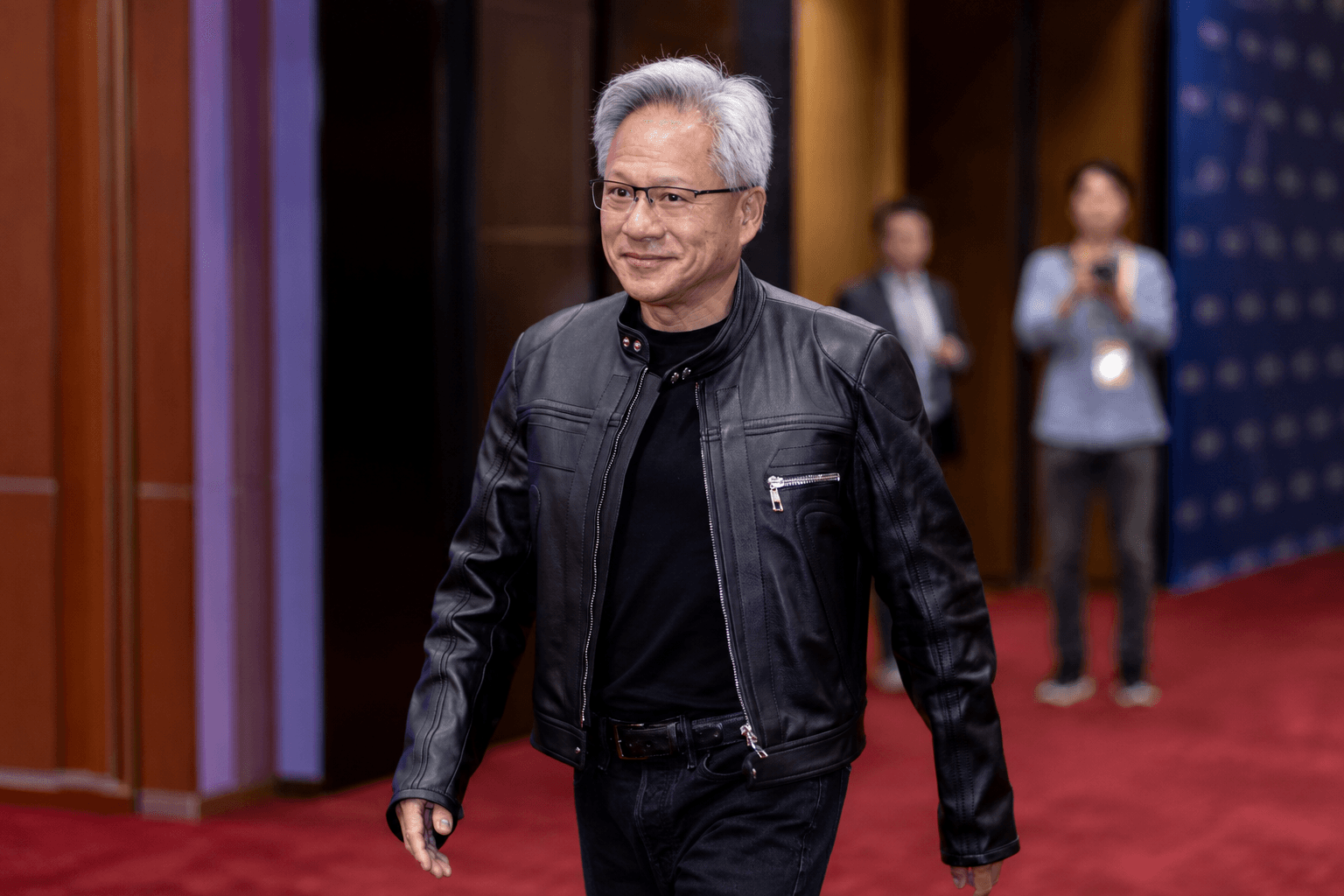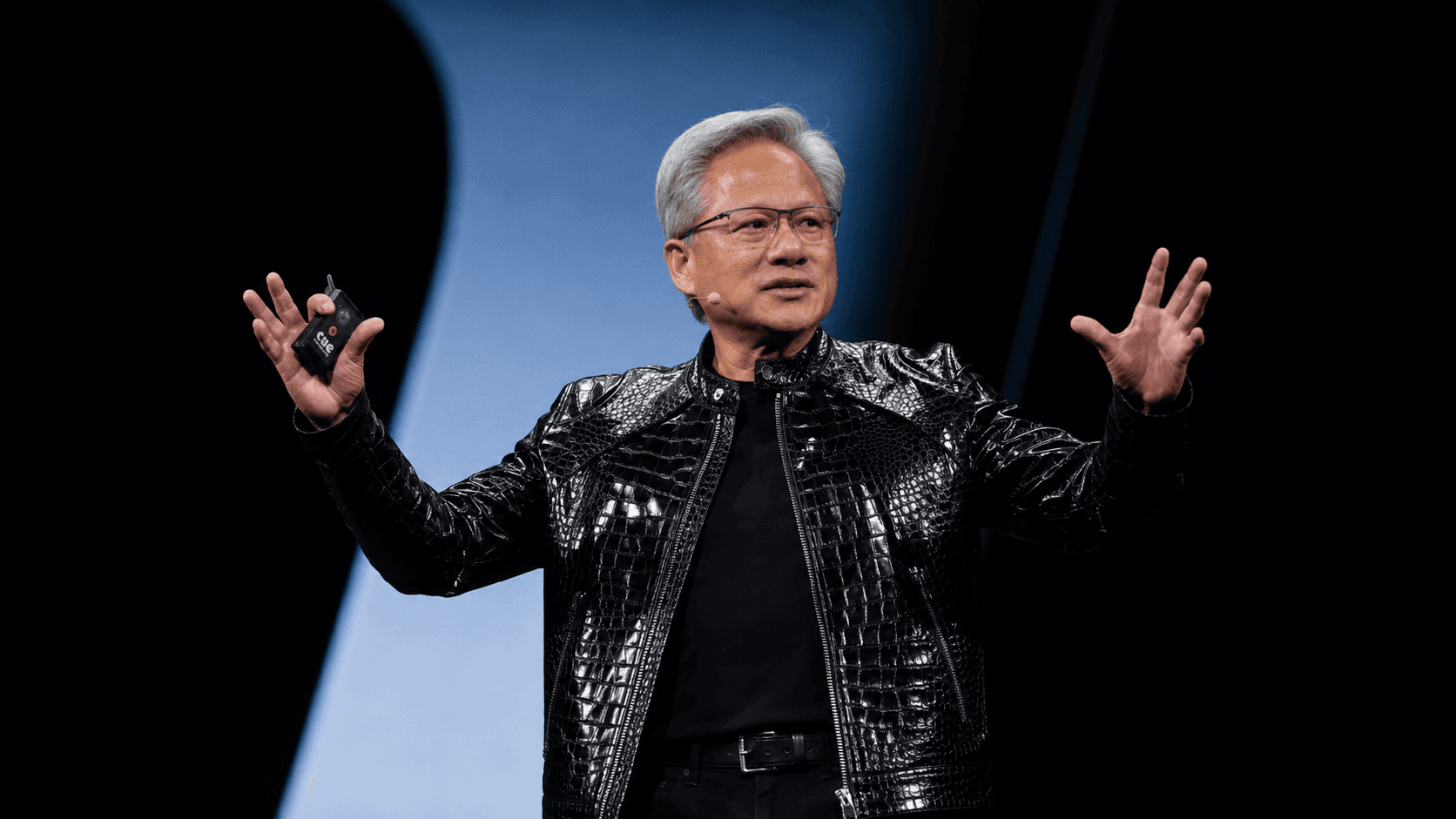
Marvell Technology shares jumped 22% in premarket trading Tuesday after Nvidia CEO Jensen Huang called the chip designer the 'next trillion-dollar company' at Computex 2026 in Taipei. The endorsement, delivered onstage alongside Marvell CEO Matthew Murphy on June 1, extends a year-to-date run that now tops 158% — making Marvell one of the best-performing AI-infrastructure names of the cycle. Nvidia recently committed $2 billion to Marvell and other firms building photonics technology, tying the two companies more tightly together as AI data centers scale.
Marvell designs the networking and connectivity silicon that moves data between the thousands of accelerators stitched together inside modern AI clusters. As training and inference workloads sprawl across more chips, the bottleneck shifts from raw compute to the interconnect — exactly the slice of the stack Marvell occupies. Huang's pitch leaned on that thesis: Nvidia sells the GPUs, but the GPUs only matter if they can talk to each other fast enough.
The company's most recent quarter underscored the demand picture. Marvell posted $2.4 billion in revenue in its fiscal 2027 first quarter, beating analyst estimates in May, and guided to continued growth on the back of its data-center business. That segment has rapidly overtaken Marvell's legacy carrier and enterprise networking lines as the company's primary growth engine.
Key facts
- 01Marvell Technology stock jumped 22% in premarket trading Tuesday after Jensen Huang called it the 'next trillion-dollar company' at Computex 2026.
- 02Marvell is up more than 158% year-to-date, outpacing every other major AI-infrastructure name.
- 03Nvidia recently committed a $2 billion investment in Marvell and other photonics-focused chip designers.
- 04Marvell posted $2.4 billion in revenue in its fiscal 2027 first quarter, beating analyst estimates in May.
- 05Huang made the call onstage alongside Marvell CEO Matthew Murphy during Computex Week in Taipei on June 1, 2026.
Huang framed the relationship as structural rather than promotional, arguing that the disaggregation of computing across vast clusters is what makes connectivity vendors essential.
The $2 billion Nvidia commitment is part of a broader bet on photonics — moving data with light rather than electricity, which is more energy-efficient over the distances involved in hyperscale data centers. Power and thermal constraints have become the binding limit on AI buildouts, and optical interconnect is one of the few near-term levers that materially changes the math. Nvidia has been spreading capital across the supply chain rather than trying to vertically integrate every piece itself.
For Marvell to reach a trillion-dollar valuation, the stock would need to roughly quintuple from current levels — a high bar even given the year-to-date gains. The company sits well behind Nvidia and Broadcom in market capitalization among AI-infrastructure pure plays. Huang's framing is aspirational, not a near-term price target.
The endorsement also lands at a moment when investors are scrutinizing which suppliers in Nvidia's orbit will sustain growth as hyperscaler capex cycles mature. Marvell's custom-silicon work for Amazon and other cloud providers, alongside its merchant networking chips, gives it exposure to both ASIC and GPU buildouts. That dual position is part of why Huang's comments moved the stock so sharply — they confirm Marvell is core to Nvidia's own roadmap, not just an adjacent beneficiary.
The risk for Marvell shareholders is the same risk facing every AI-infrastructure name riding the current capex wave: any deceleration in hyperscaler spending lands disproportionately on suppliers. Marvell's stock has run hard, and a 158% year-to-date gain leaves little margin for a soft quarter. Custom-silicon competition from Broadcom and the in-house design teams at Amazon, Google, and Microsoft also continues to intensify.
The Huang endorsement matters less for what it predicts about Marvell's market cap and more for what it signals about how Nvidia views the rest of the AI stack. Nvidia is no longer just selling GPUs — it is actively underwriting the connectivity, optical, and packaging layers required to make those GPUs useful at scale, and rewarding the suppliers that execute. For AI builders, that means the networking layer is about to get the same kind of capital and competitive attention the accelerator layer has had for the past three years.

Working on something we should cover, or seeing a story we missed? Send leads, documents, or feedback to hello@aichatdaily.com. For sensitive tips, see our secure tips page for Signal and PGP options.
Spotted an error? Email hello@aichatdaily.com with the URL and the issue, or read our full corrections policy.