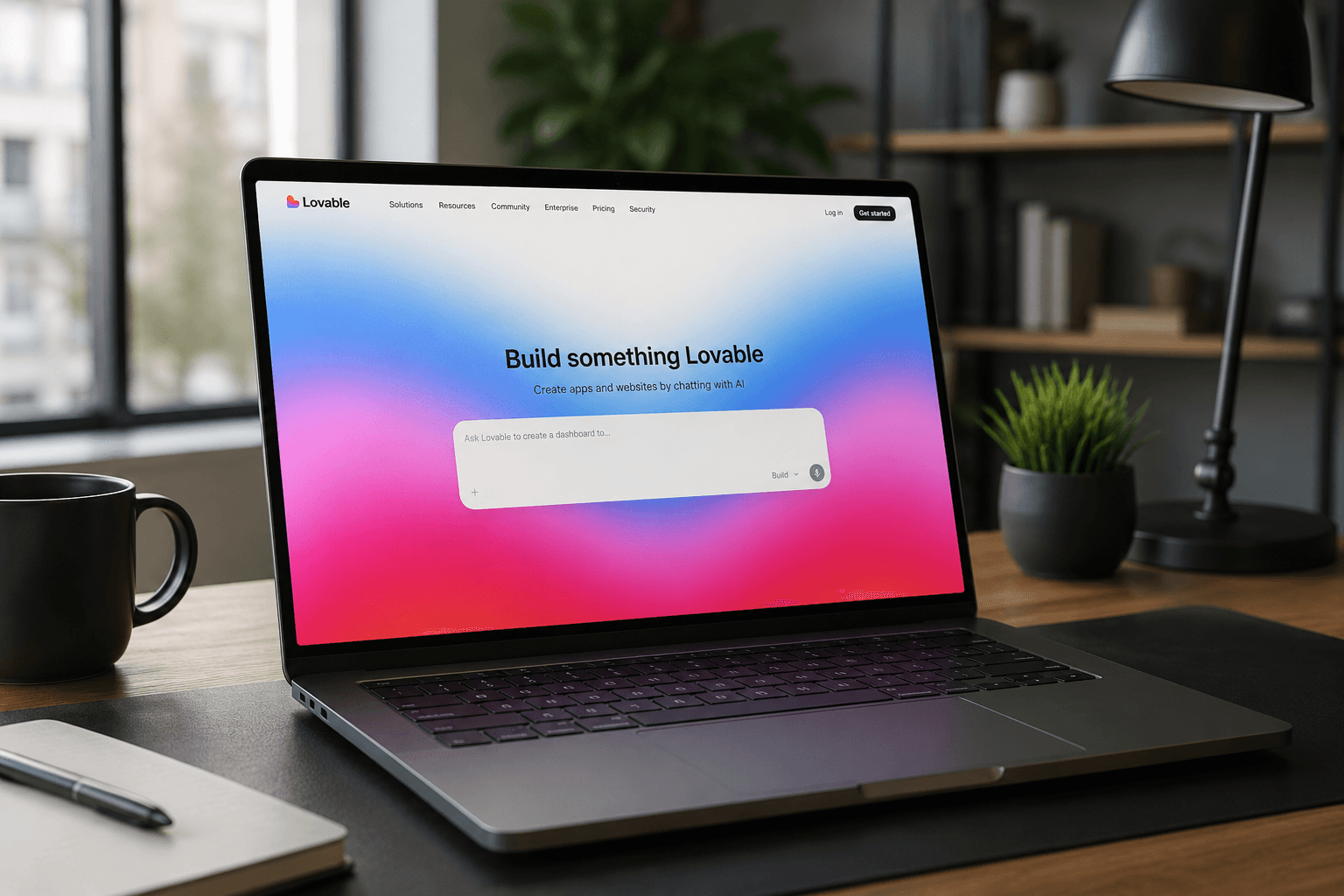
Lovable, the Swedish vibe-coding startup, is in talks to raise $300 million at a $13.2 billion valuation — exactly double the $6.6 billion mark it hit last December. Menlo Ventures, which closed its latest $3 billion fund last month, is expected to lead the round. The company is less than three years old.
The valuation jump tracks a revenue curve that has moved even faster than the funding cadence. Lovable crossed $500 million in annualized revenue run rate in June, a milestone most enterprise software companies take a decade to reach. The doubling of the valuation in roughly seven months is a direct read on how investors are pricing that growth.
Vibe coding — building software by describing it in natural language — is the most lucrative consumer and prosumer use case AI has produced so far. Lovable's user base spans solo founders, designers, and salespeople building websites and e-commerce storefronts, but the company has also signed enterprise contracts with Workday, Asana, and Nvidia. That mix of self-serve volume and enterprise seat expansion is what's underwriting the price.
Key facts
- 01Lovable is in talks to raise $300M at a $13.2B valuation, exactly double the $6.6B mark it hit in December.
- 02Menlo Ventures, which closed a $3B fund last month, is expected to lead the round.
- 03The less-than-three-year-old startup crossed $500M in annualized revenue run rate in June.
- 04Enterprise customers include Workday, Asana, and Nvidia, alongside its base of founders and designers.
- 05Rival Cursor was acquired by SpaceX for $60B last month; Replit hit $9B in March.
The competitive set is expanding at similar speed. Replit was valued at $9 billion in March. Factory, which helps enterprises build AI agents, raised $150 million at a $1.5 billion valuation in April. And Cursor, the developer-focused vibe-coding tool, was acquired by SpaceX for $60 billion last month — a datapoint that reframes what the top of this market can support.
Against that backdrop, $13.2 billion for Lovable starts to look like a middle-of-the-pack mark rather than an outlier. The Cursor exit in particular has reset the ceiling: if a developer-first vibe-coding tool clears $60 billion, a category-adjacent tool with $500 million in ARR and a broader user base than Cursor's has room to run. Menlo's willingness to lead at this price reflects that reset.
Lovable's product bet is that most software will eventually be built by people who don't code. The Workday and Asana logos matter less as revenue than as proof that large enterprises are letting non-engineers ship internal tools built on a vibe-coding stack. If that pattern holds, the addressable market is closer to Microsoft Office than to GitHub.
The obvious counterweight is that valuations in this segment are moving faster than durability has been proven. A less-than-three-year-old company at $13.2 billion is priced against a growth curve that has to keep bending upward through several more funding rounds. Any deceleration — an enterprise churn signal, a pricing war triggered by Cursor-inside-SpaceX or Replit — puts a mark like this under pressure quickly. Sifted reported the talks; terms could still shift before close.
The read for the AI market is that vibe coding is now the clearest revenue-per-user story in generative AI outside of the frontier labs themselves. Lovable's $500 million ARR at three years old, Replit's $9 billion mark, and the $60 billion Cursor exit all point at the same conclusion: the money in applied AI right now is in tools that collapse the distance between wanting software and having it. The frontier-model bet still dominates headlines, but the application layer is where the compounding revenue is showing up first.

Working on something we should cover, or seeing a story we missed? Send leads, documents, or feedback to hello@aichatdaily.com. For sensitive tips, see our secure tips page for Signal and PGP options.
Spotted an error? Email hello@aichatdaily.com with the URL and the issue, or read our full corrections policy.