Micron has overtaken Meta and Tesla in market value, a reordering driven entirely by the memory bottleneck inside every AI training cluster. Reuters reported the milestone as part of a broader repricing of semiconductor suppliers tied to AI infrastructure spend. The headline isn't that Micron is suddenly bigger than two of the most-watched consumer technology companies on the planet — it's why.
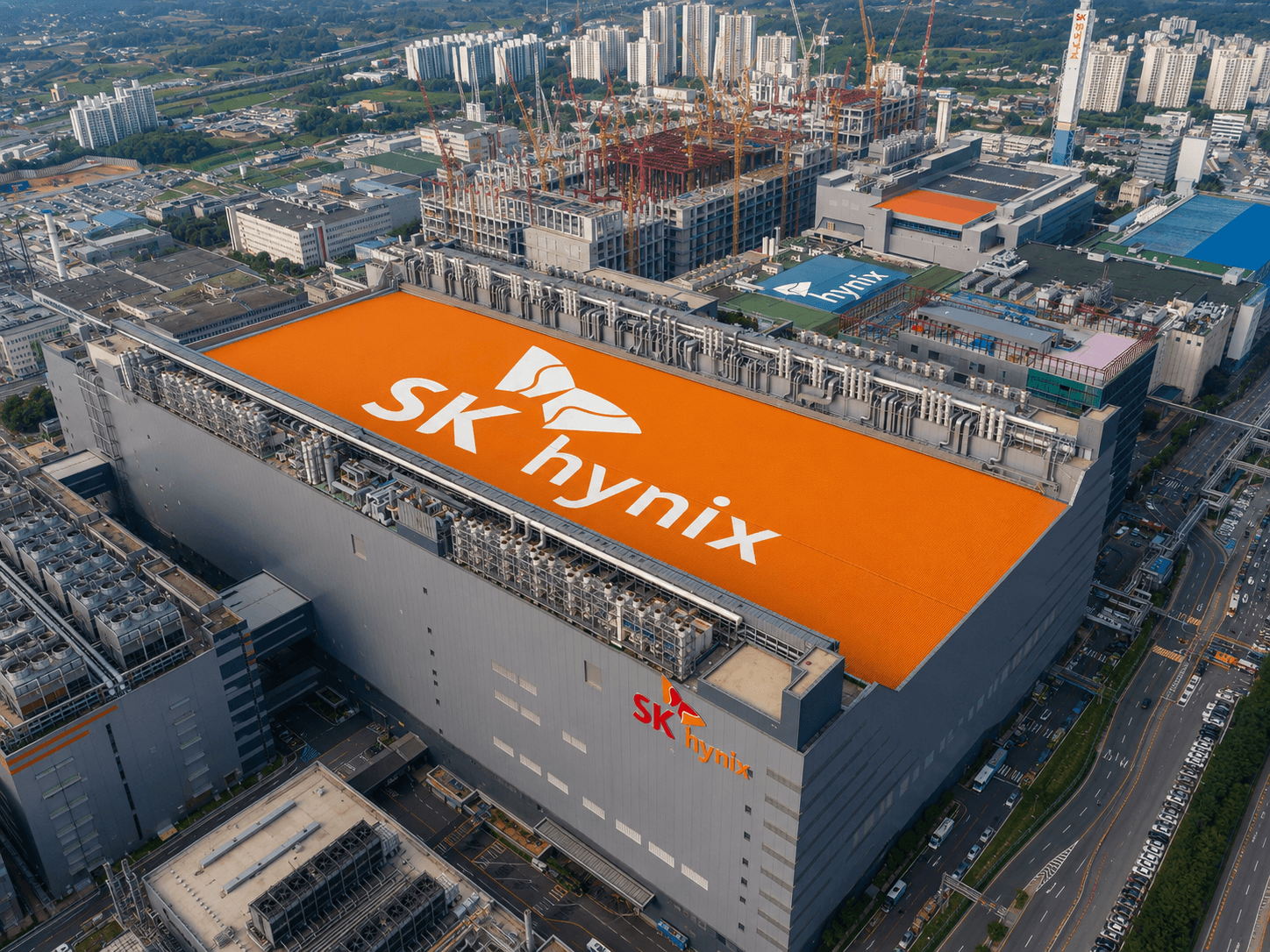
High-bandwidth memory, or HBM, has become the most contested component in the AI stack. Every Nvidia H100, H200, B100, and B200 ships with stacks of HBM bolted to the GPU die, and supply has trailed demand for the better part of two years. Micron is one of three companies in the world that can make it at scale, alongside SK Hynix and Samsung. When hyperscalers double their training-cluster orders, Micron's order book moves before anyone else's.
Meta and Tesla, by contrast, are downstream consumers of that same infrastructure. Meta is building out enormous training clusters for its Llama family and for the recommendation systems that underpin Instagram and Facebook ads. Tesla runs its Dojo training compute for autonomy and humanoid robotics. Both are spending heavily on the very memory Micron sells. The market is now valuing the supplier above the buyers.
Key facts
- 01Micron's market capitalization has surpassed both Meta and Tesla, according to Reuters.
- 02The rise is driven by relentless demand for high-bandwidth memory used in AI training and inference clusters.
- 03Memory, not just GPUs, has become a gating constraint for hyperscaler AI buildouts.
- 04Meta and Tesla, both consumer-AI heavyweights, now trail a component supplier in equity value.
This is the second-order consequence of the AI capex cycle that few investors priced in two years ago. Nvidia capturing the GPU layer was the obvious trade. Memory was treated as a commodity input — cyclical, low-margin, prone to glut. HBM has broken that pattern. It is custom-engineered for accelerator dies, sold under multi-year supply agreements, and priced at a premium that traditional DRAM never commanded.
Micron's ascent above Meta's market cap is the more striking of the two comparisons. Meta is a profitable advertising giant with a multi-trillion-user network and an internal AI roadmap that consumes its own silicon. The fact that a memory supplier now outweighs it in equity value tells you how much of Meta's projected growth is already tied to infrastructure it has to buy from someone else.
Tesla's slip below Micron is a different story. Tesla's valuation has rested on a narrative that blends autos, energy, autonomy, and robotics, with AI compute as the connective tissue. That narrative has cooled in recent quarters as delivery growth slowed and the autonomy timeline stretched. Micron's rise past it reflects both Tesla's softening and the sheer pull of memory demand on the AI supply chain.
The risk inside this trade is the one memory investors know best: cyclicality. HBM is engineered, but it is still memory. If hyperscaler capex pulls back, if a more efficient training paradigm reduces memory pressure per token, or if Samsung and SK Hynix flood the market with qualified HBM3E and HBM4 capacity, Micron's pricing power compresses fast. The company has lived through multiple boom-bust cycles in standard DRAM and NAND. Nothing about HBM exempts it from that history.
There is also a concentration question. A handful of customers — Nvidia, AMD, and the hyperscalers building custom accelerators — drive the bulk of HBM demand. That is great for visibility when the orders are flowing and dangerous when one of them blinks. Micron's quarter-to-quarter earnings will track AI capex more tightly than its historical DRAM cycles ever did.
Micron passing Meta and Tesla is a market signal about where the value in AI is accruing right now: not at the model layer, not at the application layer, but at the components no one can substitute. For the next several quarters, the companies selling the parts inside the parts will keep capturing an outsized share of the AI trade — and the leaderboard will keep reshuffling around whichever supplier sits closest to the bottleneck.

Working on something we should cover, or seeing a story we missed? Send leads, documents, or feedback to hello@aichatdaily.com. For sensitive tips, see our secure tips page for Signal and PGP options.
Spotted an error? Email hello@aichatdaily.com with the URL and the issue, or read our full corrections policy.