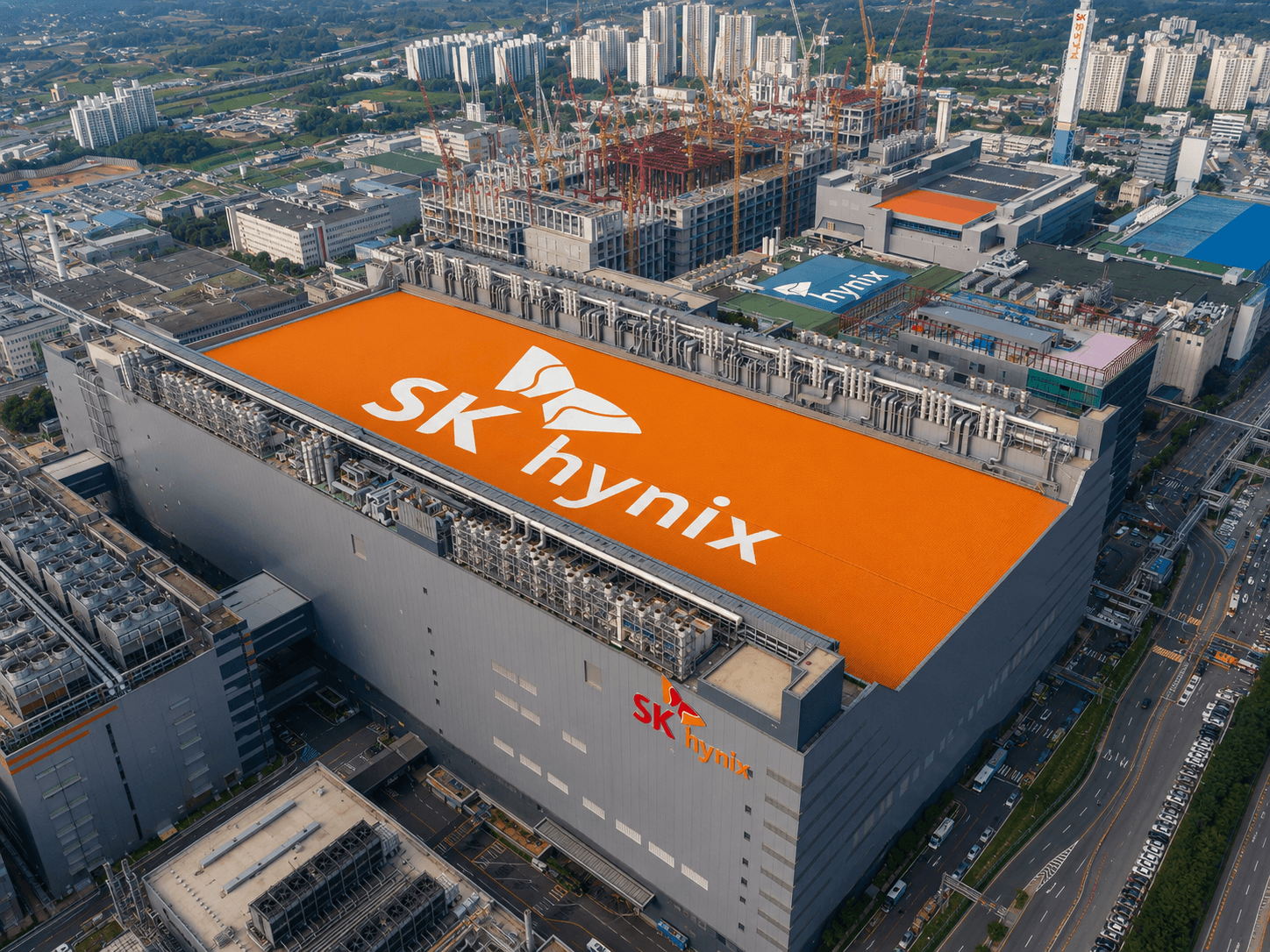
SK Hynix's chief executive expects 2027 to bring the worst memory shortage the industry has seen, with demand for DRAM and high-bandwidth memory continuing to outstrip supply beyond 2030. The forecast, delivered by the world's dominant supplier of HBM to Nvidia's AI accelerators, points to a multi-year structural gap between what AI systems need and what the memory industry can physically produce.
The comments are unusually direct for a chip executive. Memory has historically been the most cyclical corner of semiconductors, with gluts and shortages rotating on roughly two-year cycles. SK Hynix is now telling investors and customers to plan for a four-year-plus stretch in which the cycle does not reset.
HBM sits at the center of the story. Every top-tier AI training and inference chip — Nvidia's Blackwell, AMD's MI350 series, custom silicon from hyperscalers — pairs its logic die with stacks of HBM, and each new generation demands more of it per accelerator. SK Hynix supplies the majority of that market, with Samsung and Micron competing for the remainder.
Key facts
- 01SK Hynix's CEO says 2027 will be the worst year on record for memory supply, driven by AI demand.
- 02The company expects memory demand to outstrip supply beyond 2030, a multi-year structural gap.
- 03SK Hynix is the dominant supplier of HBM, the memory stack used in Nvidia's AI accelerators.
- 04The warning follows SK Hynix's $26.5B foreign IPO on US markets, the largest ever of its kind.
The capacity math is unforgiving. HBM fabs take years to build and qualify, the packaging step relies on advanced through-silicon-via processes with limited throughput, and the same wafer starts have to be split between HBM and conventional DRAM for phones, PCs, and servers. Reallocating capacity to HBM tightens the standard DRAM market, which is why the CEO's warning covers memory broadly rather than HBM alone.
The timing lines up with the wave of AI data-center construction now under contract. Hyperscalers have signed multi-year compute commitments running into the hundreds of billions of dollars, and each of those buildouts assumes memory availability the industry has not yet promised. If SK Hynix's forecast is right, allocation — not price — becomes the binding constraint on how many AI accelerators actually ship in 2027 and 2028.
SK Hynix has been positioning for exactly this scenario. The company raised $26.5B in the largest-ever foreign IPO on US markets, which AI Chat Daily covered earlier this month, and has been steering the proceeds toward HBM capacity expansion and next-generation packaging lines. Even so, the CEO's remarks suggest management does not believe its own buildout, or the industry's collective buildout, will close the gap this decade.
Customers are already responding by locking in supply years in advance. Nvidia, AMD, and the major cloud providers have shifted from spot purchasing to long-term take-or-pay agreements, a structural change that concentrates SK Hynix's revenue but also removes the flexibility memory buyers historically enjoyed during down cycles. Smaller AI hardware startups will feel this first — allocation tends to flow to the largest customers.
The forecast is not without caveats. Memory demand assumptions depend on continued AI capex growth at current pace, and the industry has been wrong about cycle turns before — the 2023 memory bust caught the same executives who had projected shortages the year prior. A slowdown in AI training runs, a shift toward smaller models, or breakthroughs in on-chip memory architectures could soften the trajectory. SK Hynix itself has an incentive to talk shortage into existence: tight markets are good for pricing.
For the AI market, the read-through is that the compute bottleneck is migrating. Through 2024 and 2025 the constraint was GPU supply; through 2026 it has increasingly been power and data-center construction; by 2027, on SK Hynix's forecast, it will be the memory that sits alongside the GPU. That reshuffles the balance of power in the AI supply chain toward the three memory makers, and it puts a hard ceiling on how quickly capacity can scale even for companies willing to pay any price.

Working on something we should cover, or seeing a story we missed? Send leads, documents, or feedback to hello@aichatdaily.com. For sensitive tips, see our secure tips page for Signal and PGP options.
Spotted an error? Email hello@aichatdaily.com with the URL and the issue, or read our full corrections policy.