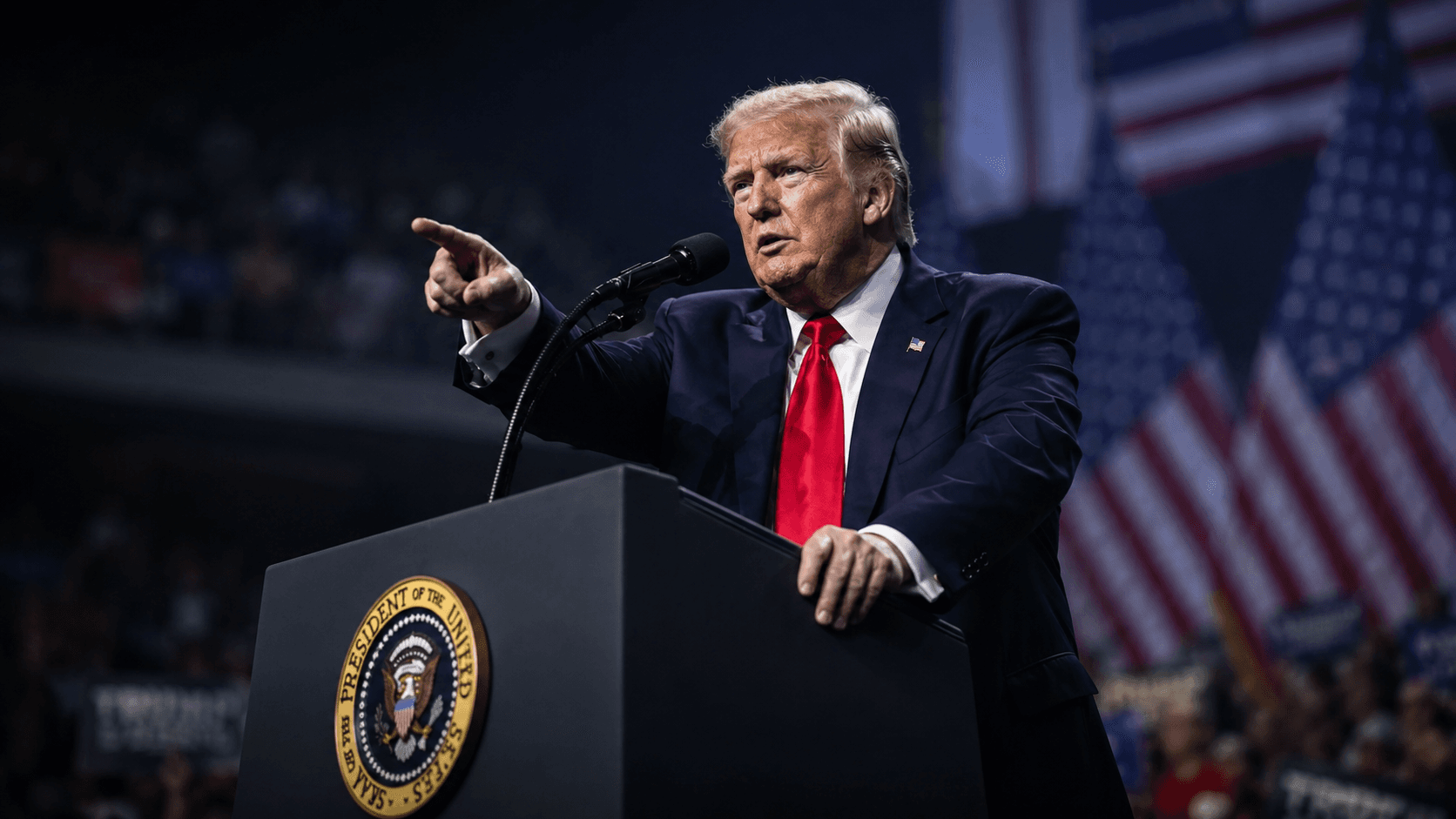
Nearly 200 utility companies and data center developers have signed President Donald Trump's rate payer protection pledge, a voluntary commitment meant to shield US households from bearing the electricity costs of the AI buildout. New signatories include NextEra Energy, Duke Energy, Equinix, and Digital Realty, with Trump expected to announce the expanded roster on Thursday, July 22, 2026. A White House official said the combined signatories now deliver roughly 80% of all power reaching US homes and businesses.
The pledge was introduced in March 2026 and originally signed by Google, Meta, Microsoft, Oracle, OpenAI, Amazon, and xAI. Its central commitment is that AI providers, not ratepayers, will front the cost of new generation and grid infrastructure needed to train and run generative models. The document is short on enforcement specifics and long on general assurances.
The context is a widening bill. PJM, the largest US electrical grid operator, is expected to pass $6.3 billion in additional costs to consumers across 13 states, driven largely by data center demand. Some proposed data center projects have been downsized or blocked outright as local officials push back on siting and grid impact.
Key facts
- 01Nearly 200 utility and data center organizations have signed Trump's rate payer protection pledge, up from an initial group of tech signatories in March 2026.
- 02New signatories include NextEra Energy, Duke Energy, Equinix, and Digital Realty; original signers included Google, Meta, Microsoft, Oracle, OpenAI, Amazon, and xAI.
- 03Committed companies now account for roughly 80% of all power delivered to US homes and businesses, per a White House official.
- 04PJM, the largest US grid operator, is expected to add $6.3 billion in additional consumer costs across 13 states due to data center demand.
- 05The pledge is voluntary, carries no penalty for non-compliance, and cannot override state regulators who actually set electricity rates.
The political read is straightforward. At the March signing, Trump said tech companies "need some PR help" to counter backlash over data center projects and rising electricity rates. Bringing the utilities themselves under the same pledge broadens the message from "tech will pay" to "the entire power sector is aligned on protecting ratepayers."
The mechanics are less straightforward. US electricity rates are set by state public utility commissions and, in wholesale markets, by traders and grid operators like PJM. The federal government does not set retail power prices. A White House pledge, however broadly signed, has no direct authority over the rate cases that actually determine what a household pays each month.
The pledge is also entirely voluntary. There is no penalty for non-compliance, no audit mechanism, no defined threshold for what counts as an AI provider covering its share of infrastructure costs. Signatories can point to the pledge while their state filings tell a different story, and nothing in the document prevents that.
For the hyperscalers, signing costs nothing and buys political goodwill at a moment when data center approvals are getting harder in several states. For the utilities, the calculus is similar: aligning publicly with a White House initiative is cheaper than fighting individual siting battles town by town. The pledge does not change how any specific power purchase agreement is structured.
The $6.3 billion PJM figure is the harder number to explain away. That cost is already baked into capacity auction results and will flow through to bills across the 13-state footprint regardless of what any pledge says. If AI-linked demand keeps growing at the pace utilities are forecasting, similar increases are likely in other regional grids over the next several rate cycles.
Skeptics will note that the same tech companies signing the pledge are also the ones pushing utilities to accelerate new gas and nuclear buildouts on timelines that require ratepayer-backed financing to pencil out. Whether the pledge holds up depends on how those individual deals are structured — who signs the long-term power purchase agreement, who guarantees the loan, and who is on the hook if demand forecasts prove wrong. None of that is settled by a White House ceremony.
The pledge is a signaling exercise, and signaling has value when public opposition is stalling projects. What it is not is a rate-setting mechanism, and that gap is where the political risk sits for the AI industry over the next 18 months. If PJM-style pass-through costs keep landing on bills while signatories tout their commitment, the pledge becomes the thing critics point to rather than the thing that quiets them. The real test is in the next round of state rate cases, not in Thursday's announcement.

Working on something we should cover, or seeing a story we missed? Send leads, documents, or feedback to hello@aichatdaily.com. For sensitive tips, see our secure tips page for Signal and PGP options.
Spotted an error? Email hello@aichatdaily.com with the URL and the issue, or read our full corrections policy.