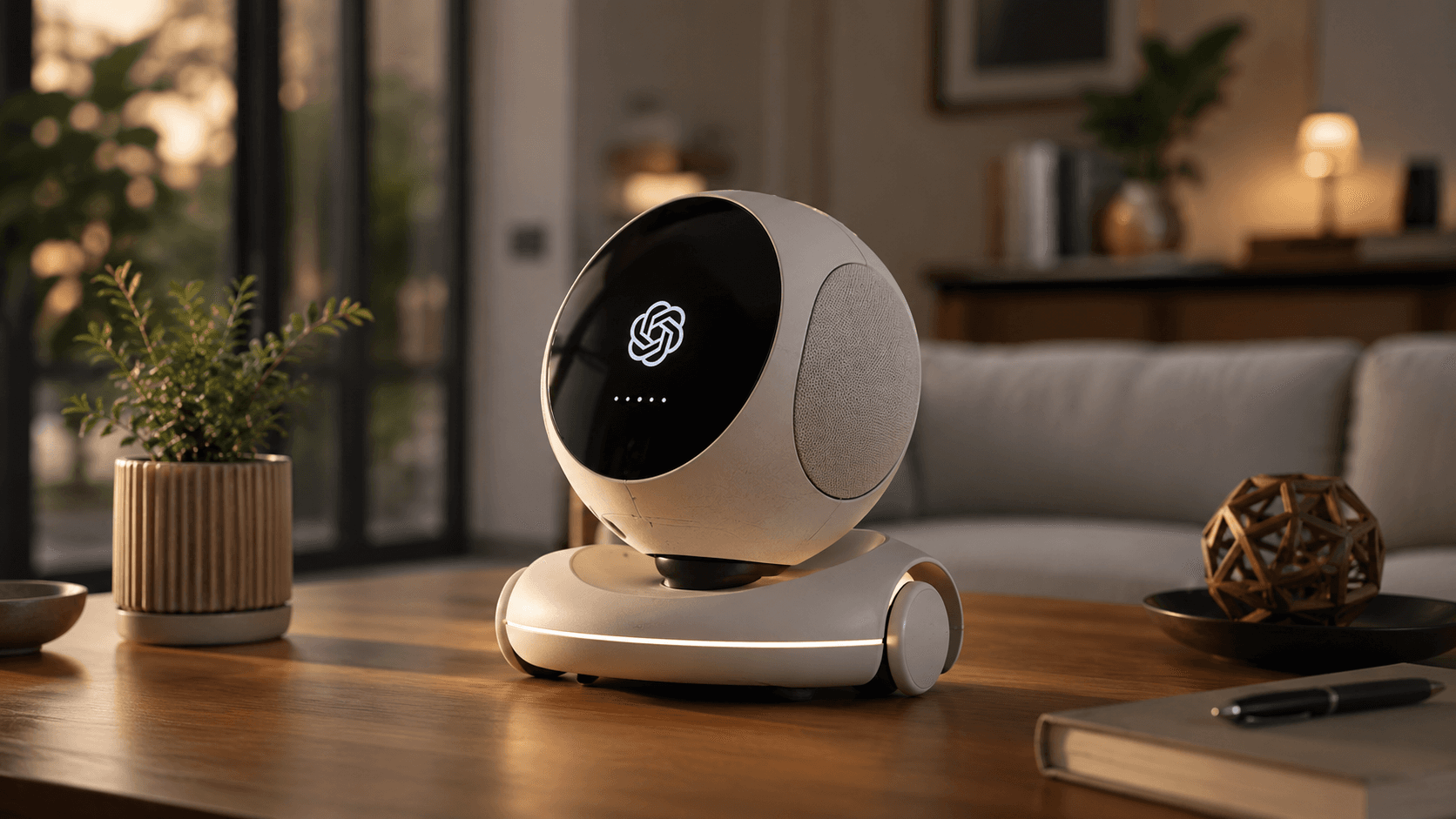
OpenAI is trying to sell agents to the 99% of workers who don't write code. ChatGPT Work, released last month on the company's $20-a-month subscription tier, is a retooled version of Codex aimed at accountants, investors, doctors and anyone whose day runs through Slack, Notion, Figma, Salesforce and email. The pitch is simple: an AI that doesn't just answer questions but completes multistep projects on its own. The adoption gap OpenAI needs to close is anything but simple.
An OpenAI-backed study found that in June, 98% of OpenAI employees were using Codex, but just 17% of organizational subscribers and less than 1% of individual subscribers had picked it up. The joint ChatGPT Work and Codex app counts 20 million users, against more than a billion people prompting ChatGPT on the web. That is the chasm ChatGPT Work is built to cross.
Thibault Sottiaux, who leads OpenAI's core product work including Work, frames the shift as an expansion of what a chatbot can be. The commercial logic tracks the product logic: agents that run for longer stretches burn through more tokens, which makes each active user materially more valuable to OpenAI than a casual ChatGPT prompter. If coding has been the lucrative early beachhead for AI labs, it is still a narrow slice of the professional work these companies need to touch to justify the compute they are buying.
Key facts
- 01ChatGPT Work launched last month on OpenAI's $20/month subscription tier, targeting non-engineer white-collar workflows.
- 0298% of OpenAI employees used Codex in June, versus 17% of organizational subscribers and under 1% of individual subscribers.
- 03The joint ChatGPT Work and Codex app has 20 million users, against more than a billion people prompting ChatGPT online.
- 04ChatGPT Work is a modified Codex, retooled between February and now to handle general tasks beyond code.
- 05Vertical rivals Harvey in law and Clay in sales are chasing the same non-engineer customers with model-agnostic products.
The internal history of the product explains why the launch matters. Andrew Ambrosino, the lead engineer for OpenAI's desktop app, said the company's own communications and finance teams started using Codex "at a time that it was actively hostile to them" — the tool would ask them about code and show them empty diffs. The retrofit from developer tool to general-purpose agent ran from February to now.
Vertical competitors are not waiting. Harvey is pursuing law firms, Clay is pursuing sales teams, and both take a model-agnostic approach, plugging in whichever frontier model performs best on a given task. Anthropic's Claude Code and the emerging Claude Cowork are chasing similar territory, as is Perplexity AI with its browsing agent. If OpenAI cannot lock in the workflow layer, the value could route around it.
“If the labs cannot rapidly get ahold of the key complementary assets needed to scale AI in the market, value will accrue elsewhere.”— Christian Catalini, a16z contributor
Christian Catalini, writing on a16z's blog, laid out the strategic risk in plain terms. That framing is why OpenAI is investing in the harness — the software wrapped around the model that decides which tools it uses, what context it sees, and how it reports back. A command-line interface was enough to change how software gets built. It is not enough to reach a billion knowledge workers.
The design problem is real. As Ambrosino put it, an agent for non-engineers has to play with the messy world of a user's life, their tools, and websites that were built in 1995 and never updated. That means calendar quirks, permission dialogs stashed on the mobile app but not the web app, SaaS connectors that partially work, and inbox access that trades privacy for utility. Ambrosino himself has granted ChatGPT Work access to his inbox, Slack, phone, Notion and Figma, and accepts the risk that private DMs might leak into a generated document.
Inside OpenAI, there is a live debate about how much scaffolding the interface still needs. Some employees argue buttons are unnecessary — users can just ask the model. Ambrosino pushed back on that view, saying discoverability matters in this phase and the buttons will fade later. He compared the current UI to skeuomorphism, the design habit of making digital tools look like the physical objects they replaced. The training wheels, in his telling, are what get non-engineers over the hump.
Akshay Nathan, who leads the product engineering team at OpenAI, framed the payoff as a fix for information overload. That vision — ChatGPT as a personal assistant with real reach into your workspace — is what OpenAI is charging $20 a month for, and what it hopes will lift utility enough to lift willingness to pay.
The limitations are still visible. Setting up read-only permissions on cloud drives is confusing enough that users report circling through error messages before a mobile dialog explains that only full access will work. Some features exist on the web app but not mobile, or vice versa. ChatGPT Work can create Google Calendar events but not new calendars. These are shipping-software rough edges, not existential flaws, and they are exactly the kind of thing that gets patched release over release.
The bigger question for OpenAI's business is whether ChatGPT Work moves the 99% number. Sam Altman is reportedly using it to plan his vacations. VCs are using it to assemble investment memos. Ops teams are spinning up dashboards. Those are the exact use cases that would move a casual ChatGPT user onto a paid, agent-heavy tier — and each one is a token-hungry workload that pays back OpenAI's compute bill.
The strategic read is that OpenAI has correctly identified where the money is and where the risk is at the same time. Coding tools proved agents work; ChatGPT Work is the bet that the same pattern scales into finance, sales, law, healthcare and operations before Harvey, Clay and the model-agnostic vertical players lock in the customer relationship. The gap between 98% internal use and less than 1% among individual subscribers is not a footnote. It is the entire growth thesis for the next 12 months, and OpenAI's ability to close it will decide whether the company remains a model provider or becomes the default interface for professional work.

Working on something we should cover, or seeing a story we missed? Send leads, documents, or feedback to hello@aichatdaily.com. For sensitive tips, see our secure tips page for Signal and PGP options.
Spotted an error? Email hello@aichatdaily.com with the URL and the issue, or read our full corrections policy.