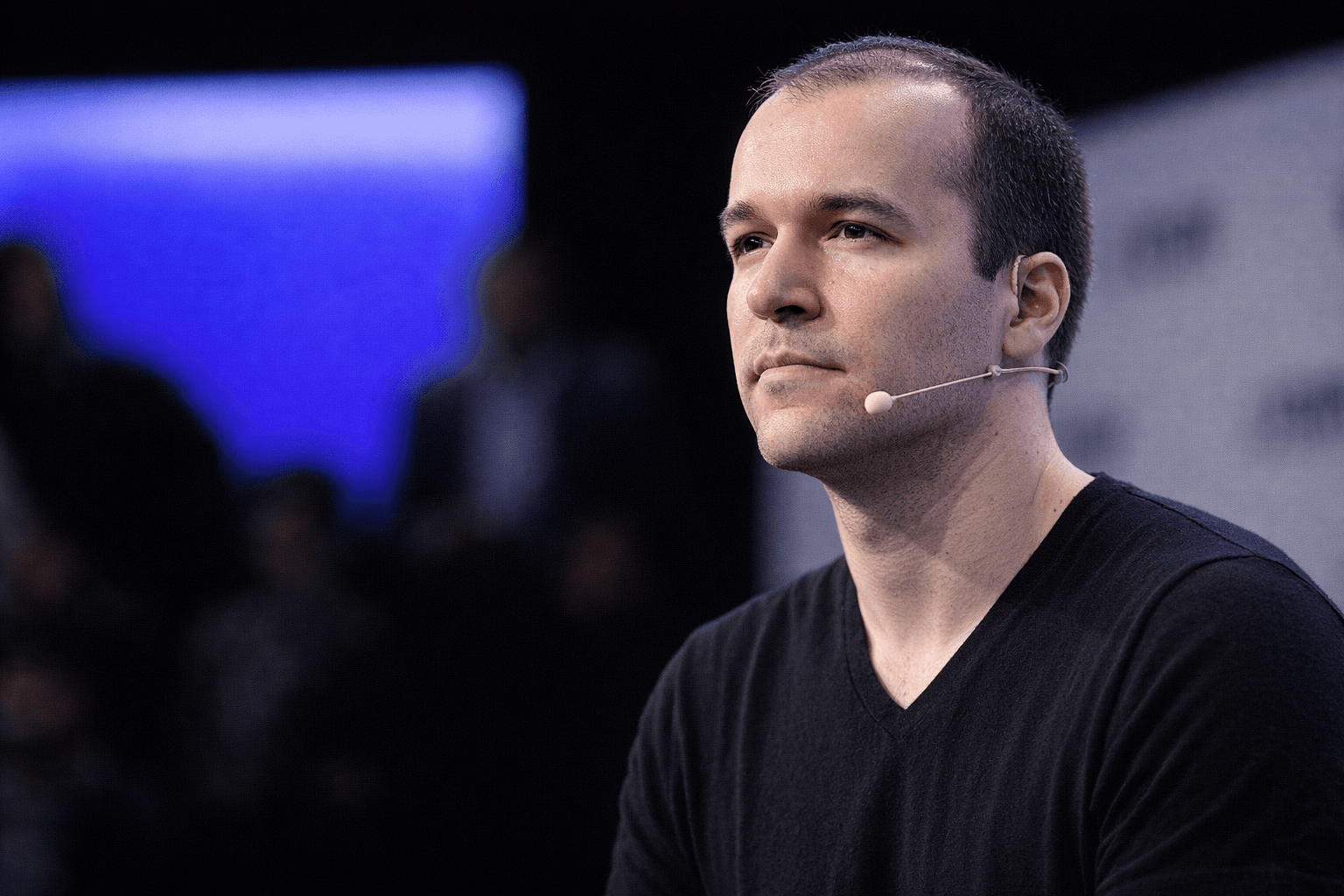
OpenAI has tasked Chris Lehane, a veteran political operative who dubbed himself the 'master of disaster' during his crisis communications work in Bill Clinton's White House, with fixing the company's mounting public relations problem. Lehane, who joined OpenAI in 2024 and now runs global affairs, policy, and communications, faces twin challenges: rebuilding public trust in AI and lobbying states to pass regulations that won't slow OpenAI's growth.
Public sentiment toward AI has soured despite ChatGPT's popularity. Three months ago, OpenAI cofounder Greg Brockman flagged the shift in an interview, and the backlash has since intensified. Last month, someone threw a Molotov cocktail at CEO Sam Altman's San Francisco home and wrote a manifesto advocating crimes against AI executives. College commencement speakers now get booed for optimistic AI talk.
Lehane argues public narratives about AI's societal impact are too polarized. One extreme predicts a 'Bob Ross view of the world' where nobody works and everyone lives in 'beachside homes painting in watercolors all day.' The other envisions a dystopian future where only a small elite controls superintelligent systems. He wants OpenAI to strike a more calibrated tone.
Key facts
- 01Chris Lehane, a Bill Clinton White House crisis communications veteran, now runs OpenAI's global affairs, policy, and communications teams.
- 02Lehane helped launch Leading the Future super PAC last summer with more than $100 million in funding commitments from tech figures including OpenAI cofounder Greg Brockman.
- 03OpenAI recently backed an Illinois bill giving AI labs liability shields if their models caused catastrophic harm, then distanced itself after criticism.
- 04The company is lobbying states to pass AI laws that mirror California and New York regulations in what Lehane calls 'reverse federalism.'
OpenAI has contributed to the polarization. Altman warned last year that 'whole classes of jobs' would vanish when artificial general intelligence arrives, then softened his stance recently by declaring that 'jobs doomerism is likely long-term wrong.' Lehane says the company needs to propose concrete solutions to the concerns it raises, pointing to OpenAI's recent policy proposals for a four-day work week, expanded health care access, and a tax on AI-powered labor.
Some former OpenAI employees dispute the company's commitment to balanced messaging. Members of OpenAI's economic research unit quit after alleging the team was morphing into an advocacy arm that downplayed AI's negative economic impacts when those findings became inconvenient for the company.
“If you're going to go out and say that there are challenges here, you also then have an obligation—particularly if you're building this stuff—to actually come up with the ideas to solve those things.”— Chris Lehane, OpenAI chief of global affairs
Lehane helped launch Leading the Future, a pro-AI super PAC that secured more than $100 million in funding commitments from tech figures including Brockman last summer. The group has opposed New York congressional candidate Alex Bores, who authored New York's strongest AI safety law. Lehane says he consulted Brockman on the donations in 'a very general way' but is not involved in the super PAC's day-to-day operations. Critics argue the super PAC strategy backfired, with some candidates now campaigning on the fact that AI money is opposing them.
OpenAI is pursuing what Lehane calls 'reverse federalism,' lobbying states to pass AI laws that mirror California and New York regulations rather than create a patchwork of different rules. The company recently supported an Illinois bill that would have let AI labs dodge liability if their models caused catastrophic harm, so long as they published safety frameworks publicly. After the bill's sponsor said it was 'an initiative of OpenAI' and Illinois's governor criticized it, OpenAI distanced itself from the liability safe harbor provision.
OpenAI has since backed a different Illinois bill requiring leading AI companies to have their safety practices audited by outside third parties. The legislation, also endorsed by Anthropic, passed the Illinois Senate on Thursday.
Lehane's background includes helping Airbnb navigate regulatory fights in cities that viewed short-term rentals as operating in a legal gray area, which he describes as being 'ahead of the law.' He also played a key role forming Fairshake, the crypto industry's super PAC that worked to legitimize digital currencies in Washington. Whether the same playbook works for OpenAI depends on whether the company can credibly claim it's building critical infrastructure rather than amplifying an existential risk. Lehane is betting that harmonized state regulations and a recalibrated public message will land OpenAI in the former category before the political window closes.

Working on something we should cover, or seeing a story we missed? Send leads, documents, or feedback to hello@aichatdaily.com. For sensitive tips, see our secure tips page for Signal and PGP options.
Spotted an error? Email hello@aichatdaily.com with the URL and the issue, or read our full corrections policy.