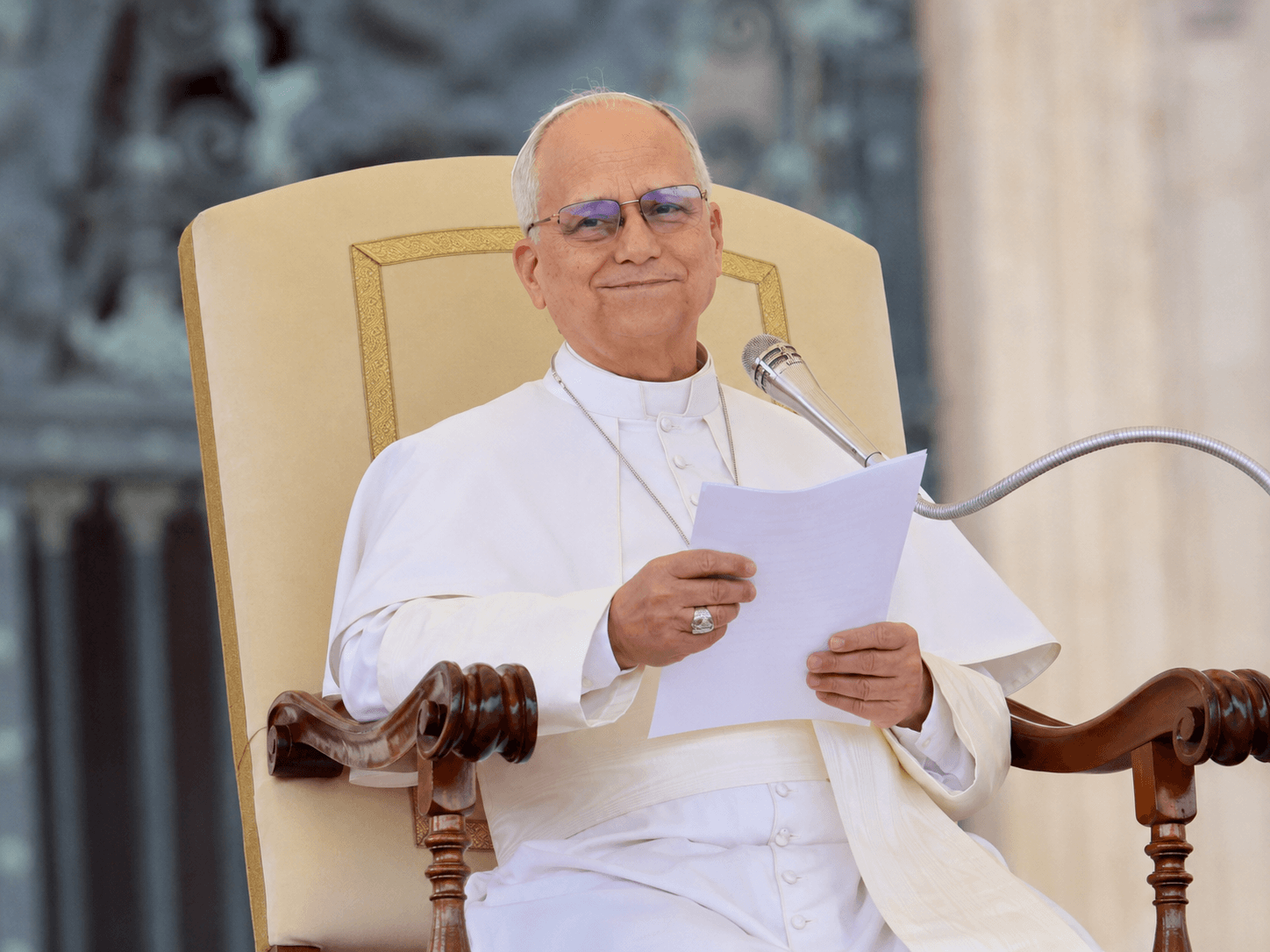
Pope Leo XIV invited Anthropic cofounder Christopher Olah to speak at the Vatican on May 25, 2026, when the Pope presented his first encyclical on artificial intelligence. The move formalized an alliance between the Catholic Church and Silicon Valley that has been building since the Vatican launched its Rome Call for AI Ethics initiative in 2020, when the Church partnered with Microsoft and IBM on shared principles for AI development.
Anthropic launched in 2021 after Dario and Daniela Amodei left OpenAI, convinced that AI models were becoming too powerful to be developed exclusively according to the logic of competition and speed. The company built its public image around AI safety and Constitutional AI, a framework that trains models using explicit ethical principles rather than just correcting risky outputs after the fact.
The encyclical, titled Magnifica Humanitas, warns that increasingly powerful AI systems risk being shaped solely by economic, geopolitical, and competitive incentives. Pope Leo XIV framed the core risk as a new digital Babylon, a society that reduces people, relationships, and truth itself to data, performance, and efficiency.
“technological power takes on a new face, one that is predominantly private.”— Pope Leo XIV, Pope
Key facts
- 01Pope Leo XIV invited Anthropic cofounder Christopher Olah to speak at the May 25, 2026 Vatican presentation of his first encyclical on AI, titled Magnifica Humanitas.
- 02Anthropic launched in 2021 after Dario and Daniela Amodei left OpenAI to build AI systems guided by Constitutional AI, a framework based on explicit ethical principles.
- 03The Vatican's 2020 Rome Call for AI Ethics partnered with Microsoft and IBM to establish shared principles on transparency, inclusion, and accountability.
- 04Olah leads Anthropic's interpretability research, aiming to transform neural networks into algorithms understandable to human beings.
Olah represents the theoretical side of Anthropic's work. He leads the company's interpretability research, which attempts to understand what happens inside increasingly complex neural networks. On his personal website, he describes himself as someone trying to transform neural networks into algorithms understandable to human beings.
The Vatican sees Anthropic as a rare industry actor willing to publicly acknowledge that the problem of AI cannot be solved by the technology industry alone. Olah's presence at the encyclical presentation carried symbolic weight because his research aligns with the Pope's central thesis: that the risk is building technologies too powerful to be understood, controlled, or governed.
The partnership carries industrial stakes beyond the spiritual dimension. For Anthropic, the relationship with the Vatican delivers reputational value at a moment when AI is central to debates about labor, national security, surveillance, and military power. Claude, Anthropic's chatbot, was built around the idea of trust, and ethics itself has become part of the product's symbolic infrastructure.
The encyclical repeatedly insists that technology is not neutral and that algorithms inevitably embody a particular worldview. Constitutional AI is Anthropic's attempt to explicitly introduce values, rules, and principles into model behavior, rather than leaving those judgments implicit.
Pope Leo XIV spoke explicitly about the concentration of technological power in the hands of a small number of transnational private actors. The critique echoes contemporary debates around AI governance: who controls the models, who decides the criteria by which they are trained, who owns the infrastructure of the future.
The Vatican has followed the alignment debate with particular attention in recent years. The Church's concern is that nuclear technology was controlled by states, whereas AI is being developed primarily within private companies. The encyclical frames this shift as technological power taking on a new face, one that is predominantly private.
Olah acknowledged during the presentation that even companies most attentive to ethics remain immersed in economic, geopolitical, and competitive incentives that can conflict with doing the right thing. The statement was unusual for a tech executive and publicly recognized that self-regulation by technology companies alone will not solve the problem.
The encyclical warns that the Hiroshima of the 21st century might not be a single catastrophic event but a slow process of social automation. The risk is that human beings begin delegating to machines the ways they think, choose, inform themselves, and relate to one another.
The Vatican's bet is that Anthropic's Constitutional AI framework represents a serious attempt to build alignment into model behavior from the start. Whether that framework scales as models grow more powerful remains the open question, but the Church has decided to ally with the lab that at least makes the attempt central to its identity.

Working on something we should cover, or seeing a story we missed? Send leads, documents, or feedback to hello@aichatdaily.com. For sensitive tips, see our secure tips page for Signal and PGP options.
Spotted an error? Email hello@aichatdaily.com with the URL and the issue, or read our full corrections policy.