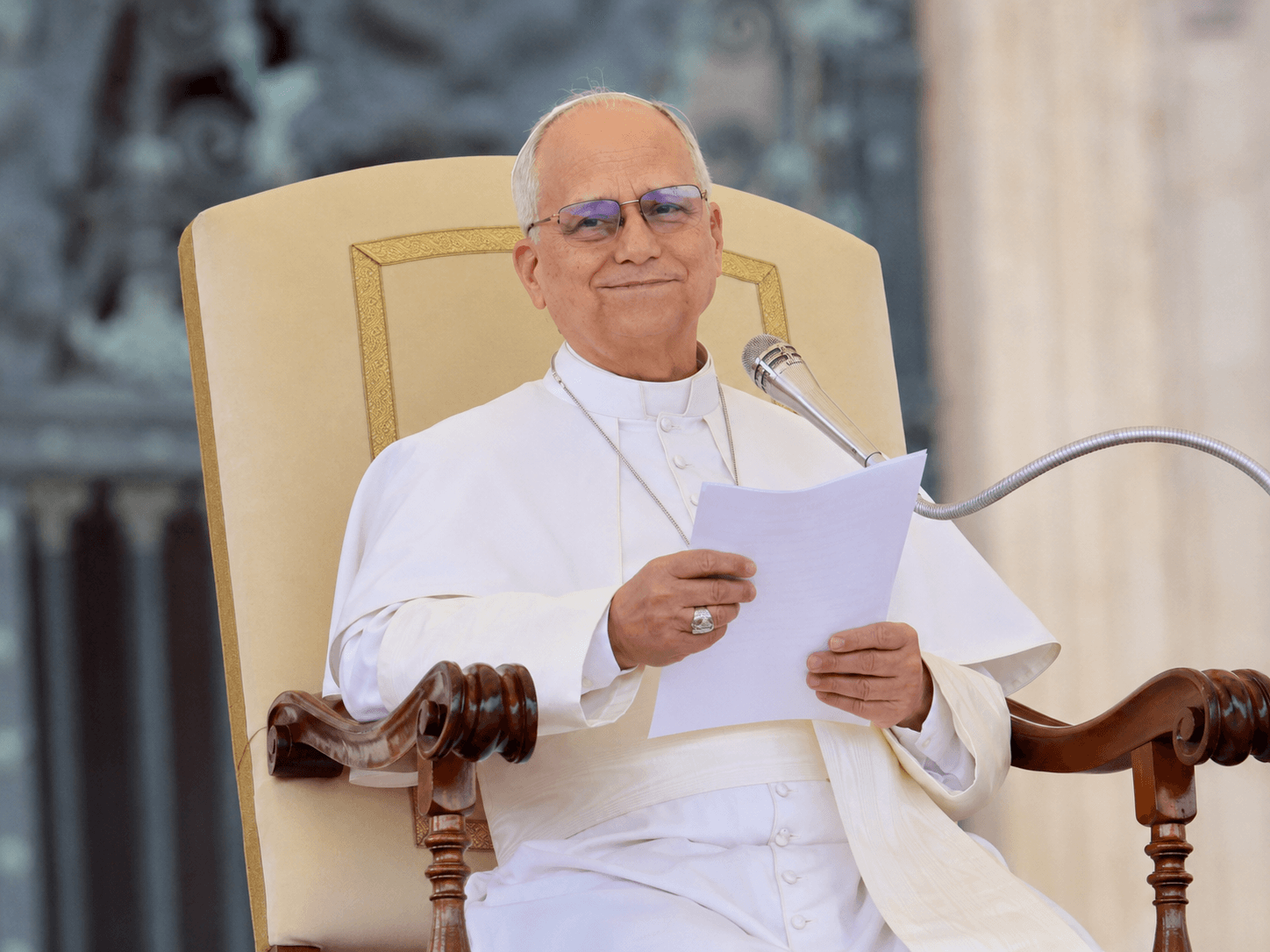
Pope Leo XIV published his first encyclical Monday, a 200-page document titled Magnifica Humanitas that frames AI as a lens for examining older structural problems: inequality, the erosion of democracy, and the concentration of governance power in the hands of a technical elite. The pope presented the work alongside Anthropic co-founder Chris Olah at the Vatican, signaling the church's intent to engage directly with the AI industry rather than merely critique it from the sidelines.
The encyclical argues that AI amplifies existing disparities because the technology is built and controlled by those who already hold economic resources, expertise, and access to data. Leo writes that concentrated power allows elites to shape information and consumption patterns, influence democratic processes, and steer economic dynamics to their own advantage. The document calls for clear criteria and effective oversight grounded in participation from affected communities, not just technical gatekeepers.
“When such power is concentrated in the hands of a few, it tends to become opaque and evade public oversight, increasing the risk of distorted forms of development that give rise to new dependencies, exclusions, manipulations and inequalities”— Pope Leo XIV, Pope
Leo explicitly calls for an end to the AI arms race for ever more powerful algorithms and larger datasets, a dynamic he describes as driven by the assumption that technical power automatically confers the right to govern. The encyclical's language echoes Pope Leo XIII's 1891 Rerum Novarum, which addressed the concentration of industrial power during the previous century's technological revolution. The modern version updates the analysis for an era in which data harvesting and algorithmic influence operate at a scale Leo XIII could not have imagined.
Key facts
- 01Pope Leo XIV published a 200-page encyclical Monday addressing AI's role in amplifying inequality and concentrated power.
- 02The document was presented alongside Anthropic co-founder Chris Olah at the Vatican.
- 03Leo called for an end to the AI arms race for ever more powerful algorithms and larger datasets.
- 04The encyclical echoes Pope Leo XIII's 1891 Rerum Novarum, which addressed Industrial Revolution power concentration.
- 05The document appeared days after Trump delayed his AI oversight executive order following urging from tech investors.
The timing is pointed. The encyclical appeared just days after President Donald Trump delayed signing an executive order that would have imposed government oversight on new AI models before release, reportedly following pressure from former White House AI czar David Sacks. The contrast is deliberate: Leo positions the church as a counterweight to tech-industry influence on policy, arguing that regulatory capture by the industry undermines the possibility of governance in the public interest.
The document cites recent examples of concentrated tech power reshaping politics and society. Elon Musk's acquisition of Twitter and deployment of the platform to influence the 2024 election appears as a case study, as do the hundreds of millions flowing from tech elites into super PACs designed to block AI regulation. Paolo Carozza, a Notre Dame Law School professor and chair of the Meta Oversight Board, told TechCrunch that AI-driven misinformation and deepfakes have corroded the public's capacity to recognize truth, with direct consequences for democratic politics.
Carozza added that the tech industry's practice of harvesting and manipulating human data poses fundamental challenges to cognitive freedom, a concept the encyclical develops at length. Leo argues that when algorithmic systems shape what people see, read, and believe without meaningful transparency or consent, they erode the preconditions for autonomous thought and democratic participation. The document does not propose specific policy mechanisms but frames the problem as one requiring structural intervention, not incremental reform.
The encyclical positions AI as a test case for whether technological development can be governed in the public interest or will continue to consolidate power in the hands of those who build and control the systems. Leo writes that disarmament in the AI context means discrediting the assumption that technical power automatically confers the right to govern, a formulation that challenges the Valley's longstanding preference for self-regulation over external oversight.
The choice to present the document with Chris Olah, a co-founder of Anthropic and a prominent AI safety researcher, suggests the Vatican is attempting to build bridges with the technical community rather than simply condemning the industry from the outside. Olah's presence lends the encyclical credibility among researchers who might otherwise dismiss religious commentary on AI as uninformed or moralizing. Whether that bridge-building translates into concrete influence on industry practice remains to be seen.
The encyclical does not call for a ban on AI or a halt to research. Instead, it argues that the trajectory of AI development is inseparable from questions of governance, accountability, and the distribution of power. Leo writes that AI's surreal capabilities raise the stakes enormously for these older questions, making it impossible to separate technical progress from the political and economic structures that determine who benefits from that progress.
The document will face immediate tests of relevance. Trump's delay of the AI oversight executive order, following pressure from tech investors and advisors, demonstrates the gap between aspirational calls for oversight and the political realities of implementing it. The encyclical offers a moral framework but does not resolve the practical question of how to impose accountability on an industry with the resources to shape policy in its favor.
The Vatican's entry into the AI governance debate marks a shift in how religious institutions engage with technology policy. Rather than treating AI as a distant or abstract threat, Leo frames it as the current front in a long-running struggle over who governs, for whom, and under what constraints. The encyclical positions the church as a participant in that struggle, not just a commentator, which raises the stakes for both the Vatican and the industry it seeks to influence.

Working on something we should cover, or seeing a story we missed? Send leads, documents, or feedback to hello@aichatdaily.com. For sensitive tips, see our secure tips page for Signal and PGP options.
Spotted an error? Email hello@aichatdaily.com with the URL and the issue, or read our full corrections policy.