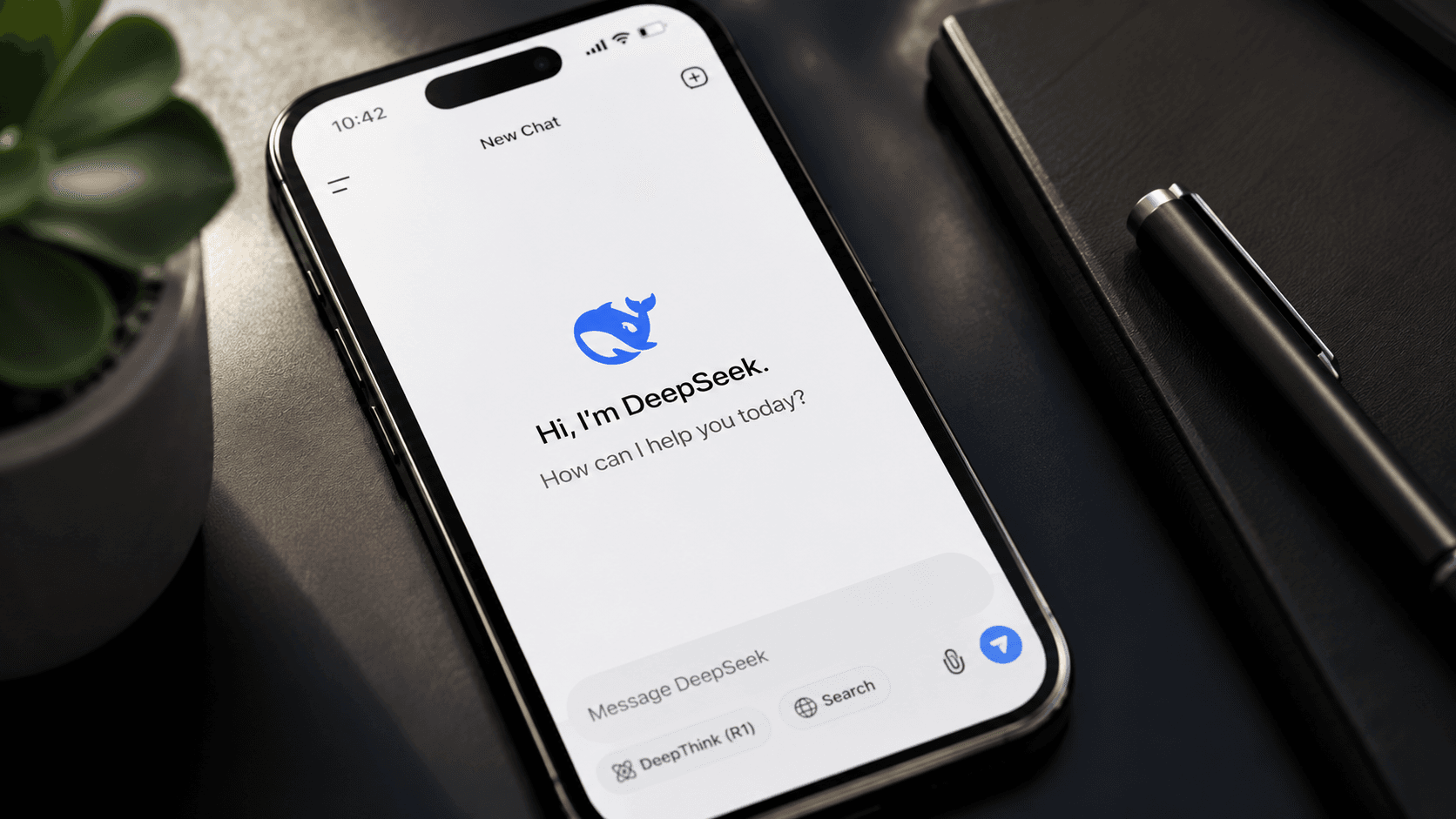
DeepSeek founder Liang Wenfeng said the Chinese AI lab prioritises building AGI over generating profit and is likely to keep its top-tier models open-source, according to a Yicai report carried by Reuters. The comments are the clearest public signal yet on how DeepSeek plans to balance its research ambitions against the commercial pressures now facing every frontier model developer.
Liang's framing puts DeepSeek in a category of its own among labs at the frontier. OpenAI, Anthropic, and Google DeepMind all keep their strongest models behind closed APIs, arguing that safety, moat, and revenue require it. Meta releases Llama with open weights but has not claimed its top model as frontier-class. DeepSeek is now positioning itself as a lab that intends to ship its best work as open weights while still chasing AGI.
The stance matters because DeepSeek has repeatedly demonstrated it can compete at the top of the benchmark tables. Its R1 reasoning model, released with open weights earlier this year, forced a re-rating across the US market and prompted a wave of policy debate in Washington over how much of a lead US labs actually hold. If DeepSeek continues to release models of that calibre openly, the gap between closed frontier and open frontier narrows with every drop.
Key facts
- 01DeepSeek founder Liang Wenfeng told Yicai the company prioritises AGI research over profit.
- 02Liang said DeepSeek is likely to keep its top-tier models open-source, per the Yicai report.
- 03The stance sets DeepSeek apart from OpenAI and Anthropic, whose frontier models remain closed.
- 04DeepSeek's open-weight R1 release earlier this year rattled US markets and reset expectations for Chinese model quality.
Liang's profit comments also cut against the direction of travel at rival labs. OpenAI is restructuring around a for-profit core valued in the hundreds of billions. Anthropic has closed multi-billion-dollar rounds tied to compute commitments from AMD and others. DeepSeek, backed by the quant hedge fund High-Flyer, has so far avoided the same pressure to monetise every capability release, and Liang's remarks suggest that posture is deliberate rather than incidental.
The open-source pledge does have limits worth reading carefully. Liang said DeepSeek is likely to keep top models open, not that every model will be released with weights, code, and training data in full. Chinese labs including Alibaba's Qwen and Moonshot AI have adopted similar tiered strategies, releasing capable open-weight models while keeping some artefacts and infrastructure proprietary. DeepSeek's exact release cadence for future frontier work remains unspecified in the Yicai piece.
The policy backdrop in Washington has grown more hostile to open-weight Chinese models over the past month. The White House and Commerce Department have been publicly split on how to curb what they describe as distillation of US models by Chinese labs, and the Treasury has floated sanctions in connection with Moonshot's Kimi K3 release. DeepSeek has not been named in those specific actions, but any US move to restrict Chinese open-weight models on national-security grounds would land on DeepSeek's doorstep.
Liang's AGI framing is also a recruiting and mission signal. Top researchers globally weigh mission against compensation when choosing where to work, and a lab publicly committed to open-sourcing frontier models can pitch itself to talent that finds closed labs philosophically uncomfortable. That has been part of Meta's Llama pitch and, before it, part of the original OpenAI pitch. DeepSeek is now claiming that ground more explicitly than any other frontier-scale lab.
The commercial question is whether the strategy is sustainable at frontier compute costs. Training runs at the level of GPT-5, Claude Opus, or Gemini 2.5 require multi-billion-dollar clusters and the power contracts that come with them. High-Flyer's balance sheet has funded DeepSeek's runs so far, but scaling to the next tier without either a revenue engine or state-backed compute allocation is not obvious. Liang did not detail how DeepSeek plans to finance the next generation of models in the Yicai interview.
Skeptics will note that stated intentions and shipping decisions diverge under pressure. OpenAI began life as a non-profit committed to open research; that commitment did not survive contact with the capital requirements of frontier training. Any lab that reaches genuine AGI-adjacent capability will face the same question DeepSeek is answering today in theory but has not yet had to answer in practice, when the model in question could plausibly generate significant commercial value or raise significant safety concerns.
For the broader AI market, DeepSeek's open-source commitment is a pricing anchor. Every capable open-weight model release compresses margins on closed API pricing and expands what enterprises can run in their own environments. If DeepSeek's next generation lands with the same impact as R1 and stays open, cloud providers, closed-model labs, and inference startups all recalibrate. The lab's willingness to give away its best work is, in effect, the single most important variable in the open-versus-closed debate heading into 2026.

Working on something we should cover, or seeing a story we missed? Send leads, documents, or feedback to hello@aichatdaily.com. For sensitive tips, see our secure tips page for Signal and PGP options.
Spotted an error? Email hello@aichatdaily.com with the URL and the issue, or read our full corrections policy.