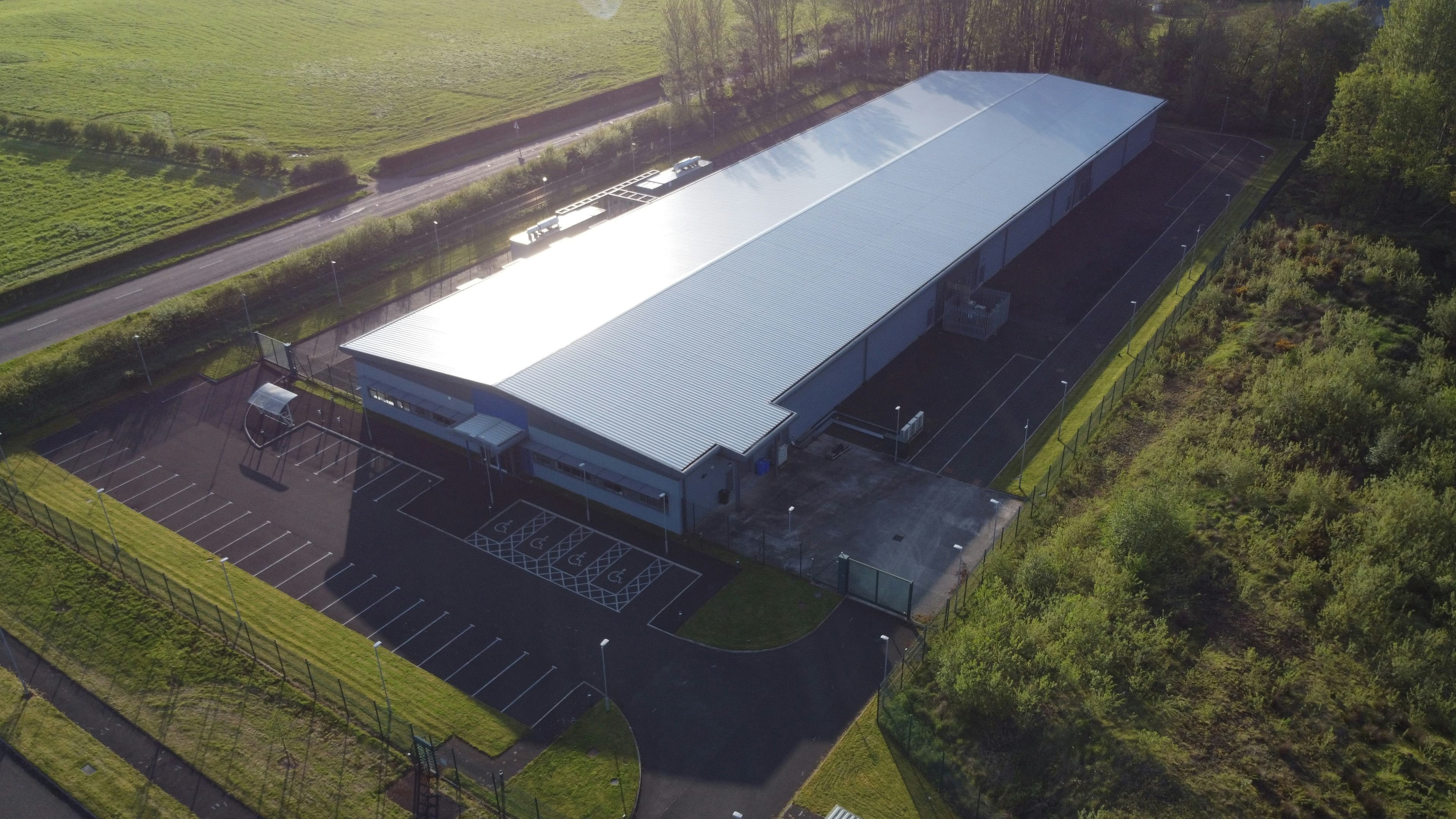
US data centers will consume one-fifth of the electricity generated in the country by 2035, quadruple their share today, according to a new BloombergNEF forecast. AI compute is the driver: data center capacity is projected to reach nearly 200 gigawatts over the next decade, with nearly half of that devoted to training and inference. By 2033, the US will host 64% of AI chips measured by power demand.
The revised figure is 83% higher than what BloombergNEF projected in December. That is not an outlier revision. EPRI, an electrical industry nonprofit, has more than doubled its 2024 estimate for data center load growth, and S&P's forecast rose by more than a third between October and April. Every serious forecaster covering the grid has moved the same direction in the same six months.
The pace of upward revisions reflects how fast AI-specific buildout has outrun grid planning. Capacity announcements from the largest model builders, cloud providers, and colocation operators have compressed timelines that utilities used to measure in decades. Grid planners writing baseline forecasts a year ago were assuming a demand curve that no longer exists.
Key facts
- 01BloombergNEF projects US data centers will consume one-fifth of national electricity by 2035, four times today's share.
- 02US data center capacity is on track to hit nearly 200 gigawatts over the next decade, with nearly half devoted to AI training and inference.
- 03The 2035 electricity demand estimate is 83% higher than BloombergNEF's December forecast; EPRI has more than doubled its 2024 number.
- 04PJM will send 34% of its electricity to data centers; ERCOT will devote 22% of generating capacity.
- 05Electricity prices in PJM rose 76% over the past year, with data centers driving 38% of charges in the most recent capacity auction.
The concentration problem is as sharp as the aggregate. The PJM Interconnection, which spans Virginia to Illinois, is on track to send 34% of its electricity to data centers. ERCOT, which covers most of Texas, will devote 22% of its generating capacity to the same load. Both grids were built to serve diversified industrial and residential demand, not to route a third of their output to a single customer class clustered in a handful of counties.
PJM has already been overwhelmed on the supply side. The grid operator paused applications for new generating sources to connect for four years, a freeze that ended only in April. During that window, data center connection requests kept arriving. The supply-demand imbalance has pushed electricity prices in PJM up 76% over the past year.
The situation has become tense enough that American Electric Power, one of the largest utilities in the PJM footprint, has threatened to withdraw from the interconnection entirely. That is a rare posture from an incumbent utility and signals how badly the current market design is functioning under AI-driven load growth.
Even with the congestion, hyperscalers keep queuing up. Data centers represented 38% of charges in PJM's most recent capacity auction, meaning the sector is now the marginal price-setter for a grid that serves 65 million people. The economics of AI compute justify paying whatever the auction clears at; the economics of residential electricity bills do not.
The pressure is not confined to the US. BloombergNEF estimates that on an aggressive AI adoption trajectory, data centers will create 1,935 terawatt-hours of new global electricity demand by 2033, nearly as much as India consumes annually. The US will absorb most of the growth, but the remaining share is enough to reshape grid planning in Europe, the Middle East, and parts of Asia.
The forecasts carry real uncertainty. AI training demand could plateau if model efficiency gains outpace scaling, and inference workloads may migrate to more efficient silicon faster than BloombergNEF assumes. Historical grid forecasts have overshot as often as they have undershot. But the recent revision pattern is one-directional, and the physical constraints — transformers, transmission lines, interconnection queues — take years to relieve regardless of which forecast proves correct.
The load story is now the AI story. Model releases and benchmark scores get the headlines, but the binding constraint on the next phase of AI deployment is whether PJM, ERCOT, and their overseas counterparts can physically deliver 200 gigawatts of new capacity on the timeline the hyperscalers are demanding. If they cannot, the compute gets built somewhere else, and the geography of AI shifts with it. The utilities threatening to walk away from their own interconnections are the leading indicator.

Working on something we should cover, or seeing a story we missed? Send leads, documents, or feedback to hello@aichatdaily.com. For sensitive tips, see our secure tips page for Signal and PGP options.
Spotted an error? Email hello@aichatdaily.com with the URL and the issue, or read our full corrections policy.