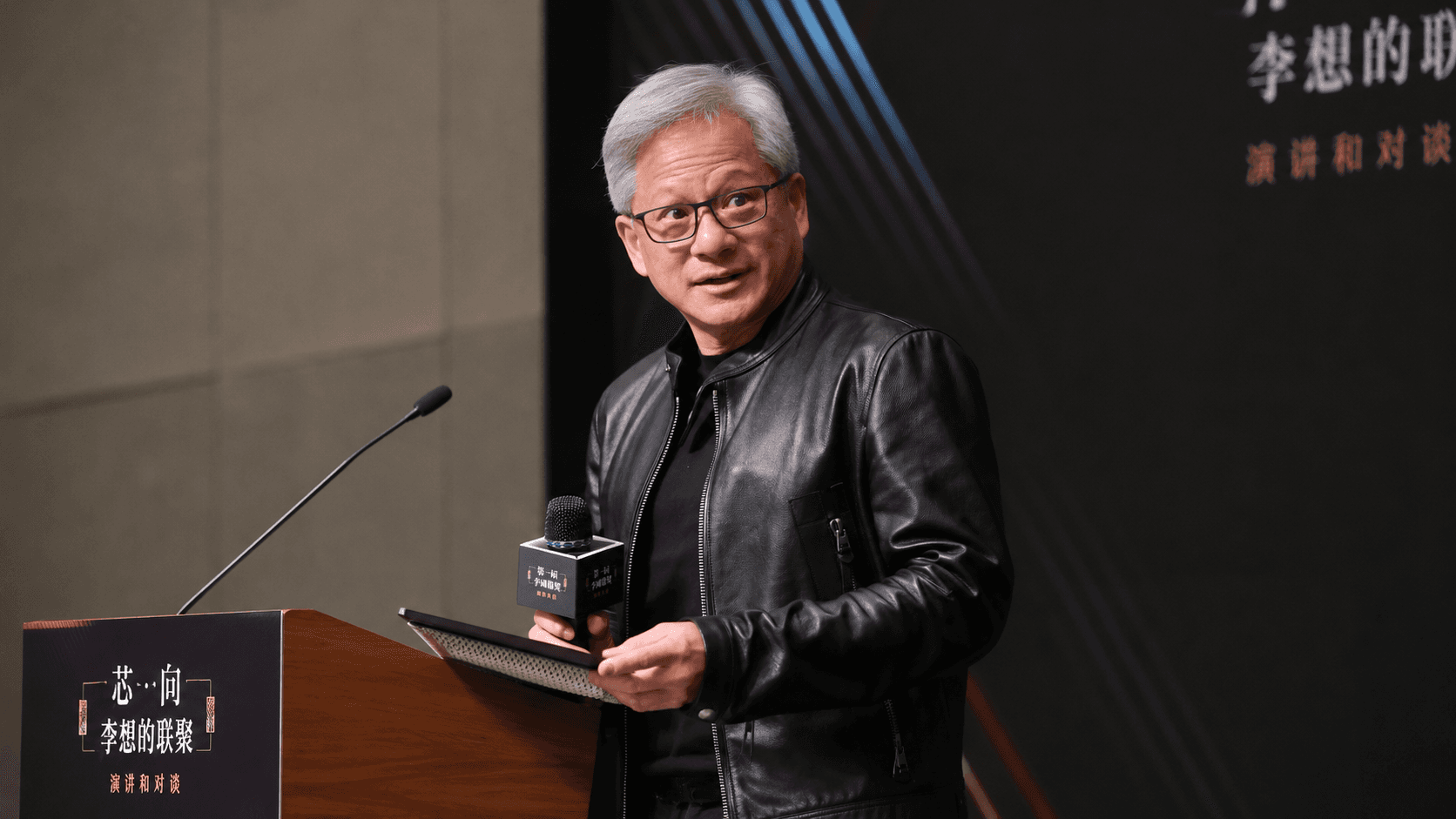
NVIDIA founder and CEO Jensen Huang delivered the keynote at Carnegie Mellon University's 128th commencement on May 10, 2026, telling the Class of 2026 their careers are beginning at the start of the AI revolution. Speaking on a rainy morning at Gesling Stadium in Pittsburgh, Pennsylvania, Huang drew a direct parallel between his own entry into computing at the dawn of the PC era and the position graduates now occupy. "I cannot imagine a more exciting time to begin your life's work," he said.
Huang framed AI as the largest technology infrastructure buildout in human history and a "once-in-a-generation opportunity to reindustrialize America and restore the nation's capacity to build." He argued that every prior platform shift — PCs, the internet, mobile and cloud — had been a prelude to this one. "But what is about to happen now is bigger than anything before," Huang said. "Because intelligence is foundational to every industry, every industry will change."
The address was as much a recruiting pitch for the field as a graduation speech. Huang told the assembled graduates that no generation had entered the world with more powerful tools or greater opportunities, and that the buildout extended well past software engineers — to electricians, plumbers, ironworkers, technicians and builders of every kind. "For the first time, the power of computing and intelligence can truly reach everyone and close the technology divide," he said.
Key facts
- 01Jensen Huang delivered the keynote at Carnegie Mellon University's 128th commencement on May 10, 2026.
- 02Huang received an Honorary Doctor of Science and Technology from CMU President Farnam Jahanian.
- 03Huang traced AI's roots to CMU's Logic Theorist in the 1950s and the founding of the Robotics Institute in 1979.
- 04NVIDIA's next major event, The Next Generation of AI, runs June 1-2 in Taipei.
- 05Huang drew a direct parallel between his own career starting at the PC revolution and graduates starting at the AI revolution.
Huang also pushed back on the framing that AI automation displaces workers, distinguishing between the task and the purpose of a job. Radiologists do not just read scans, he argued; they care for patients. AI automates the scan-reading; the radiologist's purpose remains. "AI automates tasks but elevates workers," Huang said, urging graduates to engage deeply with the technology rather than retreat from it.
“AI is not just creating a new computing industry. It is creating a new industrial era — a once-in-a-generation opportunity to reindustrialize America and restore the nation's capacity to build.”— Jaeden Schafer
On safety and policy, Huang struck a measured tone that drew applause from the commencement crowd. "The responsibility of our generation is not only to advance AI — but to advance it wisely," he said, adding that "scientists and engineers have a profound responsibility to advance AI capabilities and AI safety together." He extended the responsibility to lawmakers as well: "Policymakers have a responsibility to create thoughtful guardrails that protect society while still allowing innovation, discovery and progress to move forward."
Huang condensed his prescription into four imperatives: "Advance safely. Create thoughtful policies. Make AI broadly accessible. And encourage everyone to engage." He warned that fear-driven retreat carries its own cost. "History shows that societies that retreat from technology do not stop progress — they only surrender the opportunity to shape it and to benefit from it," he said.
The choice of venue was deliberate. Huang positioned Carnegie Mellon as "one of the true birthplaces of artificial intelligence and robotics," citing CMU researchers' creation of the Logic Theorist in the 1950s — widely considered the first AI computer program — and the founding of the Robotics Institute in 1979, the first academic institute devoted entirely to robotics. "AI started right here at Carnegie Mellon," he said. Ahead of the ceremony, Huang visited the Robotics Institute and met with students, including members of the robotics club.
CMU President Farnam Jahanian conferred an Honorary Doctor of Science and Technology on Huang, one of the university's highest distinctions. Huang, the son of immigrants, leaned into a personal note. "Like many in this audience, I am a first-generation immigrant," he said. "My parents came here because they believed America could give their children a chance. How can we not be romantic about America?"
The optimism was unalloyed, and the speech largely sidestepped the harder questions about AI's near-term labor impact that have surfaced in recent weeks — including layoff rounds at Cloudflare, which cut more than 1,100 jobs in an AI-native reset, and Coinbase, which reduced headcount by 14% while flattening its org chart around AI. Huang's framing — automation elevates rather than displaces — is the industry's preferred narrative, but the displacement data from specific employers is still being written.
For NVIDIA, the commencement address doubles as positioning. The company has spent the past two years arguing that AI infrastructure is a generational buildout on the scale of electrification, a thesis that supports both its data-center revenue trajectory and the political case for domestic manufacturing capacity. Huang's next stage is The Next Generation of AI event, running June 1-2 in Taipei, where the pitch will move from graduates to customers, partners and policymakers. Closing his address, Huang invoked Carnegie Mellon's motto: "My heart is in the work. So put your heart in the work. Build something worthy of your education, your potential and the people who believed in you long before the world did."

Working on something we should cover, or seeing a story we missed? Send leads, documents, or feedback to hello@aichatdaily.com. For sensitive tips, see our secure tips page for Signal and PGP options.
Spotted an error? Email hello@aichatdaily.com with the URL and the issue, or read our full corrections policy.