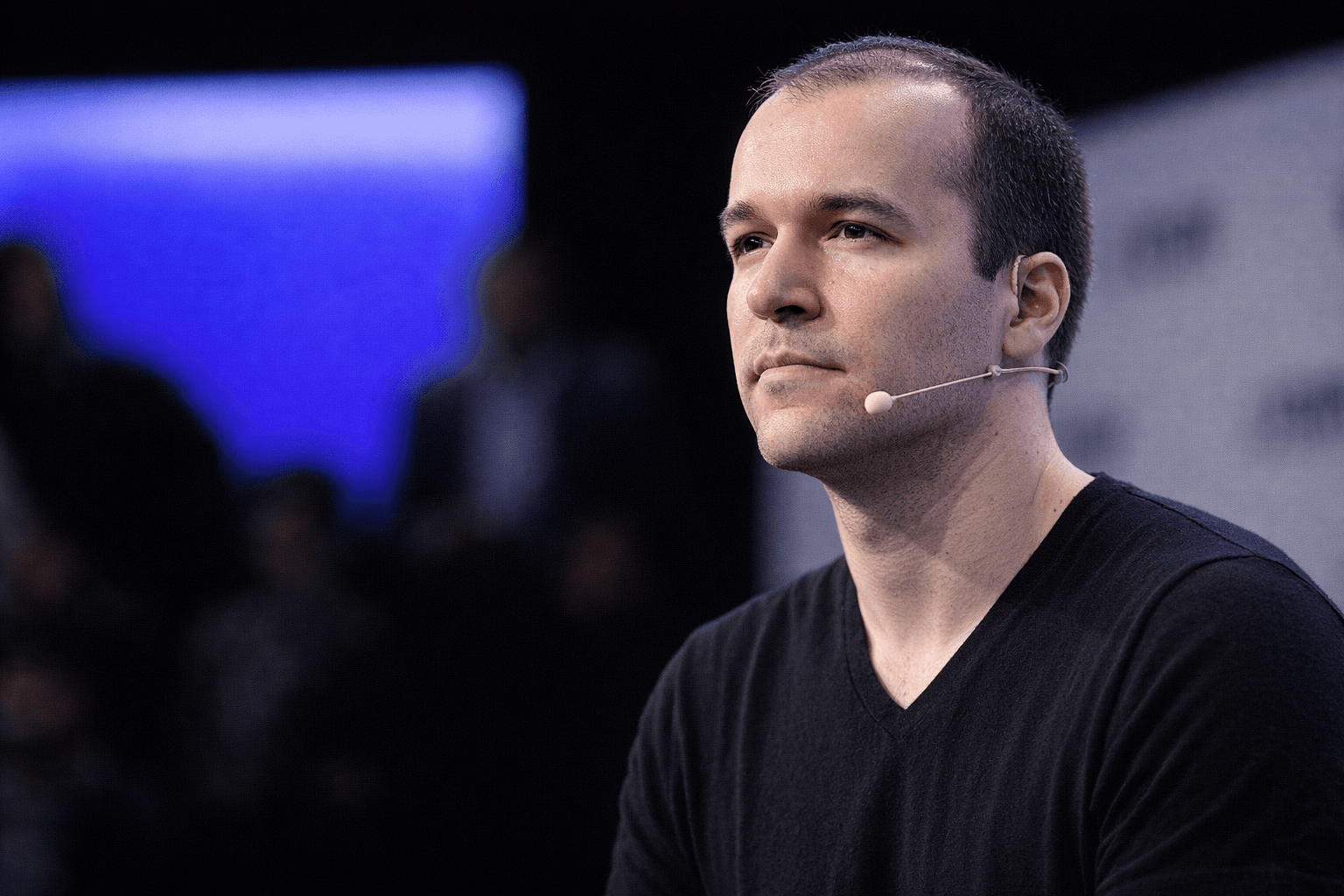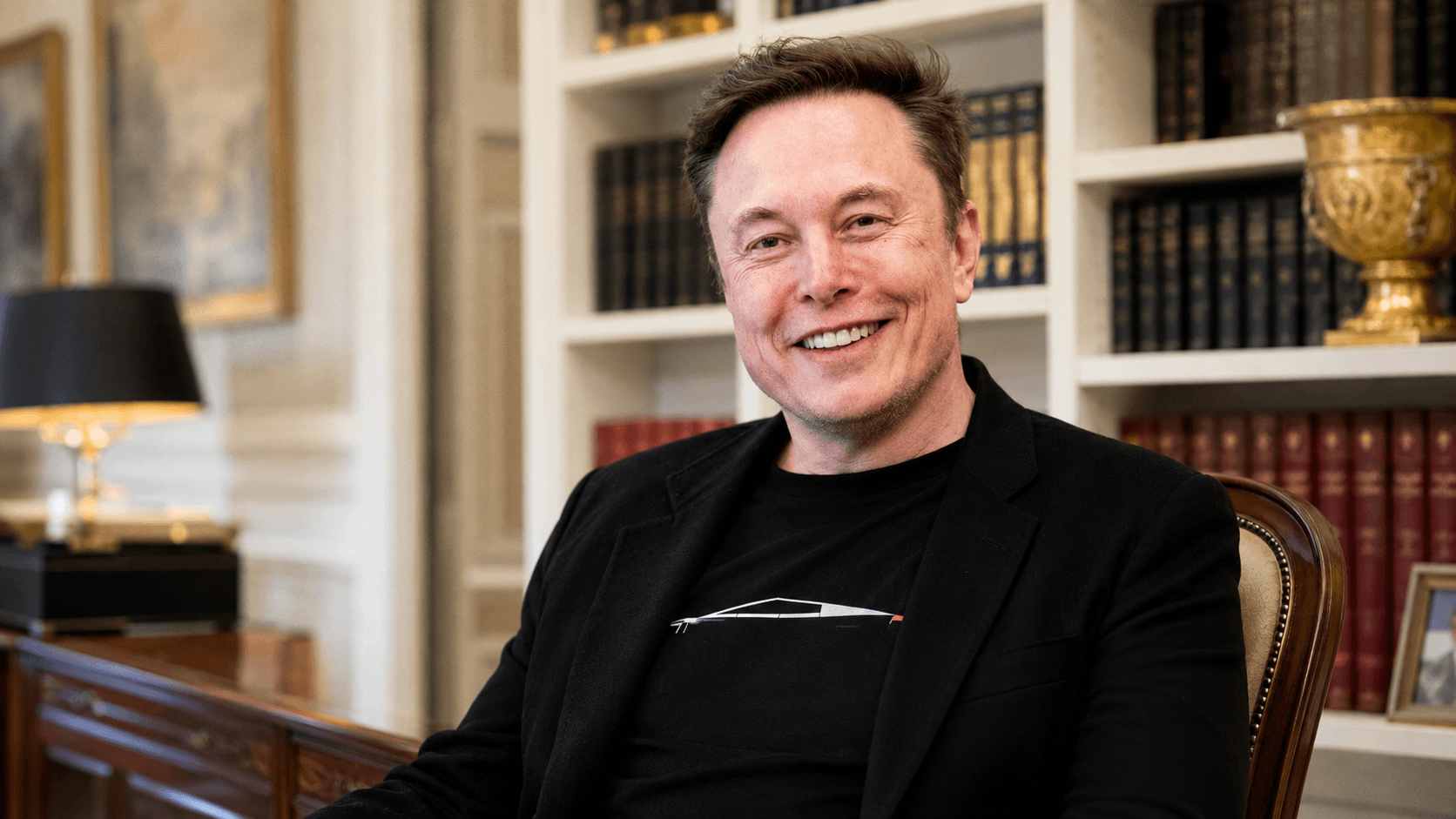
Elon Musk testified Thursday in a California federal court that xAI used OpenAI's models to help train Grok, answering 'Partly' when OpenAI lawyer William Savitt asked directly whether xAI had distilled its rival's systems. Pressed further, Musk said it is 'standard practice to use other AIs to validate your AI' and that 'generally all the AI companies' do the same. The admission came during cross-examination in Musk's own lawsuit against OpenAI, Sam Altman, and Greg Brockman over the lab's shift from nonprofit to for-profit structure.
Distillation is the practice of training a smaller model to mimic the outputs of a larger, more capable one, preserving most of the performance at a fraction of the inference cost. It is the technique OpenAI has spent the past year publicly warning about, mostly aimed at Chinese labs like DeepSeek. Musk, whose xAI was founded in 2023, just acknowledged on the stand that an American competitor did it too.
Musk also used the witness box to rank the field. He put Anthropic in first place, OpenAI second, Google third, and Chinese open-source models fourth, describing xAI as a much smaller company with just a few hundred employees. That is a sharp climbdown from his claim last summer that xAI would soon trail only Google.
Key facts
- 01Under cross-examination Thursday, Musk answered 'Partly' when asked if xAI used distillation on OpenAI's models to train Grok.
- 02Musk said it is 'standard practice to use other AIs to validate your AI' and that 'generally all the AI companies' do it.
- 03OpenAI told a House committee in a February 2026 memo it has 'taken steps to protect and harden our models against distillation.'
- 04Anthropic cut OpenAI off from Claude coding models in August 2025 and later blocked xAI for the same reason.
- 05Musk ranked Anthropic first among AI labs, then OpenAI, Google, and Chinese open-source models, calling xAI a much smaller shop with a few hundred employees.
The legal exposure here is murky. Distillation is not clearly illegal, but it typically violates the terms of service that frontier labs attach to their APIs and consumer products. OpenAI told a House committee in a February 2026 memo that it has 'taken steps to protect and harden our models against distillation,' framing the issue around national competition: 'China can't advance autocratic AI by appropriating and repackaging American innovation.'
“Musk ranked Anthropic first, OpenAI second, Google third, and Chinese open-source models fourth, putting xAI's few hundred employees well behind the leaders.”— Jaeden Schafer
The Trump administration has picked up that frame. In an April 2026 memo, White House science and technology policy director Michael Kratsios said the government would share intelligence with US labs about foreign distillation efforts, adding that the 'U.S. government is committed to the free and fair development of AI technologies across a competitive ecosystem.' OpenAI, Anthropic, and Google have separately coordinated through the Frontier Model Forum on defenses against systematic querying.
Those defenses have already been turned inward. In August 2025, Anthropic cut OpenAI's access to its Claude coding models after alleging terms-of-service violations. Anthropic has since blocked xAI from using its models for coding work as well. The pattern suggests US labs assume one another of the same behavior they publicly attribute to Chinese competitors.
Musk's admission lands in the middle of a broader trial about who controls OpenAI's future. Savitt has spent multiple days walking Musk through 2017 emails and texts in which Musk pushed to take over OpenAI and, when rebuffed, withheld funding and recruited away researchers. We covered that line of questioning earlier this week.
The competitive context is getting more expensive by the month. OpenAI just resolved Microsoft's legal overhang on its $50B Amazon deal. Google has committed up to $40B to Anthropic in cash and compute. DeepMind alum David Silver raised $1.1B for a new lab focused on AI that learns without human data. Against those numbers, xAI's headcount and Musk's own ranking suggest the lab is fighting above its weight, which is exactly the kind of position where distillation is most tempting.
There is a real question about how much weight to put on Musk's words on a witness stand. He hedged with 'Partly' rather than a clean yes, and 'standard practice to use other AIs to validate your AI' could describe benchmarking against a competitor's outputs rather than wholesale copying of behavior. Neither OpenAI nor xAI offered detail beyond the testimony itself, and the trial transcript is the only public record of what xAI actually did with OpenAI's models.
Still, the testimony is the first on-the-record concession from a frontier lab founder that the distillation arrow points in every direction, not just from Beijing to San Francisco. That undercuts the political case OpenAI has been building in Washington, where the threat is framed almost entirely around China. If American labs are quietly training on each other's outputs while lobbying the White House to block foreign labs from doing the same, the policy argument gets harder to hold together.
For xAI specifically, the admission is awkward but not fatal. Grok's commercial position depends on its integration with X and on Musk's willingness to keep funding compute, not on a clean training provenance. For OpenAI, the bigger problem is that its own legal team just got Musk to confirm, on the record, the thing it has spent a year telling regulators only adversaries do. That line is now a lot harder to draw.

Working on something we should cover, or seeing a story we missed? Send leads, documents, or feedback to hello@aichatdaily.com. For sensitive tips, see our secure tips page for Signal and PGP options.
Spotted an error? Email hello@aichatdaily.com with the URL and the issue, or read our full corrections policy.