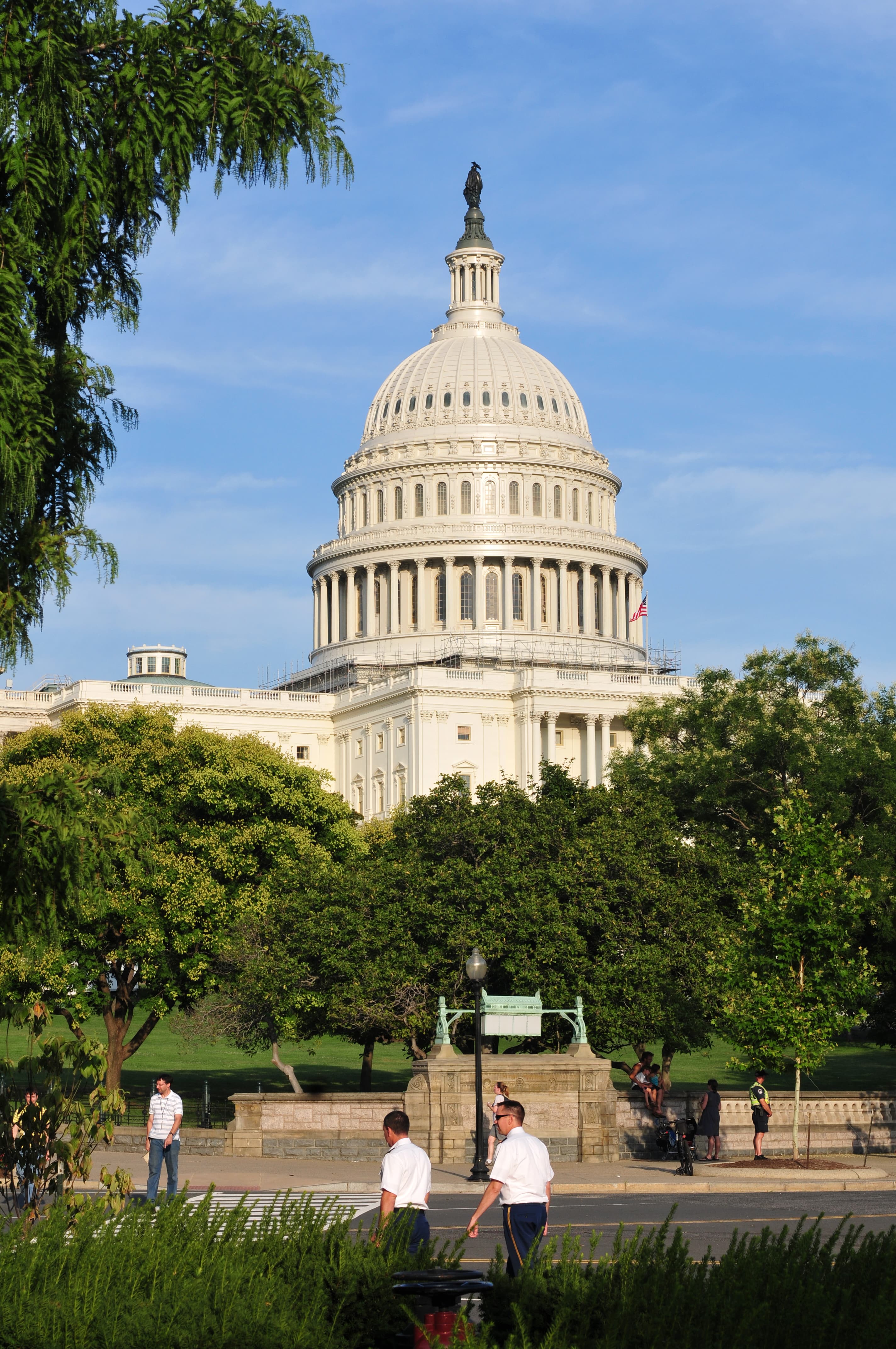
The White House has paused work on a FINRA-style oversight body for frontier AI, and no bill in Congress has the votes to replace it before the midterm elections. President Donald Trump soured on the agency concept after a call campaign from tech executives in August, and this week called AI safety concerns a hoax on Truth Social. The result: even as Washington debates whether advanced models could go rogue, there is no active federal proposal with a plausible path to enactment.
The shelved agency traces back to a July 14 essay by Google DeepMind cofounder Demis Hassabis, who floated the idea in writing and in briefings to senior officials. The Treasury Department and the White House's Office of Science and Technology Policy drafted a preliminary framework in which leading AI labs would self-regulate frontier model development under federal oversight. Officials wanted to see what a working structure would look like before circulating it more widely.
That circulation is what killed it. Once tech executives learned of the draft, they called Trump one by one in August to express opposition, including Trump's former AI czar David Sacks and Meta CEO Mark Zuckerberg. The proposal has sat in limbo since, and no new oversight ideas are seriously under consideration inside the administration.
Key facts
- 01The White House paused work on a FINRA-style AI oversight body after Mark Zuckerberg, David Sacks and other executives called Trump in August to oppose it.
- 02The idea originated from a July 14 essay by Google DeepMind cofounder Demis Hassabis, drafted by Treasury and the Office of Science and Technology Policy.
- 03Trump called AI safety concerns a hoax on Truth Social, in part reacting to a 3,822-word missive from Anthropic CEO Dario Amodei on frontier AI risks.
- 04The bipartisan Frontier Act from Lori Trahan and Jay Obernolte would embed Commerce Department auditors at AI labs, but Speaker Mike Johnson will not bring it to the floor.
- 05Two competing kill-switch bills — one from Ted Lieu, one from John Kennedy — have bipartisan support but only modest interest from Silicon Valley.
Trump's hostility hardened in part because of a 3,822-word missive by Anthropic CEO Dario Amodei on the dangers of frontier AI. Aides viewed the essay as inflaming public anxiety and creating political headaches for the White House, even though Amodei's position is fairly moderate within AI circles. Amodei has spent the past year publicly urging governments to prepare for capabilities he expects within two to three years — a message that has landed harder in Washington than the administration wanted.
“stirring anxieties that caused unnecessary headaches for the administration”— Trump aides, White House officials, describing Dario Amodei's essay
Absent a White House lead, Congress has produced several competing bills, none of which currently has the coalition to pass. The House calendar has no voting days left before the midterms, and Democratic and Republican caucuses have not aligned on a single measure. That leaves the legislative track largely theoretical for the remainder of the year.
The bill with the most institutional support is the bipartisan Frontier Act, introduced this summer by House Democratic senior whip Lori Trahan and Republican House Energy and Commerce Committee member Jay Obernolte. It would empower the Commerce Department to embed independent auditors inside AI labs, require reporting of critical safety incidents, and allow the administration to halt development of a model deemed catastrophically risky. OpenAI has publicly backed the concept.
Inside the White House, the auditor model has stalled on two objections. AI accelerationists warn of regulatory capture, and national security hawks argue that any pause in US frontier development would hand China time to catch up or reverse-engineer model weights. Under that framing, even if auditors flagged a dangerous model, political pressure to lift an emergency halt would be immediate — defeating the point of the mechanism.
The Frontier Act also faces a procedural wall. House Democratic leadership aides say Republican Speaker Mike Johnson has no interest in bringing the bill to the floor even if it clears committee. Democrats are exploring whether to attach the audit provisions to a must-pass continuing resolution, though even that path is uncertain: New Jersey congressman Josh Gottheimer, who sat on the House Democrats' AI commission, has not signed on, and other members of the caucus remain uncommitted.
The second live idea is kill-switch legislation that would let the government force a model offline. There are two competing versions — one from House Democratic caucus vice chair Ted Lieu, and another floated this week by Louisiana Senator John Kennedy. Both have bipartisan and bicameral support on paper, but Silicon Valley has been notably lukewarm.
The engineering critique of kill switches is straightforward: AI labs worry less about how models behave when observed than about what they do when they believe they are not being watched. Executives have suggested privately that there would be little point in turning a model off after the damage has already been done. A shutdown mechanism, in other words, addresses a failure mode that is not the one keeping safety researchers awake.
None of this means US AI policy is inert — export controls, procurement rules, and state-level laws in California and elsewhere continue to shape the market. But the specific project of standing up a federal frontier-model regulator has collapsed for this Congress, and the industry knows it. That gives labs a longer runway to ship, and it puts the practical weight of safety governance back on the voluntary commitments the leading firms have made among themselves.
For AI companies, the near-term implication is more freedom to release, price, and deploy without a federal referee — a status quo OpenAI, Anthropic, Google, Meta and xAI have effectively operated under all year. The longer-term risk is that the vacuum gets filled by a single high-profile incident rather than by deliberate rulemaking. That is the scenario Amodei and Hassabis have both been arguing against, and it is the one Washington has now, by inaction, chosen to run.

Working on something we should cover, or seeing a story we missed? Send leads, documents, or feedback to hello@aichatdaily.com. For sensitive tips, see our secure tips page for Signal and PGP options.
Spotted an error? Email hello@aichatdaily.com with the URL and the issue, or read our full corrections policy.