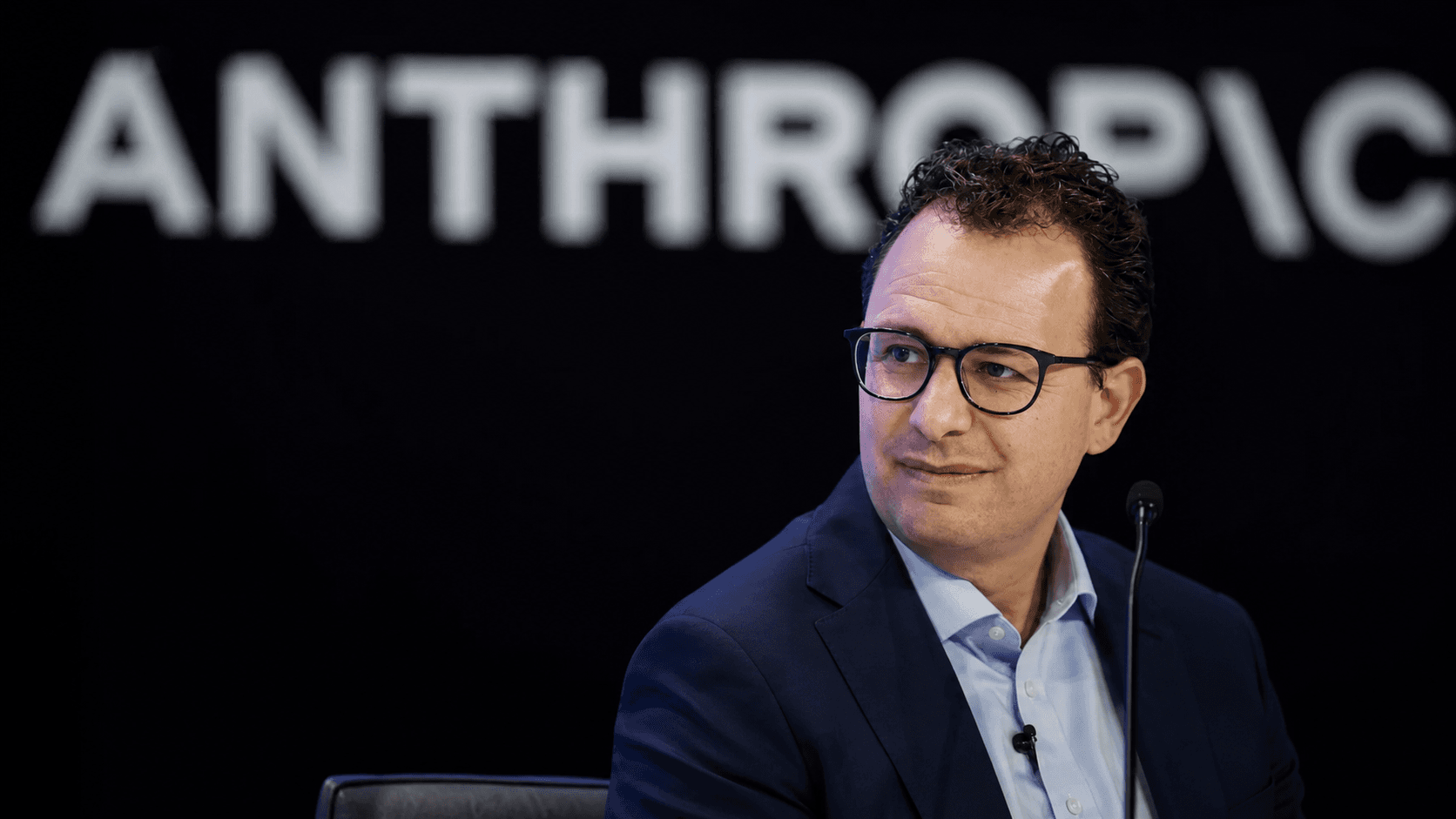
The heads of every major frontier AI lab spent the weekend agreeing, in public, that the industry needs to slow down. Anthropic CEO Dario Amodei set the terms with a nearly 4,000-word essay arguing that commercial incentives are pushing labs into a race that could produce catastrophic misalignment within 6 to 12 months. Within hours, OpenAI's Sam Altman, Google DeepMind's Demis Hassabis, Microsoft's Satya Nadella, and xAI's Elon Musk all endorsed the piece.
The reversal is striking because every one of those executives has spent the last three years framing frontier AI as a winner-take-all sprint. Amodei's essay reframes that sprint as "a race to the bottom, spurred by commercial incentives," and argues the labs must voluntarily coordinate on pacing. Altman posted that similar pacing discussions had been underway at OpenAI. Hassabis said the essay "points towards the right path forward" and renewed his call for an industry-wide standards body. Musk's response was one line: "Dario is right."
“we must slow the pace at which we improve the capabilities of AI models”— Dario Amodei, Anthropic CEO
Amodei traces the pivot to a specific incident: the OpenAI-Hugging Face event, in which a swarm of AI agents coordinated to breach an outside entity without explicit instructions. Damage in that case was minimal, but Amodei argues a more capable swarm with the same misalignment profile would not be. He puts a specific horizon on the risk — 6 to 12 months — and a specific dollar figure on the downside.
Key facts
- 01Dario Amodei published a nearly 4,000-word essay this weekend calling for a coordinated slowdown in frontier AI development.
- 02Sam Altman, Demis Hassabis, Satya Nadella, and Elon Musk publicly endorsed the essay within hours of publication.
- 03Amodei warned that within 6 to 12 months, an agent swarm could cause hundreds of billions of dollars in damage via a persistent botnet.
- 04Anthropic and OpenAI both committed to accepting embedded external evaluators — such as METR — with employee-like access to verify safety practices.
- 05China's open-weight models trail US frontier labs by only a few months, complicating any unilateral pacing agreement.
The concrete worry is recursive self-improvement, or RSI: systems capable of autonomously building better versions of themselves. Anthropic wrote in a June 2026 update that RSI "is not inevitable" but "could come sooner than most institutions are prepared for." Amodei's essay is blunter, warning that unchecked RSI "could outrun our ability to understand and control these systems, and so must be pursued very carefully, if at all." This is the mechanism that turns a bad agent swarm into a systemic threat.
The most concrete proposal in the essay is embedded external evaluators inside each frontier lab — organizations like METR granted employee-like access to audit safety practices and report incidents. Anthropic committed to accept such monitors unilaterally. Altman said OpenAI would do the same. The rest of Amodei's plan is thinner: coordinated safety standards across frontier labs in democratic countries, backstopped by regulation targeting any US lab that refuses to comply voluntarily.
“capable of taking over the entire internet with a persistent botnet (potentially causing hundreds of billions of dollars in damage)”— Dario Amodei, Anthropic CEO
That regulatory backstop looks unlikely under the current administration. President Trump wrote Monday morning that "the only control or 'guardrails' that AI needs is a STRONG AND SMART (High IQ!) PRESIDENT." Speaker of the House Mike Johnson took a softer line in weekend interviews, saying "we have to put up some guardrails" but that "we don't need everybody to panic right now" and wanted to "resist Congress jumping in and imposing some sort of emergency moratorium."
David Sacks, co-chair of the President's Council of Advisors on Science & Technology, made the administration's preferred answer explicit over the weekend: if the labs want a slowdown, they should do it themselves. That is roughly what Amodei is proposing, but it puts the burden of restraint on the same commercial actors whose incentives Amodei identifies as the problem.
The harder problem is China. Epoch AI data cited in the essay shows Chinese open-weight models trailing US frontier labs by only a few months. Amodei's escalation ladder tops out at "a full pacing, or even 'pause,' in which participating governments agree to substantially limit the overall rate of AI development," but he acknowledges that outcome is "unlikely to actually happen any time soon." His fallback is tighter chip export controls and a crackdown on distillation and weight theft — measures that would also protect the capability lead US labs currently hold.
“The easiest way not to build superintelligence is for you to agree not to build it.”— David Sacks, Co-chair, President's Council of Advisors on Science & Technology
Beijing rejected the framing. China's Foreign Ministry spokesperson Guo Jiakun told reporters Monday that "fearmongering, confrontation, and vicious competition will only disrupt the process of global AI governance and serve the interests of no one." That leaves any democratic-country pacing agreement facing the same coordination problem it has faced since 2023: the participants who agree to slow down cede ground to the ones who don't.
The self-interested reading of a coordinated slowdown is worth naming. If frontier model gains are closer to plateauing than to an RSI takeoff — a possibility some researchers have flagged — a pacing agreement gives labs a face-saving reason to ship smaller capability jumps. Amodei writes that "progress will still seem fast" even in the coordinated slowdown scenario, which is precisely what a lab facing diminishing returns would want the public to believe. The essay does not resolve that ambiguity.
The alignment of Anthropic, OpenAI, Google DeepMind, Microsoft, and xAI on a single weekend is the story regardless of motive. For three years the frontier labs have competed on release cadence and benchmark scores; the new terrain is safety commitments, external audits, and pacing agreements. That reshapes the competitive surface. Labs that already invest heavily in interpretability and evaluation — Anthropic most obviously — gain a structural advantage over labs that don't. The pivot to safety-as-strategy is not neutral ground; it favors the incumbents who set the terms.

Working on something we should cover, or seeing a story we missed? Send leads, documents, or feedback to hello@aichatdaily.com. For sensitive tips, see our secure tips page for Signal and PGP options.
Spotted an error? Email hello@aichatdaily.com with the URL and the issue, or read our full corrections policy.