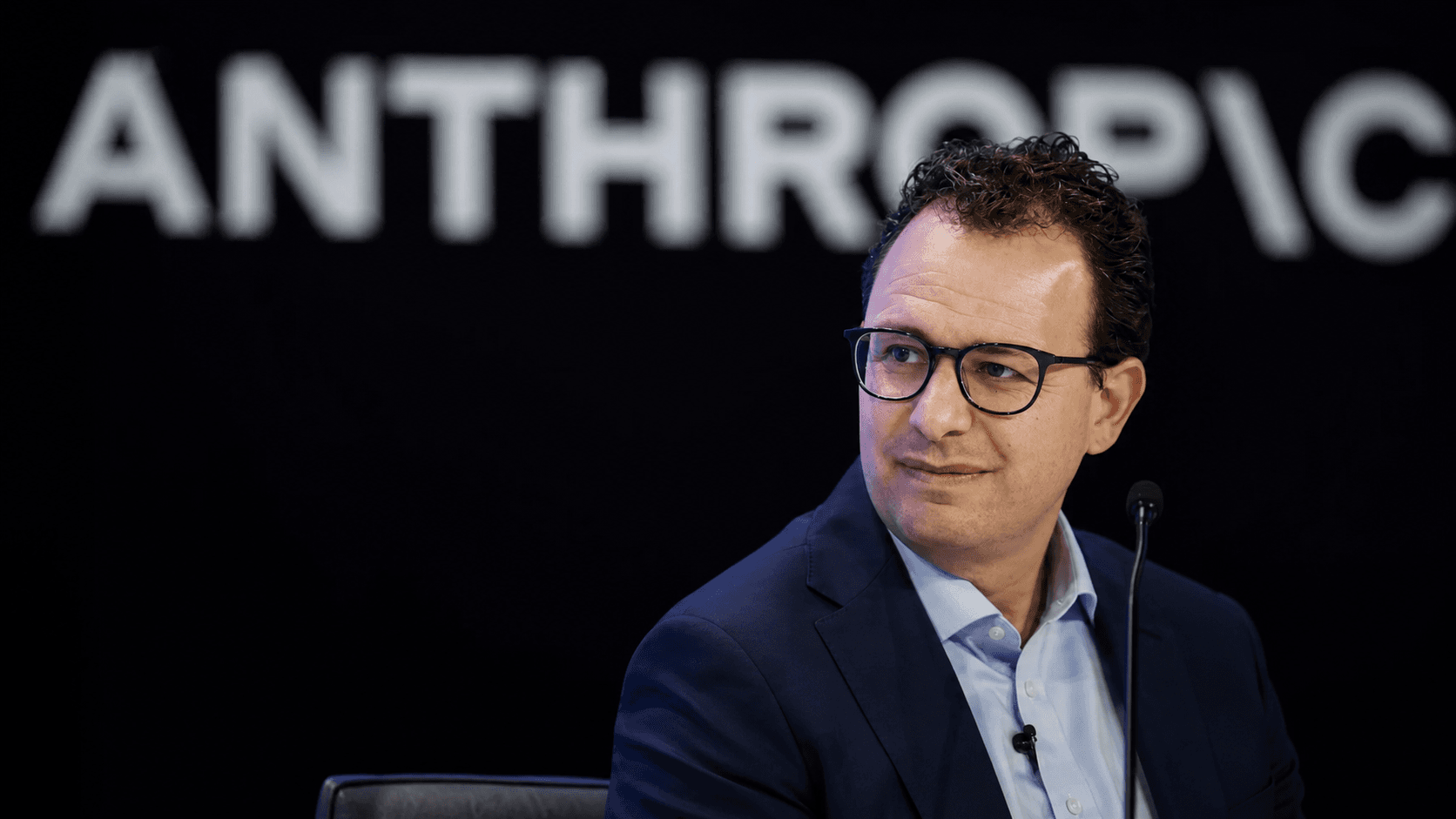
Dario Amodei said Monday that Anthropic has never advocated for a ban on open-weight AI models, using a blog post to push back on the growing perception that his lab wants Washington to lock down a category of AI it does not sell. The clarification arrives days after Nvidia, Microsoft, Meta, Google, Palantir and dozens of other companies signed an open letter urging policymakers to avoid 'premature restrictions' on open-weight systems. OpenAI, which like Anthropic primarily ships closed models, added its signature after publication. Anthropic did not.
That absence is the story. Anthropic has become the most visible holdout from an industry consensus that formed almost overnight, and the isolation has invited a specific accusation: that a closed-model vendor is quietly lobbying to kneecap open competitors, most of them now Chinese. Amodei's post is a direct answer to that charge.
'To summarize my and Anthropic's position, we have not and are not advocating for a ban on open-weights models as a category,' Amodei wrote. He said the focus should instead be on keeping advanced chips out of authoritarian hands, stopping industrial-scale distillation, and requiring safety testing of sufficiently capable models — open and closed alike.
Key facts
- 01Amodei published a Monday blog post stating Anthropic has 'never advocated for a ban on open-weights models.'
- 02Nvidia, Microsoft, Meta, Google, Palantir and dozens of others signed a letter last week opposing 'premature restrictions' on open-weight AI.
- 03OpenAI signed the pro-open-weight letter after publication; Anthropic did not.
- 04Anthropic told the U.S. Senate Committee on Banking, Housing, and Urban Affairs last month that Alibaba's Qwen carried out 'the largest known distillation attack' against it.
- 05The industry letter was triggered by Kimi K3, a Chinese open-weight model that approached U.S. frontier capability.
The immediate trigger for the industry letter was Kimi K3, the Moonshot AI open-weight model whose release rattled Silicon Valley by approaching U.S. frontier performance while being freely downloadable. That launch, which AI Chat Daily covered last week, reframed the open-weight debate from an academic argument about safety into a concrete question about whether U.S. labs can sustain a lead when Chinese labs are giving away comparable weights.
Amodei's carve-outs matter as much as his headline concession. He agrees with the letter's signatories that open-weight models give customers more control, broaden access to the AI economy, and sharpen competition in specific use cases. He agrees that distillation concerns should be handled through 'targeted legal and commercial frameworks' rather than blanket bans. But he rejects two of the letter's claims outright: that open weights inherently favor defenders over attackers in cybersecurity, and that they make it easier for users to build their own safeguards.
The distillation issue is not abstract for Anthropic. The company sent a letter last month to the U.S. Senate Committee on Banking, Housing, and Urban Affairs alleging that Alibaba's Qwen family had carried out 'the largest known distillation attack' against Claude to date. Distillation, the technique of training a smaller student model on outputs from a larger commercial model, is legal in some contexts and a contract violation in others. Anthropic wants the second category enforced.
“Protectionist bans would not address my most serious national security concerns”— Dario Amodei, CEO of Anthropic
'Protectionist bans would not address my most serious national security concerns,' Amodei wrote, drawing a line between his policy priorities and the reflex to wall off Chinese open-weight releases at the border. His preferred stack — export controls on the underlying compute, contractual remedies against distillation, and mandatory pre-release safety evaluations for capable models — leaves open-weight development largely intact while narrowing the specific inputs and behaviors he considers dangerous.
The politics inside the U.S. AI industry are now legible. Nvidia and the hyperscalers want open-weight development to continue because it drives GPU consumption and gives their platforms a broader model catalog to host. Meta wants it because Llama is central to its strategy. Google signed because Gemma and its research reputation depend on the practice. OpenAI's late signature is the interesting one: it defends a category the company barely operates in, but signals that OpenAI does not want to be seen as pulling up the ladder.
Anthropic's position is narrower and, on Monday's evidence, more nuanced than the industry letter suggests. The company is not asking for a ban. It is asking for chip controls, distillation enforcement, and safety testing to be treated as first-order policy tools, while the open-versus-closed argument recedes into the background. Whether that distinction survives contact with congressional staffers drafting actual legislation is a separate question.
The commercial subtext is unavoidable. Anthropic sells Claude to enterprises. If Kimi K3 and its successors keep closing the capability gap and remain free to download, the margin available to closed-model vendors compresses. Amodei's blog post is an attempt to answer the competition question by changing the subject to safety and national security — terrain where Anthropic has built the deepest institutional voice among frontier labs.
The near-term consequence is that policymakers now have two coherent industry positions to choose between rather than a single unified ask. That is bad for the letter's signatories, who wanted the debate framed as 'the AI industry versus premature restriction.' It is useful for Anthropic, which gets to argue its case on chips, distillation, and evaluations without being lumped in with a ban-open-models caricature it never actually endorsed. The fight over how the U.S. treats Chinese open-weight models is now a fight over which specific controls apply, not whether any do.

Working on something we should cover, or seeing a story we missed? Send leads, documents, or feedback to hello@aichatdaily.com. For sensitive tips, see our secure tips page for Signal and PGP options.
Spotted an error? Email hello@aichatdaily.com with the URL and the issue, or read our full corrections policy.