A new category of momfluencer is selling ChatGPT as a household coparent, and the early numbers suggest the pitch is landing. Lilian Schmidt, a brand consultant in Zurich, posted a TikTok in June 2025 captioned 'I Turned ChatGPT into my coparent' and watched her follower count climb to 27,000 in three weeks. She has since built a custom GPT called Coparent and sells access for $37 on her website. The product she is monetizing is not a model — it is a workaround for the unpaid labor that still falls disproportionately on mothers.
Schmidt's origin story is specific. Her 3-and-a-half-year-old daughter would not sleep, and after exhausting pediatricians, sleep experts, white-noise machines and blackout curtains, she queried ChatGPT. The model suggested the child needed more stimulation before bed, not less — chewing gum, jumping on a trampoline. Within five minutes of trying it, her daughter fell asleep next to her.
That anecdote became a content engine. Schmidt and creators like Sarah Dooley, founder of the AI-Empowered Mom and author of the forthcoming The AI-Empowered Family, now sell prompt packs, handbooks and small-group trainings teaching mothers to offload meal planning, sunscreen reminders, doctor's appointments and arts-and-crafts scheduling to a chatbot. Dooley, a former tech consultant for brands including Visa, quit her job to run the business full time.
Key facts
- 01Lilian Schmidt's 'I Turned ChatGPT into my coparent' TikTok pushed her follower count to 27,000 in three weeks.
- 02Schmidt sells access to her custom GPT, Coparent, for $37 on her website.
- 03Employed mothers spend 13.5 hours per week on chores and 12.5 on childcare, per a 2022 Department of Labor survey.
- 04Women are more than 20% less likely than men to use generative AI day-to-day, per a 2025 study.
- 05Mel Robbins announced a partnership with Microsoft Copilot on a November podcast episode.
The labor math behind the trend is documented. A 2022 Department of Labor survey found that employed mothers spend 13.5 hours per week on chores and 12.5 hours per week on childcare — a 40% increase in childcare time since 1975. Pew data shows fathers now spend more than twice as much time on household work as they did 50 years ago, but the absolute split remains lopsided. The momfluencer pitch is that a $37 GPT closes the gap that a partner has not.
The adoption gap on the other side of the screen is also documented. A 2025 study cited in the reporting found women are more than 20% less likely than men to use generative AI in their everyday lives. Stephanie Leblanc-Godfrey, founder of Mother AI, attributes part of this to what she calls a 'pale, male, and stale' problem inside the companies building the tools. Erin Grau, cofounder of Charter, points to 'mom guilt' — the perception that delegating to an AI is a form of cheating at parenting.
“You have all these people running these AI companies that actually don't reflect the society that's using them, or the needs of moms, who tend to be the heads of households.”— Stephanie Leblanc-Godfrey, Founder of Mother AI
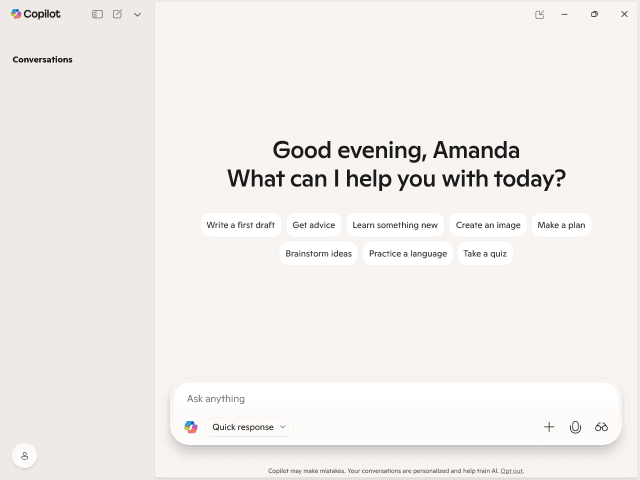
That gap is now a marketing opportunity for some of the largest media personalities in the country. Mel Robbins announced a partnership with Microsoft Copilot on a November episode of The Mel Robbins Podcast, telling listeners she did not want women to 'get left behind.' Reese Witherspoon went viral in April with an Instagram post promoting AI as a way to 'make our everyday lives easier and better.' The Cut labeled the trend 'the girlbossification of AI.'
Not everyone selling AI to mothers is comfortable with that framing. Leblanc-Godfrey told Wired she rejects 'that sort of productivity porn, toxic efficiency piece of the conversation' and is skeptical of positioning the tools as 'radical feminism.' Schmidt acknowledges the headwinds: environmental costs, the projection that nearly 15% of the workforce sits at risk of AI-driven unemployment, and active concerns about generative AI's effect on child development and mental health. Her counter is pragmatic — women already have reservations about the technology, and she does not want to add another.
The structural question the trend dodges is why the work is being delegated to software instead of a partner. Schmidt says 95% of her audience is women; the men who reach out tend to do so in private DMs, often asking how to use AI to ease their wives' workloads rather than their own. She told Wired the disparity comes down to 'the patriarchy,' adding that 'mental load is still considered a female problem' and that many men do not know what the term means. Claude and other general-purpose assistants get used by spouses to research stocks or do architecture work, but not, in her telling, to track birthday parties.
“These tools were built for people with spare time. And guess what? Moms don't have any.”— Stephanie Leblanc-Godfrey, Founder of Mother AI
The business question for AI vendors is whether this is a durable consumer wedge or a content cycle. The momfluencer market has shown it can move product — the custom-GPT economy, podcast partnerships and brand deals with Copilot and similar tools suggest model providers see mothers as a high-intent, underpenetrated segment. Closing a 20-point usage gap in a household-decision-maker demographic would be one of the more valuable distribution wins available to OpenAI, Microsoft and Anthropic, more valuable in lifetime engagement than another enterprise seat.
But the segment is being sold a tool that solves the symptom, not the cause. A $37 coparent that schedules pediatrician visits and drafts notes to the babysitter is a real productivity gain, and the sleep-training anecdote is a real outcome. It is also a product whose total addressable market depends on the underlying division of labor not changing. For the AI industry, that is a feature: persistent demand from a demographic that has been told the answer to overwork is a better assistant. For the buyers, it is one more line item on a to-do list that was already too long.

Working on something we should cover, or seeing a story we missed? Send leads, documents, or feedback to hello@aichatdaily.com. For sensitive tips, see our secure tips page for Signal and PGP options.
Spotted an error? Email hello@aichatdaily.com with the URL and the issue, or read our full corrections policy.