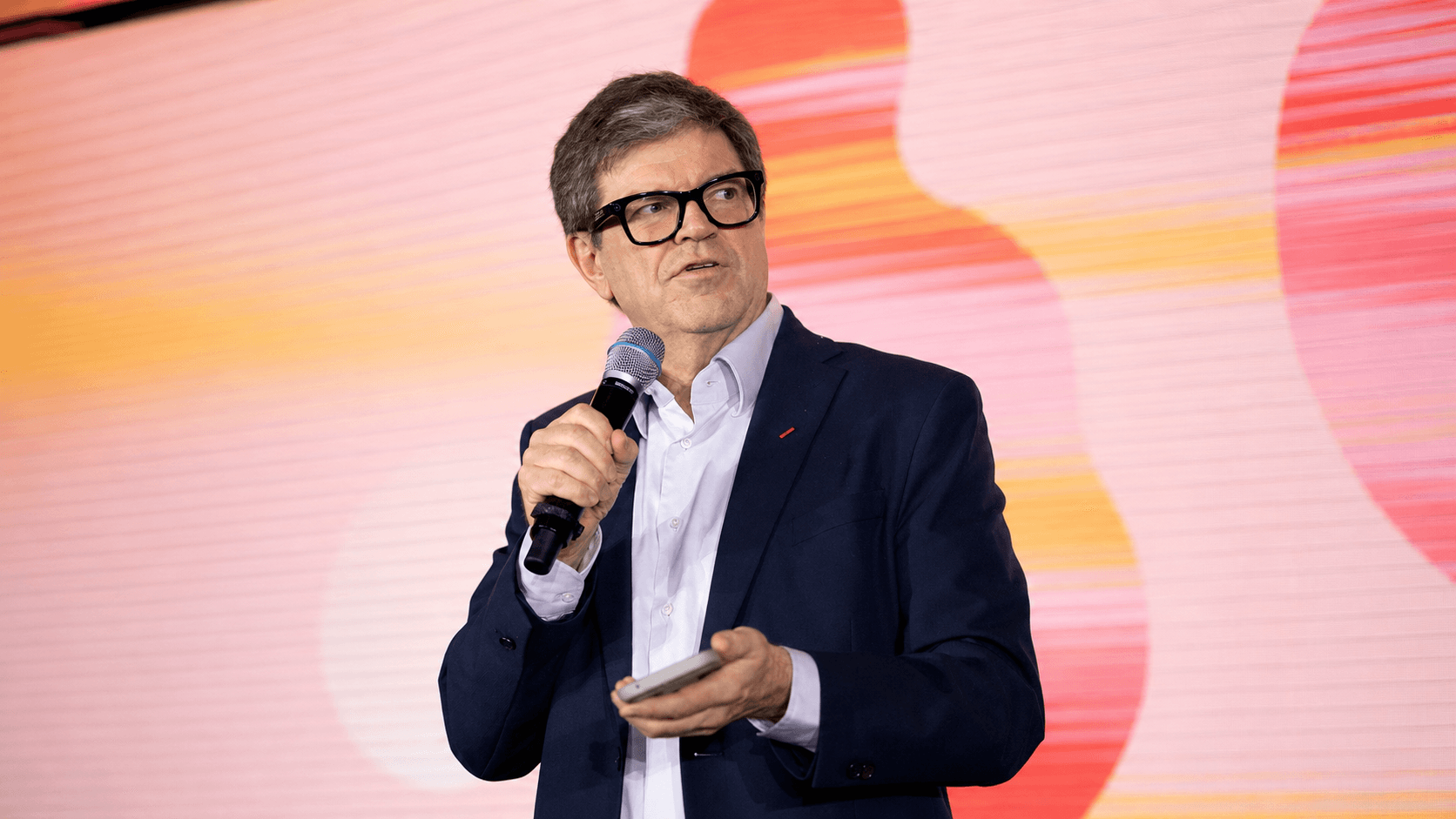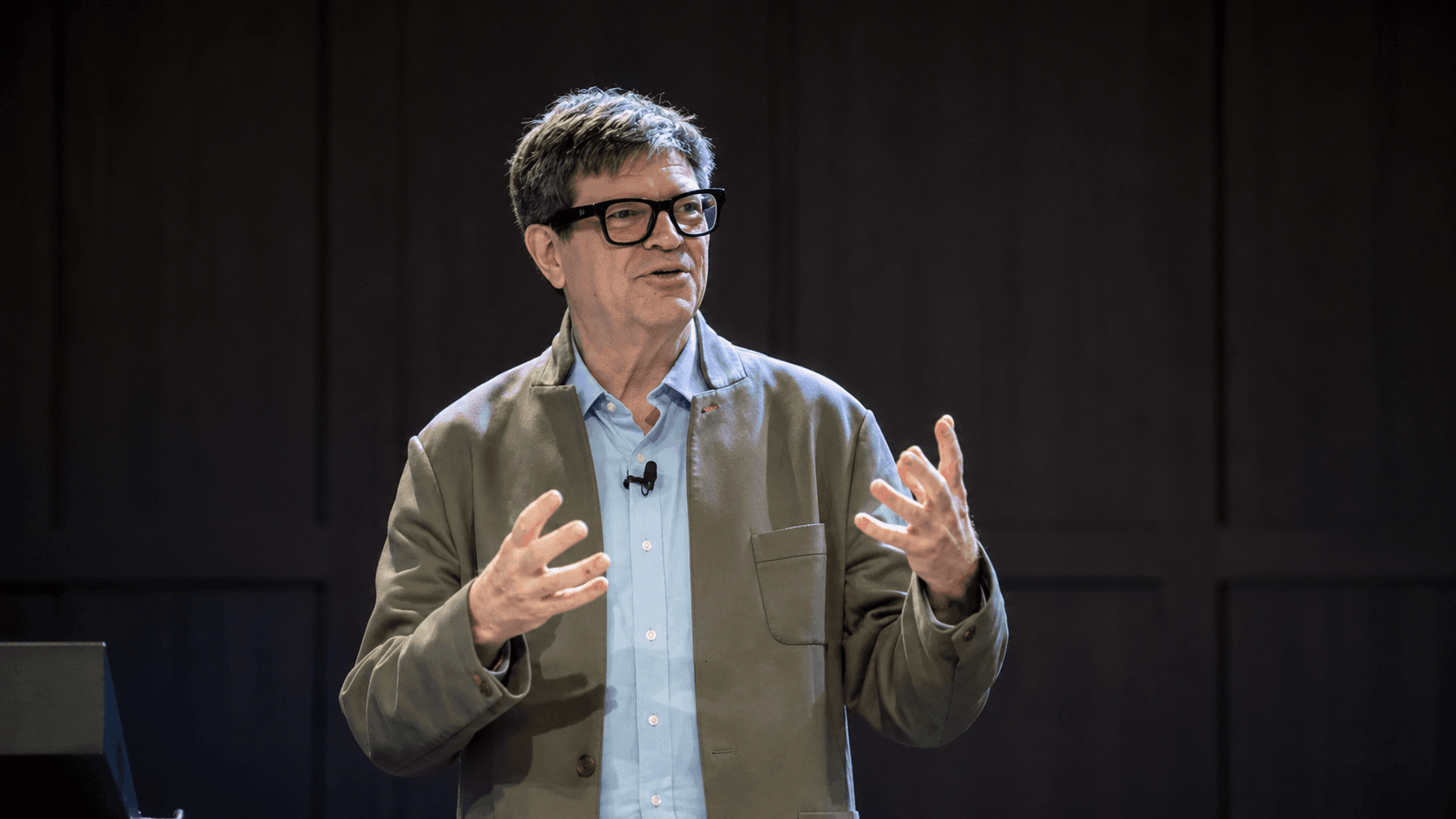
The two most-watched world model companies — Yann LeCun's AMI Labs and Fei-Fei Li's World Labs — have raised heavily, hired aggressively, and said remarkably little about what they intend to sell. Both sit at the center of a field aimed at automating spatial intelligence, with plausible commercial paths through robotics, interactive video, self-driving systems, and CGI. Neither has committed publicly to any of them.
At the All In conference this week, AMI Labs co-founder and VP of World Models Michael Rabbat declined to specify what the company is building. AMI is less than a year old, which buys some latitude, but the reticence is category-wide. World Labs has shipped Marble, currently the most fully developed product in world modeling, and its demos lean on building explorable environments for games and CGI rather than a single vertical bet.
Rabbat, pressed on timing, offered only that the company would speak when ready.
Key facts
- 01AMI Labs, co-founded by Yann LeCun, is less than a year old and has not disclosed product plans or a timeline.
- 02Fei-Fei Li's World Labs has shipped Marble, the most fully developed product in the category, largely as a capabilities demo.
- 03AMI has touched manufacturing, biomedicine, robotics, and medical AI via its Nabia partnership without picking a lane.
- 04Physicl, a data supplier to world model labs, says it doesn't know what its customers are building.
- 05The category spans self-driving, humanoid robotics, video games, and CGI — any of which could become the commercial anchor.
The silence extends downstream. Alex de Vigan runs Physicl, a data supplier feeding the world model labs, and says he does not know what his customers are training toward. That is an unusual position for a vendor whose product roadmap depends on understanding what the buyer needs next.
De Vigan's frustration is practical, not philosophical — better visibility would let Physicl generate more targeted training data.
“I wish they would tell us more. We could build more useful data if we knew what they were working on.”— Alex de Vigan, CEO of Physicl
Part of the fog is structural. A world model, in its simplest form, is a navigable representation of physical space — the same class of system that helps a Waymo route through traffic. The same underlying approach could power a humanoid robot lifting boxes, turn a few minutes of video into an explorable 3D scene, or drive a next-generation film pipeline. AMI has already dabbled in manufacturing, biomedicine, robotics, and AI software for doctors through a partnership with Nabia. No single vertical has been declared the priority.
The commercial case for any one of those markets is real. The commercial case for chasing all of them at once is not, which is why the labs will eventually have to choose. For now, the fundraising environment removes the pressure. Capital is available to world model teams on the strength of the founders and the category, not a shipping product, so there is no forcing function to announce a wedge.
There is also a competitive reason to stay quiet. If AMI unveiled a humanoid robotics stack or a Hollywood-grade rendering system tomorrow, every other well-funded lab — the neolabs, the other world model startups, and eventually OpenAI and Anthropic — would have a clearer target to chase. The same easy fundraising that lets AMI build under the radar would fund a wave of fast followers the moment the market becomes legible.
The Cixin Liu comparison writes itself: in a forest where you can't see the other hunters, the safest move is not to make noise. That logic works until a buyer, a partner, or a supplier needs a real answer about what the product is.
The unresolved question sitting under all of this is whether world models are one market or several. If they are one — a general spatial-intelligence layer that plugs into robotics, autonomy, and media — then secrecy is a temporary land grab and the winner is whoever ships a usable API first. If they are several genuinely distinct markets, the labs are quietly deciding which one to occupy, and the answer will show up as a product before it shows up as a press release. Either way, the current stall favors incumbents with capital and punishes the ecosystem of suppliers and integrators trying to build alongside them.

Working on something we should cover, or seeing a story we missed? Send leads, documents, or feedback to hello@aichatdaily.com. For sensitive tips, see our secure tips page for Signal and PGP options.
Spotted an error? Email hello@aichatdaily.com with the URL and the issue, or read our full corrections policy.