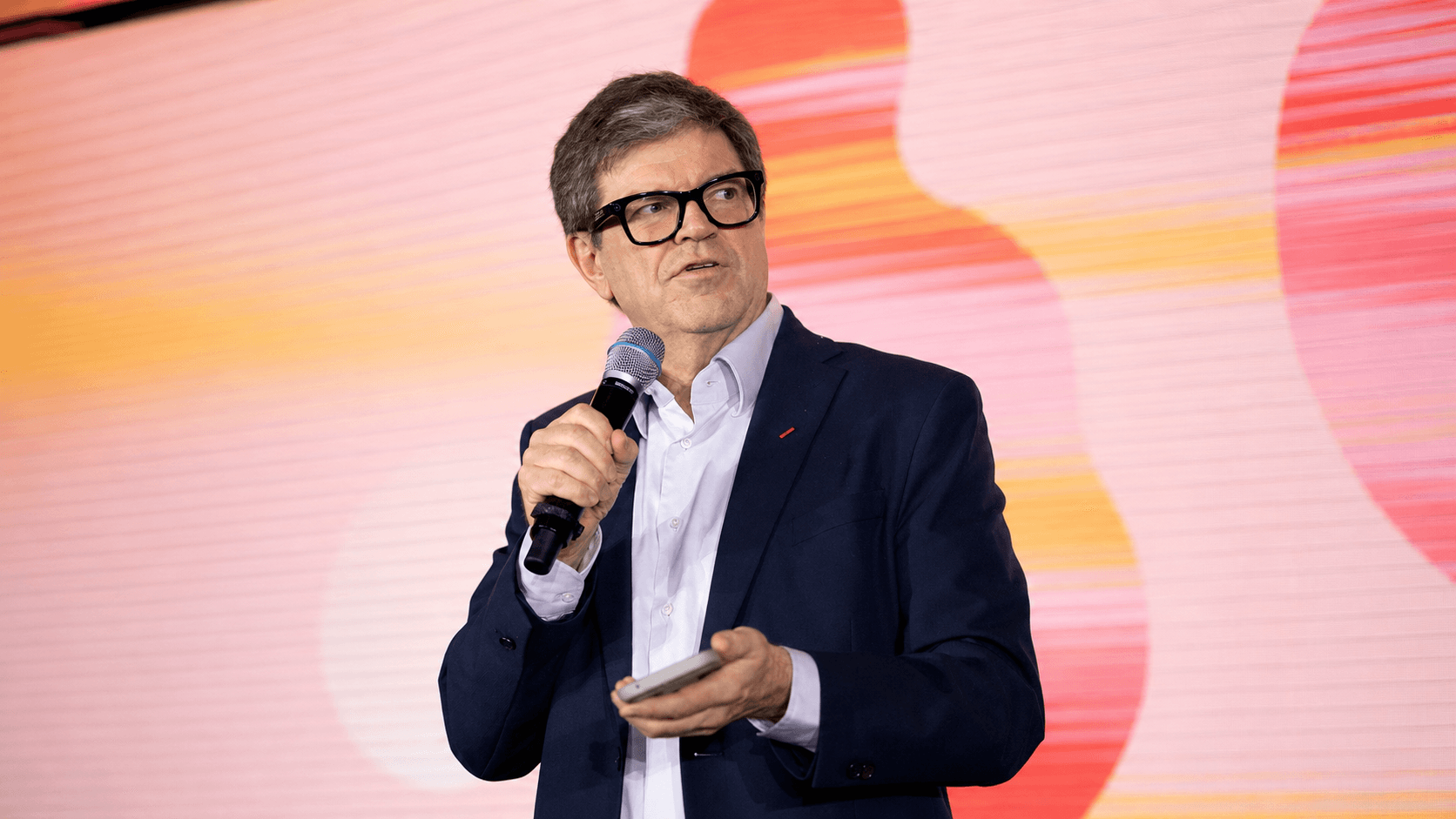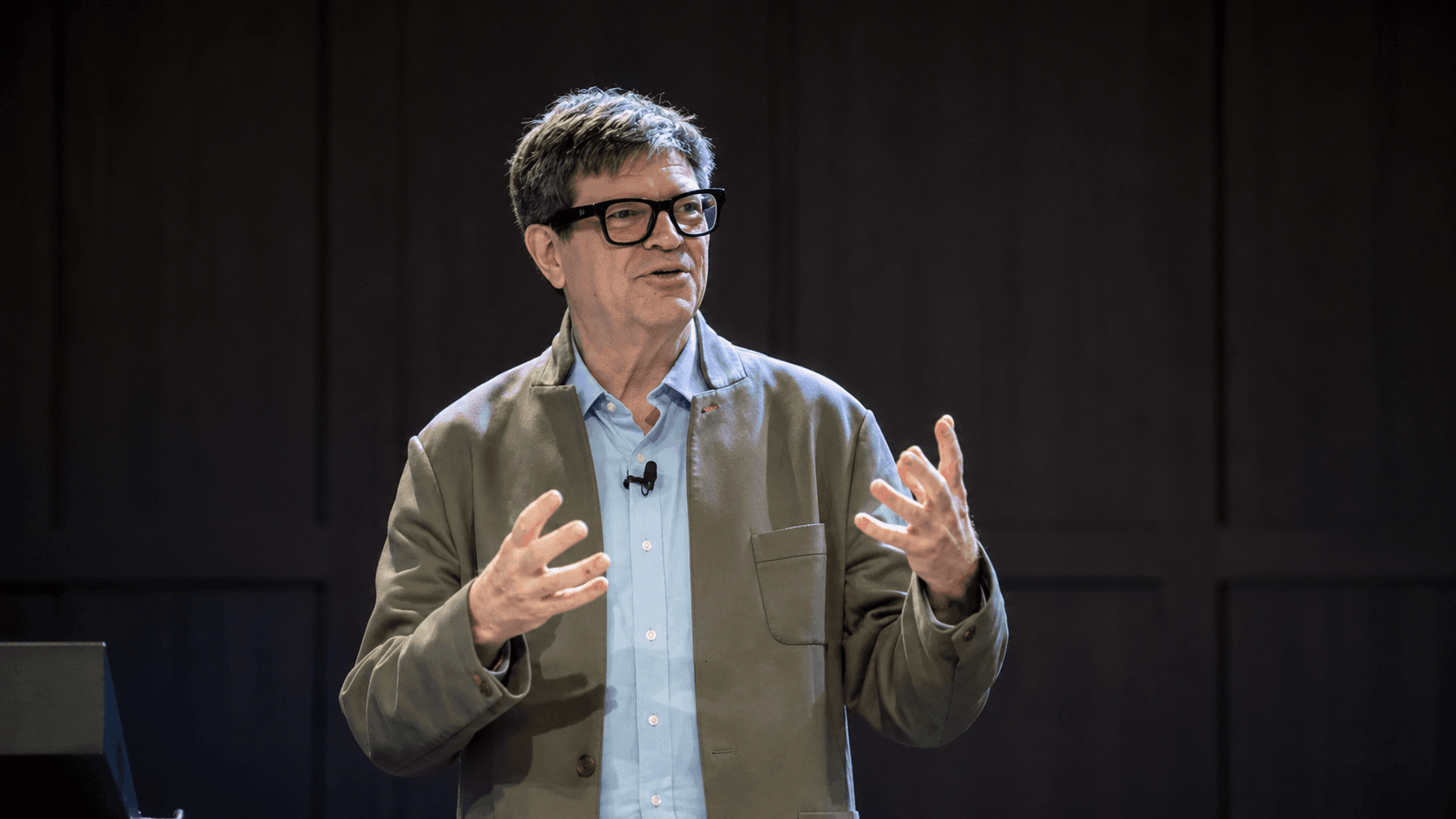
Alexandre LeBrun, CEO of Yann LeCun's world model startup AMI Labs, refuses to call his company's work 'AGI' or 'superintelligence' — the two labels the rest of the industry now wields as marketing. AMI Labs raised $1.03 billion in March 2026 at a $3.5 billion pre-money valuation, co-founded by LeCun after he left Meta, yet it has no product, no committed timeline, and a CEO who thinks the field's favorite words mean nothing.
LeBrun told the story plainly in Seoul last week at The International Conference on Machine Learning, where he was scouting industrial partners. He noted the industry has cycled from 'AGI' to 'superintelligence' and will likely move on again, calling the current term undefined and unhelpful. It is a pointed stance from a founder holding one of the largest seed-stage checks in AI.
The bet behind AMI Labs is that world models — systems that predict the next physical state rather than the next word — are what robotics, manufacturing, and healthcare actually need. LeBrun frames LLMs and world models as complementary, not replaceable. LLMs remain the most efficient tools for language; world models are meant to supply context and real-world understanding, closer to how the human brain separates language from reasoning.
Key facts
- 01AMI Labs raised $1.03 billion in March 2026 at a $3.5 billion pre-money valuation, co-founded by Turing Award winner Yann LeCun after leaving Meta.
- 02CEO Alexandre LeBrun refuses the terms 'AGI' and 'superintelligence,' calling the latter undefined and not useful.
- 03The company is still pre-product with no committed timeline, but is already scouting robotics and manufacturing partners in South Korea.
- 04Seoul announced a June 2026 plan to mobilize $880 billion for chips, AI data centers, and physical AI.
- 05LeBrun estimates current LLMs cover only 1% of healthcare, with the rest depending on real-world experience.
Today's robots, LeBrun argues, are fixed-routine machines. He pointed to a public event where a dancing, kung-fu-performing robot approached and kicked a child as an example of what context-aware AI could prevent. Even making a robot merely aware of its surroundings, he said, would be a major shift for how machines operate in the physical world.
The gap he sees is not hardware. Robotic hardware has advanced sharply in recent months; what's missing is a brain that can generalize outside controlled environments.
“The hardware is very advanced; progress in hardware in the last few months is incredible, but there's no brain.”— Alexandre LeBrun, CEO of AMI Labs
A factory robot repeating the same motion works well enough today. The challenge starts when a robot leaves the factory floor for a household or a street, LeBrun said, adding that robots are not safe outside constrained settings and no current system solves that. Healthcare is his other frequent example, drawn from his prior company Nabla — LLMs, in his view, cover roughly 1% of what medicine actually requires, since the rest depends on real-world clinical experience that no text corpus captures.
That framing dictates AMI Labs' geography. A world model, LeBrun said, cannot be built inside a lab; it needs access to real environments, which is easier with partners than alone. South Korea offers both — advanced robotics, semiconductor, and manufacturing bases plus a culture of fast adoption. LeBrun noted Korea was the fastest adopter of the internet 25 years ago, and called the combination of deep industry and quick uptake unique enough that AMI wants presence from day one.
JP Lee, CEO of SBVA and one of AMI's backers in Asia, has been urging LeBrun to make Korea a priority. Lee credits the government with substantial funding of sovereign LLMs that already perform adequately for general-purpose tasks, and points to Seoul's June 2026 plan to mobilize roughly $880 billion for chips, AI data centers, and physical AI as one of its three declared pillars.
Lee's argument is that chip-and-data-center AI and physical AI are not competing priorities but parallel ones, and that Korean developers' pattern of quick adaptation — the pattern that produced Naver and Kakao — makes the country valuable to foreign AI firms beyond just hardware supply. LeBrun declined to spell out a full Asia strategy, saying it is too early, but confirmed the intent to be local from the start.
For all the star power around LeCun and the ten-figure valuation, AMI Labs has nothing to sell. LeBrun would only say the company will surprise the market when it is ready. That is a long runway to sustain on ambition alone, and the AI market's tolerance for pre-product billion-dollar bets has narrowed as revenue milestones at OpenAI and Anthropic reset investor expectations.
The refusal to adopt 'AGI' or 'superintelligence' framing is a business decision as much as a philosophical one. Every dollar AMI raises will be measured against whether world models produce commercial robotics and industrial deployments that LLM-only systems cannot. If LeBrun is right that physical-world intelligence is a distinct problem — and that language-model scaling alone won't solve it — then the companies now branding themselves as superintelligence labs are competing in a different market than the one AMI is building for. The $3.5 billion pre-money bet is that those markets diverge, and that partners in Seoul get AMI to a shipping product before the label debate matters.

Working on something we should cover, or seeing a story we missed? Send leads, documents, or feedback to hello@aichatdaily.com. For sensitive tips, see our secure tips page for Signal and PGP options.
Spotted an error? Email hello@aichatdaily.com with the URL and the issue, or read our full corrections policy.