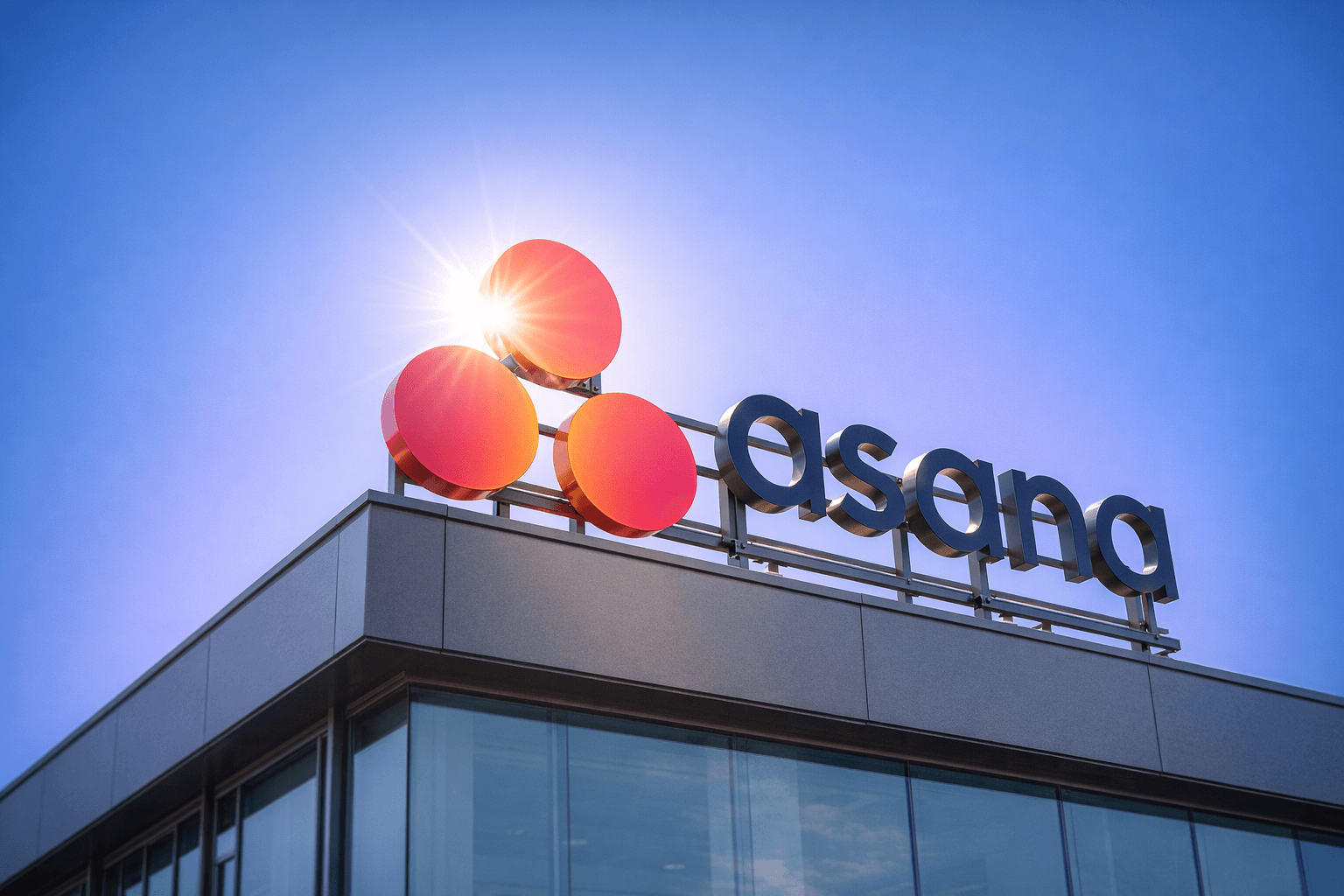
Asana has acquired StackAI, a no-code agent builder out of Y Combinator's Winter 2023 cohort, for $75 million. The deal was announced Thursday afternoon alongside Asana's earnings call and folds StackAI's workflow agents into Asana's AI Studio and AI Teammates products. StackAI co-founders Tony Rosinol and Bernard Aceituno join Asana as part of the transaction.
The price is a roughly 3.75x markup on StackAI's total funding. PitchBook data puts the company's lifetime raise at just under $20 million, most of it from a recent $16 million Series A that included Gradient, Epaklon Capital, Lobby VC, LifeX Ventures, and Vercel CEO Guillermo Rauch.
StackAI builds agents that operate inside existing enterprise systems, pulling data from Salesforce, Slack, and Google Suite to automate multi-step business processes. The category has gotten crowded fast — Zapier on one side, OpenAI and Anthropic on the other — and StackAI's pitch was that workflow-native agents need deeper hooks into the systems where work actually happens.
Key facts
- 01Asana acquired StackAI for $75M, more than 3x the just-under-$20M StackAI had raised across its lifetime.
- 02StackAI's most recent round was a $16M Series A backed by Gradient, Epaklon Capital, Lobby VC, LifeX Ventures, and Vercel CEO Guillermo Rauch.
- 03Founders Tony Rosinol and Bernard Aceituno join Asana; StackAI was part of Y Combinator's Winter 2023 cohort.
- 04Asana has lost more than half its market cap since ChatGPT launched, with the slide deepening after founder Dustin Moskovitz stepped down as CEO in March 2025.
- 05StackAI will plug into Asana's existing AI Studio agent builder and AI Teammates product line.
That matches what Asana has been building. The company released AI Studio, its agent-builder, alongside the AI Teammates library of pre-built automations over the past year. Asana's argument to enterprise buyers is that its position inside corporate project workflows gives it context — assignments, dependencies, status updates — that horizontal AI labs can't easily replicate.
Asana CEO Dan Rogers framed StackAI as a way to push that thesis further into end-to-end process automation.
The business case for the deal is harder to ignore once you look at Asana's stock. The company has lost more than half its market cap since ChatGPT launched, with the slide accelerating after founder Dustin Moskovitz departed the CEO role in March 2025. Revenue has continued to grow, but the public-market verdict has been that the legacy work-management category is exposed to AI substitution rather than positioned to capture it.
Buying StackAI is the new leadership's bet that the answer is to move up the stack rather than defend the old one. Asana now wants to be marketed as, in its own framing, the operating system for human-agent teams — a positioning that mirrors what Microsoft is trying with Copilot inside Office and what Salesforce is pushing with Agentforce.
The integration risk is real. StackAI's product was built as a standalone agent platform, and folding it into AI Studio without losing the flexibility that made it appealing to its own customers is a delicate piece of engineering. The competitive pressure is also not letting up: Anthropic and OpenAI are both shipping agent tooling directly to enterprises, and Zapier has been adding LLM-native steps across its automation library.
Asana is making the case that owning the work-graph — the actual record of who's doing what — is a more defensible position than owning the model or the trigger layer. StackAI gives it a no-code authoring surface to match that argument, and at $75 million it's a cheap option on whether the human-agent operating-system pitch lands with enterprise buyers. The stock will tell the story either way over the next few quarters.

Working on something we should cover, or seeing a story we missed? Send leads, documents, or feedback to hello@aichatdaily.com. For sensitive tips, see our secure tips page for Signal and PGP options.
Spotted an error? Email hello@aichatdaily.com with the URL and the issue, or read our full corrections policy.