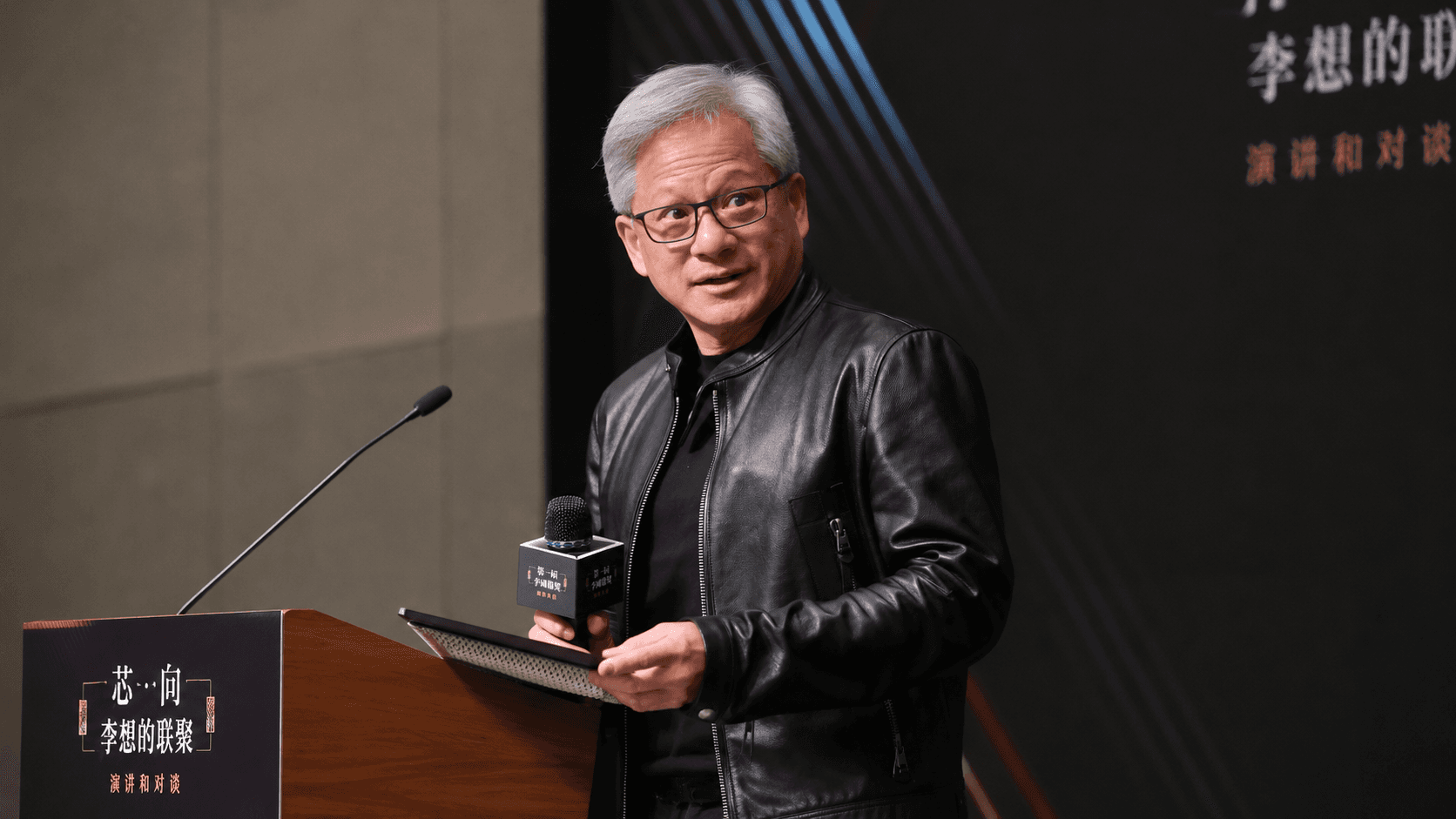
Nvidia founder and CEO Jensen Huang landed in Seoul on June 4, 2026, opening a multi-day tour of South Korea's memory makers, sovereign AI partners, robotics firms and gaming community. The visit comes directly off the back of Huang's GTC Taipei keynote at COMPUTEX on June 1, and Nvidia framed it as a supply-chain alignment trip ahead of a heavy second half of the year. Huang told media at the airport that the company is already running a very large AI infrastructure buildout and that the first half of 2026 has gone well.
The substantive update was on Nvidia's two flagship platforms. Grace Blackwell, the rack-scale system that anchors Nvidia's current data center generation, is shipping and performing in production. Vera Rubin, the next-generation platform unveiled earlier in the year, is now in full production — a meaningful shift from sampling to volume manufacturing that pulls forward the timeline customers had been planning against.
“We have a very significant, very large AI infrastructure buildout — already a very successful first half.”— Jensen Huang, Nvidia founder and CEO
That production status matters most to Korea's memory ecosystem. SK Hynix and Samsung are the primary suppliers of the HBM stacks that sit on Nvidia's GPU packages, and Vera Rubin's volume ramp puts further pressure on HBM allocation through the back half of the year. Huang's stop in Seoul is, in practice, a check-in on whether the memory side of the supply chain can keep pace with what Nvidia has committed to ship.
Key facts
- 01Jensen Huang landed in Seoul on June 4, 2026, immediately after delivering the GTC Taipei keynote at COMPUTEX on June 1.
- 02Huang confirmed Nvidia's Vera Rubin platform is in full production, with Grace Blackwell systems shipping at scale.
- 03Huang flagged robotics and physical AI as the next major sector for Korean investment.
- 04Nvidia also added 18 games to GeForce NOW in June, underscoring the gaming half of the Korea trip.
Huang also used the arrival to flag robotics as the next leg of Nvidia's push into Korea. He described robotics and physical AI as the next major sector for Korean investment, language that lines up with Nvidia's broader effort to position its Omniverse, Isaac and Jetson stacks at the center of industrial automation. Korea's strength in industrial robotics, automotive manufacturing and consumer electronics gives Nvidia a dense set of potential platform customers in a single geography.
“Grace Blackwell, our system, is doing very well, and Vera Rubin is in full production — so we are going to be very busy the second half [of the year].”— Jensen Huang, Nvidia founder and CEO
The Seoul agenda sits alongside Nvidia's consumer push. The company confirmed 18 new games will hit GeForce NOW in June, keeping the cloud gaming service in front of one of the world's most active PC gaming markets. Korea is one of the few places where the consumer GeForce business and the data center business meet in roughly equal weight, which is part of why Huang's trips here tend to span both halves of the company.
Sovereign AI is the connective tissue. South Korea has been one of the more active governments in pushing for domestic AI infrastructure, and Nvidia has used the sovereign AI label to describe its work with national champions building their own model and data center stacks on Nvidia silicon. A CEO-level visit signals that those programs are moving from announcement to procurement.
“Robotics is going to be the next major sector here in Korea — this is a great opportunity for Korea to invest in AI.”— Jensen Huang, Nvidia founder and CEO
There are caveats. Huang did not disclose new dollar figures, did not name specific Korean buyers of Vera Rubin systems, and did not provide updated HBM allocation numbers. Vera Rubin entering full production is a manufacturing milestone, not a revenue print — the question of how quickly the platform shows up in Nvidia's reported data center revenue line will not be answered until at least the company's next earnings cycle. The trip also lands at a moment when several customers are publicly rethinking data center cooling and siting strategies, which could affect deployment pace independent of chip supply.
For Nvidia, the Seoul stop is less about a single announcement than about defending the company's two-platform cadence. Grace Blackwell still has runway, Vera Rubin is now real, and the memory partners who make both possible are concentrated in one country. The harder question for the rest of the AI market is what a Vera Rubin volume ramp does to the competitive gap with AMD and the custom-silicon programs at the hyperscalers — because if Nvidia is already busy lining up H2 supply in Seoul, the window for anyone else to take share in this generation is narrowing fast.

Working on something we should cover, or seeing a story we missed? Send leads, documents, or feedback to hello@aichatdaily.com. For sensitive tips, see our secure tips page for Signal and PGP options.
Spotted an error? Email hello@aichatdaily.com with the URL and the issue, or read our full corrections policy.