Nvidia has told its largest customers that prices on servers built around its AI chips will rise more than 15% in many cases, with the increases taking effect on systems shipped early next year. The hikes cover flagship Vera Rubin and Grace Blackwell configurations and vary by chip generation and how much memory is paired with each accelerator. Contract system builders that assemble hardware for Microsoft, Google and Oracle have already begun notifying those hyperscalers.
The move is unusual for a company that carries a 75% gross margin and has spent the AI cycle setting the terms of trade for the entire semiconductor supply chain. Nvidia is not absorbing the cost of memory chips, which have become the binding constraint on how quickly it can ship complete AI systems. Instead, it is passing the increase directly to Microsoft, Google, Oracle, Amazon and Meta, the customers doing the bulk of the data-center build-out.
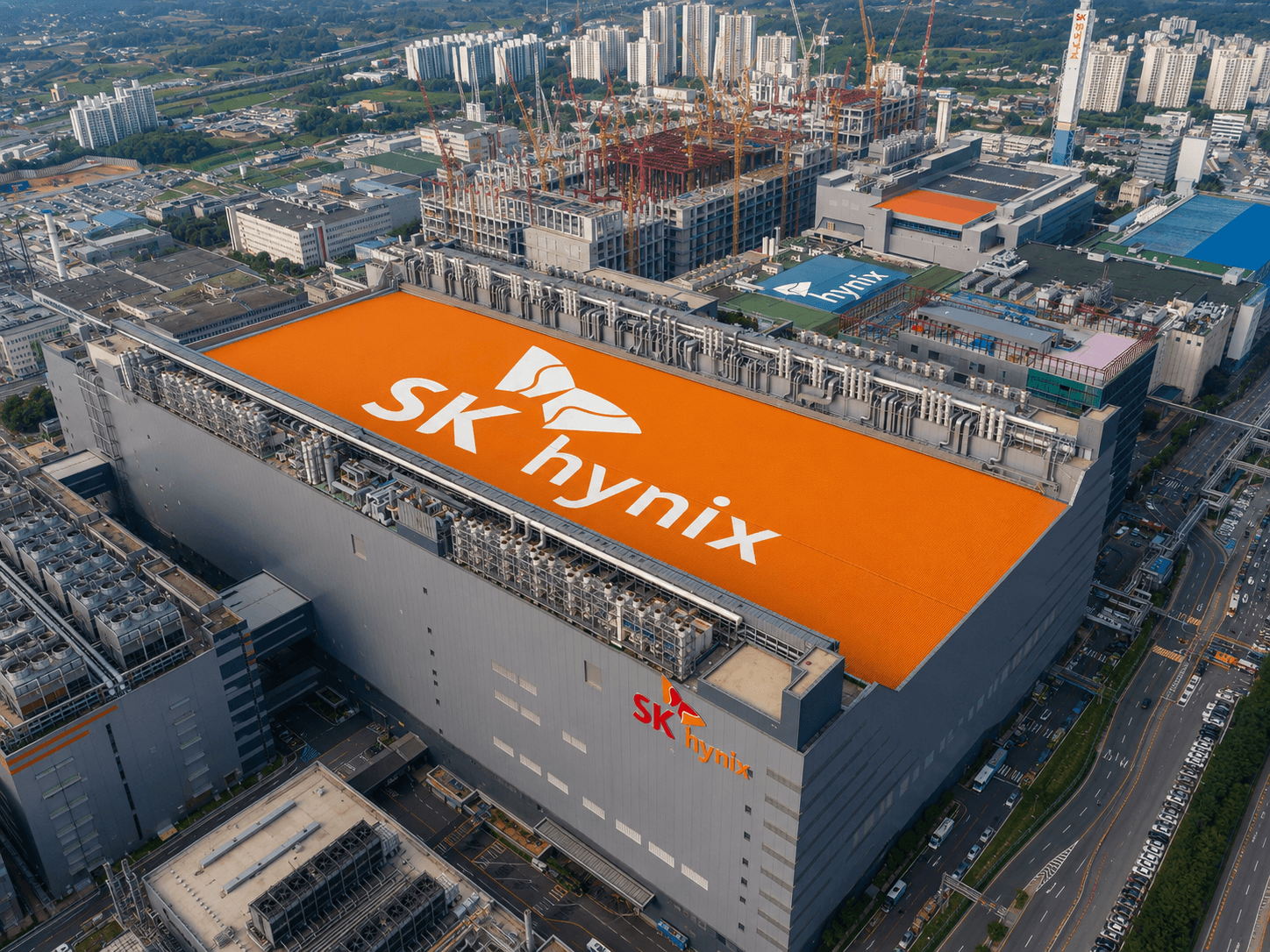
The pressure is coming from three companies: Samsung, SK Hynix and Micron. They produce the vast majority of the world's DRAM, and Nvidia's accelerators are only useful when paired with large quantities of it. Output has been rising, but not fast enough to catch demand, and the price of what has historically been a commodity component has climbed sharply. That has handed the memory trio a level of pricing power the industry has rarely seen.
Key facts
- 01Nvidia will raise prices on servers containing Vera Rubin and Grace Blackwell chips by more than 15% in many cases.
- 02The increases take effect on systems shipped early next year, with the exact hike depending on chip generation and memory configuration.
- 03Nvidia's gross margin sits at 75%, yet the company is passing costs through rather than absorbing them.
- 04Samsung, SK Hynix and Micron control most global DRAM output and have failed to keep pace with AI demand.
- 05Fiscal second-quarter earnings are due next week, with the price hike sharpening focus on memory supply.
Nvidia is not the only chip buyer feeling it. Apple and Qualcomm have both said in recent weeks that they have been forced to raise prices on their own products because of the shortage. The difference is that Nvidia sells accelerators for tens of thousands of dollars each and still cannot meet demand from Taiwan Semiconductor Manufacturing Co., its contract fab. That supply-demand imbalance has, until now, insulated it from the need to pass on input-cost inflation.
The price increases will complicate an AI infrastructure build-out that is already running into physical constraints. Data-center projects are being delayed by labor shortages, tightening capital markets and community pushback against new sites. Adding 15% or more to the bill of materials for every rack shipped next year lands on top of those problems, not in place of them.
How the hyperscalers react will depend heavily on their own memory access. Amazon, Microsoft, Google and Meta are each developing in-house accelerators, but every one of them still depends on Nvidia for the bulk of near-term capacity. Their ability to shift workloads onto their own silicon is bounded by the same DRAM supply from Samsung, SK Hynix and Micron. Escaping Nvidia does not escape the memory bottleneck.
Nvidia has also raised prices on its gaming-oriented PC graphics cards earlier this month, according to industry coverage. That suggests the memory pass-through is not confined to the data-center product line but reflects a company-wide decision to defend margin as component costs climb. It is a shift in posture from a vendor that has spent the last two years using pricing to signal how easily it could dictate terms.
The disclosure lands days before Nvidia's fiscal second-quarter earnings, which have become one of the most closely watched events in the technology sector. Investors will be looking for guidance on whether the memory squeeze compresses margin, whether customers push back on the increases, and whether Nvidia's implied shipment forecast for early next year assumes the hikes stick. CEO Jensen Huang is likely to face direct questions on all three.
The 15% figure understates the strategic story. Nvidia's willingness to raise prices at all, given its margin structure and its dominance, reveals that the memory oligopoly has moved from being a supplier to being a co-owner of the AI cost curve. Every hyperscaler capex model built on assumptions of falling per-flop costs now has to be reworked against a component base that is inflating, not deflating. The AI build-out gets more expensive from here, and the leverage in the stack has quietly shifted east to Suwon and Icheon.

Working on something we should cover, or seeing a story we missed? Send leads, documents, or feedback to hello@aichatdaily.com. For sensitive tips, see our secure tips page for Signal and PGP options.
Spotted an error? Email hello@aichatdaily.com with the URL and the issue, or read our full corrections policy.