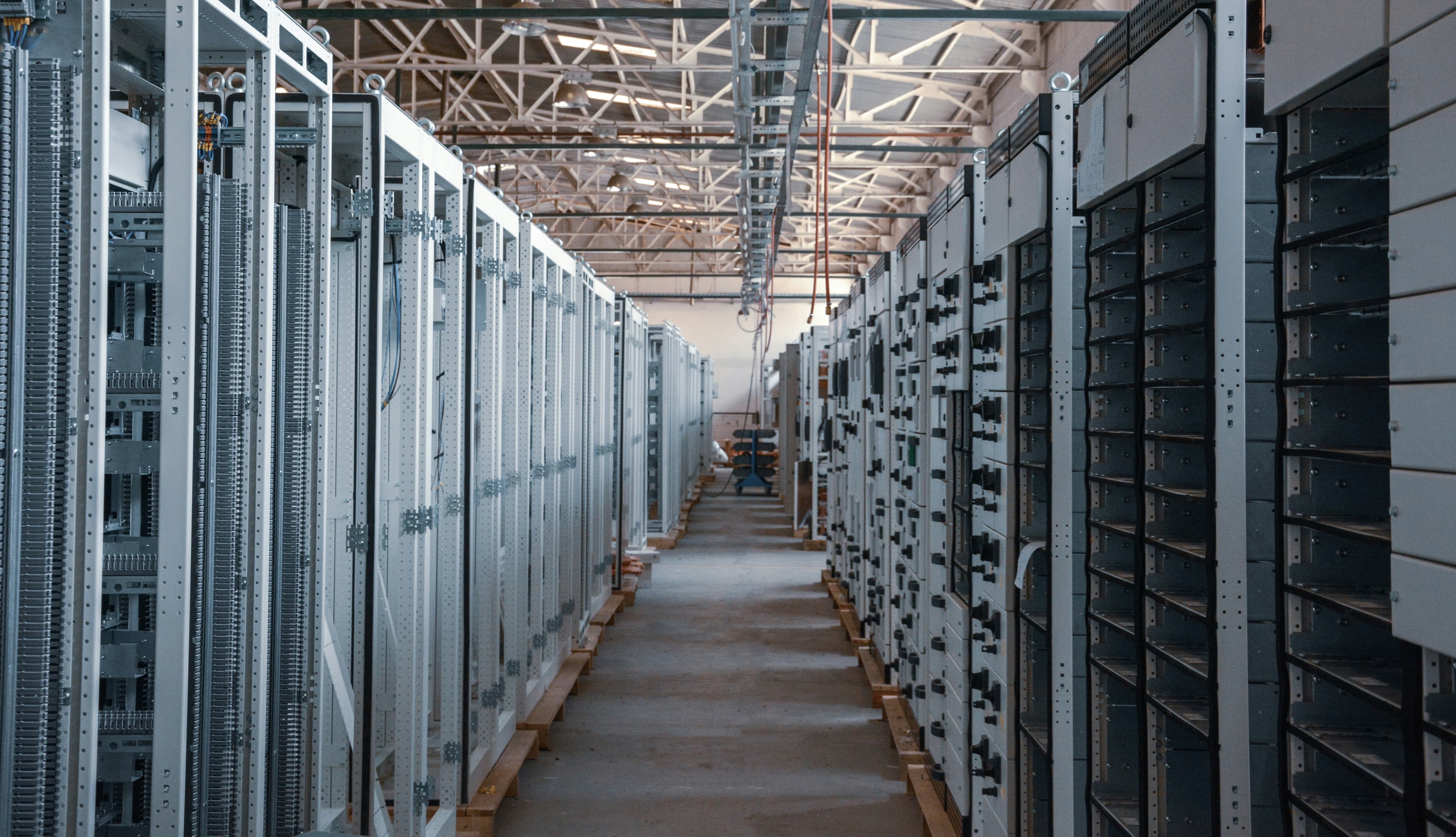
Meta has built six weatherproof tents outside New Albany, Ohio to house AI compute, cutting traditional data center construction time roughly in half. Each structure spans 125,000 square feet, and five of the six went up between April and June 2026, according to permits and satellite imagery reviewed by Cleanview founder Michael Thomas. The site is powered by 200 megawatts of modular gas turbines installed off-grid alongside the campus.
The tents are designed to hold AI chips that Thomas estimates are worth billions of dollars. Meta is calling them "rapid deployment structures," and the company is replicating the approach at multiple campuses across the United States. The strategy borrows visibly from two precedents: Tesla's parking-lot tent assembly line for the Model 3 in Fremont, California, and xAI's use of on-site gas turbines to bypass utility interconnection queues.
Mark Zuckerberg telegraphed the plan last year, telling the Information that Meta intended to use weatherproof tents to house parts of its multi-gigawatt data center buildout. What Thomas's review of local permits adds is the pace. A conventional hyperscale data center typically takes two to three years from groundbreaking to live load. Meta is compressing that to months by skipping the hardened shell and dropping racks into pre-fabricated soft structures.
Key facts
- 01Meta has built six 125,000-square-foot tents outside New Albany, Ohio, to house AI compute.
- 02Five of the structures went up between April and June 2026, according to local permits reviewed by Cleanview.
- 03The site is powered by 200 megawatts of modular gas turbines, a tactic popularized by xAI.
- 04Meta plans to spend up to $145 billion on data centers and capex; its stock is down 5% this year.
- 05Meta's latest model, Muse Spark, is complete but API access has been repeatedly delayed.
Power is the other half of the trick. Grid interconnection delays now stretch four to seven years in parts of the United States, and Meta has chosen to bypass that timeline entirely at the Ohio site by burning natural gas on-premises through modular turbines. xAI took the same path at its Memphis campus last year, drawing scrutiny from local environmental groups but getting megawatts online in weeks rather than years.
“Meta is building dozens of massive tents at campuses across the US, sticking billions of dollars of chips inside, and powering them with off-grid turbines. The AI race has officially entered its Mad Max phase.”— Michael Thomas, Founder of Cleanview
The urgency reflects how exposed Meta is right now. The company has committed to spending up to $145 billion on data centers and other capital expenditures, a figure that has unsettled investors. Meta stock is down 5% this year, a notable underperformance against the rest of the megacap AI cohort. Trimming construction costs by pitching tents instead of pouring concrete is one of the few capex levers available without slowing the buildout itself.
The buildout is happening as Meta's model release cadence has slipped. The Wall Street Journal reported recently that Muse Spark, Meta's latest frontier model, is complete internally but that the developer-facing APIs have been delayed repeatedly. Compute capacity does not fix a release problem, but a slip in product timing makes the capex bill harder to defend, which in turn raises the pressure to deliver chips into production faster and cheaper.
The tent approach is not without precedent inside the AI race, but it does mark a step change in how publicly the hyperscalers are willing to abandon the traditional data center playbook. For two decades, the industry has competed on PUE, redundancy, and Tier III/IV certifications. Soft-shell structures with on-site gas generation invert that model: speed and cost over hardening and grid integration.
There are real questions about how this scales. Modular gas turbines emit at the meter, which puts Meta on the wrong side of its own net-zero commitments and exposes the company to local air-quality permitting fights. Soft-shell structures are also harder to secure physically and to cool efficiently at the densities modern training clusters demand. Thomas's findings do not detail the cooling architecture inside the Ohio tents, and Meta has not commented on whether the deployment is interim infrastructure or a permanent template.
The Ohio tents are a tell about where the AI infrastructure market is heading. When the second-largest spender in the sector decides that the bottleneck is not money or chips but the time it takes to pour a building and wait for grid power, every hyperscaler buildout assumption gets re-examined. Expect more on-site generation deals, more pre-fabricated structures, and more permitting fights in the towns that end up hosting them. The cost of falling behind in compute is now visibly higher than the cost of building ugly.

Working on something we should cover, or seeing a story we missed? Send leads, documents, or feedback to hello@aichatdaily.com. For sensitive tips, see our secure tips page for Signal and PGP options.
Spotted an error? Email hello@aichatdaily.com with the URL and the issue, or read our full corrections policy.