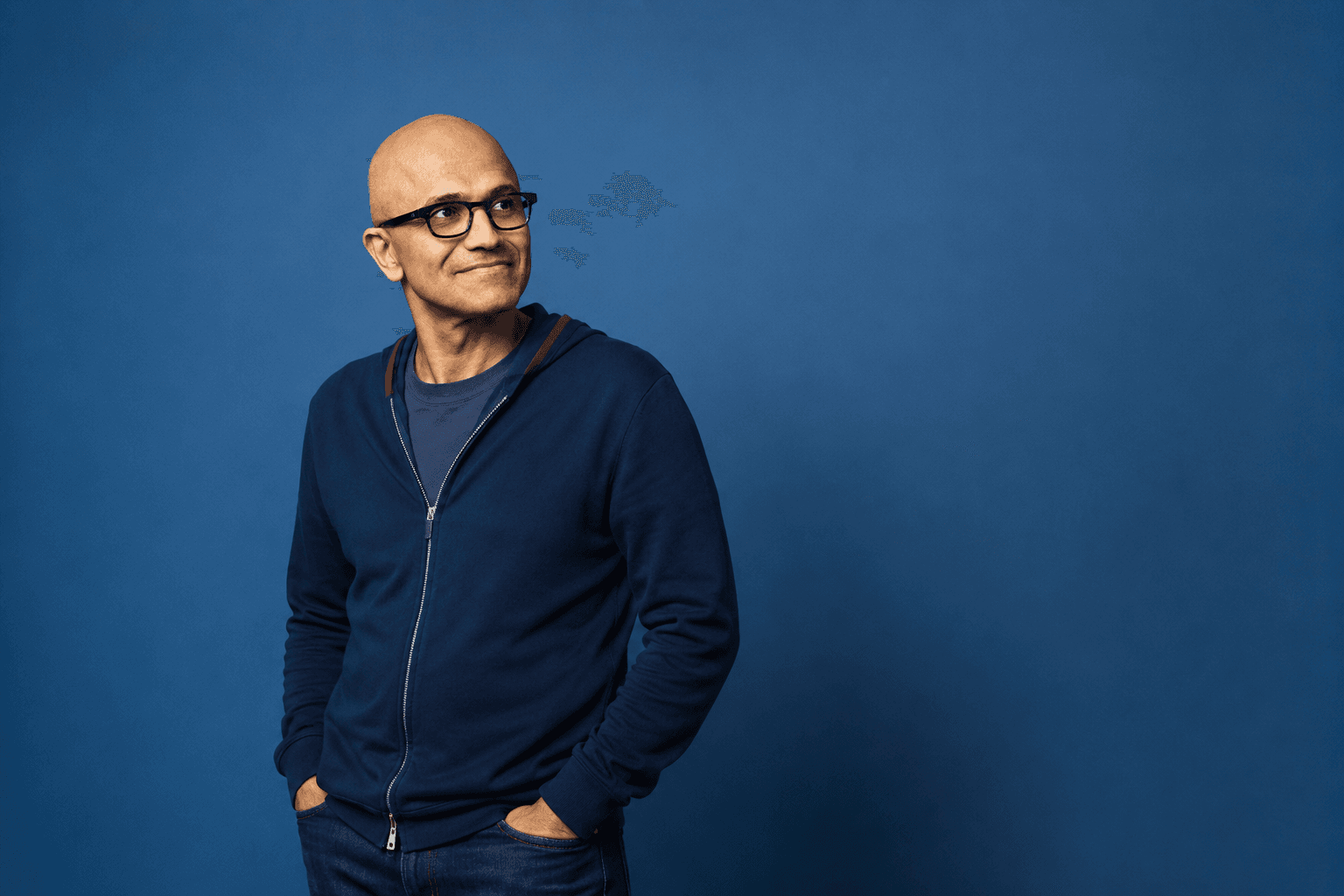
Microsoft AI chief executive Mustafa Suleyman says superintelligence is "just around the corner" and is restructuring his organization to build it in-house, ending an era in which Microsoft treated OpenAI as its sole supplier of frontier intellectual property. Speaking on the Decoder podcast on June 8, 2026, Suleyman said he has spent the last 15 to 18 months reassembling the company's model-training operation, with seven new models across modalities unveiled last week at Microsoft Build.
The pivot was unlocked by a renegotiated OpenAI contract finalized in October of last year. The new terms cement and extend the 5- to 6-year-old partnership — which still has another 4 to 6 years to run — but explicitly free Microsoft to pursue superintelligence on its own track while continuing to license and resell OpenAI models. Since October, Suleyman has been hiring a dedicated Superintelligence team and standing up training clusters at frontier scale.
Suleyman frames the technology in maximalist terms, calling it likely to be "the most valuable technology of all time." That framing explains the urgency: if he is right, paying rent on someone else's models is not a viable long-term posture for a company of Microsoft's scale.
“superintelligence is coming. I think it's just around the corner. And so I think it's going to be basically the most valuable technology of all time.”— Mustafa Suleyman, CEO of Microsoft AI
Key facts
- 01Microsoft AI unveiled 7 new models across modalities at Build, the first deliverables from a Superintelligence team Suleyman has assembled since October.
- 02A renegotiated OpenAI contract signed in October frees Microsoft to pursue superintelligence independently while still licensing OpenAI models.
- 03The 5- to 6-year-old OpenAI partnership has another 4 to 6 years to run, per Suleyman.
- 04Microsoft houses workloads for 493 of the 500 largest companies on Azure, M365 and Teams.
- 05Satya Nadella, in a message disclosed at the Musk-OpenAI trial, said: 'I don't want to be Intel and have OpenAI be Microsoft.'
The scale argument is the heart of his case. Microsoft hosts workloads for 493 of the 500 largest companies on Azure, M365 and Teams, distribution that Suleyman argues markets routinely underappreciate. Across a 5-, 6-, 7- or 10-year horizon, he said, the company cannot remain "a recipient of somebody else's IP" that it merely adapts for its own products.
The relationship has shifted because OpenAI itself has shifted. Over the last 2, 3, 4 years, OpenAI moved up and down the stack — launching ChatGPT and ChatGPT Enterprise, building its own data centers, designing its own chip, and exploring consumer hardware. What began as a research-lab-plus-product-company arrangement has turned into direct competition across multiple fronts.
The clearest internal artifact of that recognition surfaced during the Elon Musk–OpenAI trial, where a message from Microsoft chief executive Satya Nadella entered the record: "I don't want to be Intel and have OpenAI be Microsoft." The reference is to the PC era, when Intel supplied the silicon while Windows captured the platform economics — a dynamic Nadella does not want replayed with ChatGPT running on Azure.
Suleyman said the strategic adjustment predates OpenAI's November board incident, but accelerated after it. Decisions of this size, he noted, sit with Nadella alongside finance chief Amy Hood, president Brad Smith and others, and reflect a slow recognition that competitive overlap with OpenAI had grown to the point where ownership of frontier IP was no longer optional.
He took care to describe the split as evolution rather than rupture. OpenAI continues to grow revenue at a rapid clip and wants the freedom to buy compute from multiple providers and partner broadly; Microsoft, in turn, wants to stand on its own two feet on models. Both, in Suleyman's telling, get more of what they want under the new arrangement.
“It's been great for OpenAI, and it's been great for Microsoft, and all good relationships evolve, and I think this is just the next stage in our evolution.”— Mustafa Suleyman, CEO of Microsoft AI
The counterweight to the superintelligence talk is execution risk. Microsoft has not yet shown that the seven new Build models close the gap with OpenAI's or Anthropic's frontier systems on the benchmarks that matter, and Suleyman declined to share head-to-head numbers in the interview. Building training clusters of sufficient scale, hiring against OpenAI and Anthropic for top researchers, and shipping models that Microsoft's own enterprise customers prefer to GPT-class systems are three separate problems, and the company is early on all of them.
The market implication is that Microsoft is repositioning from AI distributor to AI producer, and is willing to absorb the cost of duplicating capability it already pays OpenAI to provide. For OpenAI, the upside is freedom to pursue its own compute, hardware and go-to-market ambitions without a single-customer ceiling; the downside is that its largest distribution partner is now also a direct competitor on models. For everyone else selling frontier IP — Anthropic included — Microsoft's entry as a first-party model builder narrows the set of hyperscalers that still need to rent.

Working on something we should cover, or seeing a story we missed? Send leads, documents, or feedback to hello@aichatdaily.com. For sensitive tips, see our secure tips page for Signal and PGP options.
Spotted an error? Email hello@aichatdaily.com with the URL and the issue, or read our full corrections policy.