Microsoft used its Build 2026 keynote on Tuesday to position itself as a direct competitor to OpenAI, unveiling 7 new in-house models, a cybersecurity system that coordinates 100 AI agents, and a Copilot super app built around autonomous agents called Autopilots. The headline release is MAI-Thinking-1, Microsoft AI's first reasoning model, which AI chief Mustafa Suleyman said was built from scratch for math, coding, and enterprise deployment with no distillation from another lab's models. The pitch lands roughly six weeks after Microsoft and OpenAI effectively separated in late April, though Microsoft remains OpenAI's primary cloud partner for now.
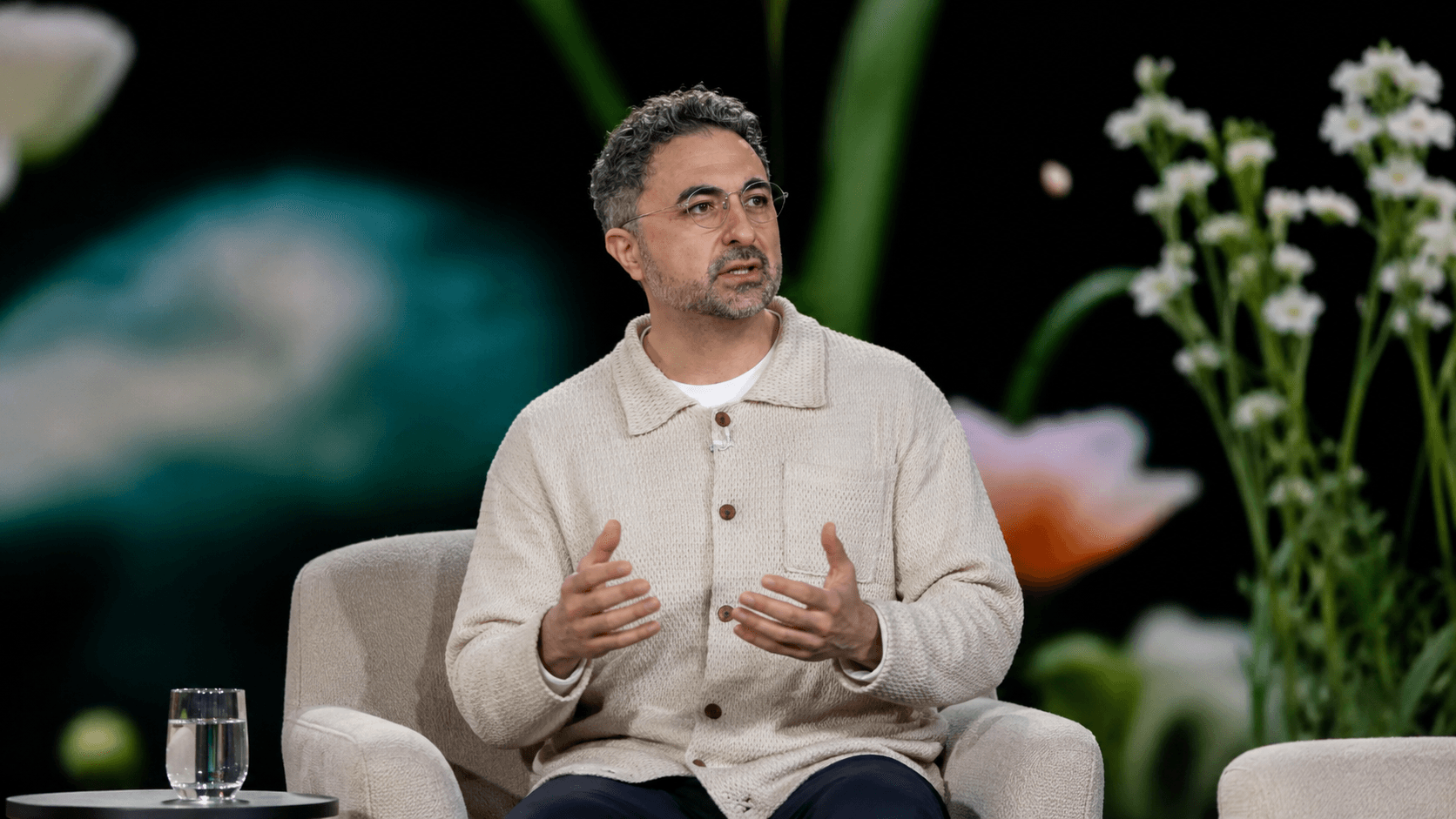
Suleyman framed the strategy plainly in an interview with The Verge: the goal is to make Microsoft one of the top four frontier labs in the world. He named the three he is chasing — Google DeepMind, Microsoft's former exclusive partner OpenAI, and Anthropic — and said Microsoft is not yet among them. Build was the company's first major event where that ambition was the explicit organizing message rather than a footnote to the OpenAI partnership.
“There's three labs that matter, Google DeepMind, OpenAI, and Anthropic. We are not one of them at the moment, and that's always been my intention.”— Mustafa Suleyman, Microsoft AI CEO
MAI-Thinking-1 is a medium-sized model aimed primarily at enterprise customers. Suleyman emphasized benchmark performance on coding tasks and a price point he said undercuts OpenAI's equivalents on some workloads — a pointed positioning in a market where customers are openly pushing back on AI pricing. Microsoft is years behind on reasoning: OpenAI began shipping reasoning models in the fall of 2024.
Key facts
- 01Microsoft unveiled 7 new models at Build 2026, led by MAI-Thinking-1, its first in-house reasoning model.
- 02Mustafa Suleyman named the 3 labs Microsoft is chasing: Google DeepMind, OpenAI, and Anthropic.
- 03MDASH, Microsoft's new cybersecurity tool, coordinates 100 AI agents to find exploitable bugs.
- 04Azure now hosts 11,000 models, giving Microsoft optionality while it builds its own frontier stack.
- 05Microsoft and OpenAI effectively separated in late April, though Microsoft remains OpenAI's primary cloud partner.
The other six models cover image, voice, transcription, and coding. Suleyman stressed repeatedly that none of them were trained via distillation from another company's system, an unusual amount of emphasis that reads as a direct response to any assumption that Microsoft's progress traces back to OpenAI IP. Microsoft wants the credit, and the independence claim, to stick.
Suleyman pointed to the renegotiated OpenAI contract as the inflection point. The new terms let Microsoft train models at larger scale and pursue what he calls superintelligence using only its own data and IP. He paired that with a softer rebrand he calls "humanist superintelligence," pitched as AI that prioritizes humanity first.
“the pivotal moment was renegotiating our contract with OpenAI. That meant that we were allowed to train models at a larger scale and explicitly pursue superintelligence entirely with our own IP, with our own data, no distillation, training from scratch.”— Mustafa Suleyman, Microsoft AI CEO
Satya Nadella used the keynote to introduce MDASH, a cybersecurity tool that strings together 100 AI agents to hunt exploitable bugs. Nadella said the multi-agent setup finds vulnerabilities better than any single model — a clear shot at Anthropic's Claude Mythos Preview, which the lab introduced in April and expanded access to just before Build. OpenAI has a competing cybersecurity system as well, and all three companies are now openly fighting for the same government and enterprise contracts.
On agents, Microsoft is playing both sides of the popular open-source OpenClaw platform. Nadella committed to first-class OpenClaw support on Windows, and OpenClaw creator Peter Steinberger — now at OpenAI — made a surprise stage appearance to demo enterprise compatibility. "You can totally run OpenClaw inside your company now, and we even made the harness itself a plug-in," Steinberger said, adding that the tool works on top of Copilot, Codex, or any other coding agent via Windows.
Microsoft's own answer is a Copilot super app that bundles its existing assistants with new agents called Autopilots, which Nadella described as autonomous, long-running agents with full enterprise compliance. The first one, Scout, is billed as an always-on personal agent that can read inboxes, join Teams group chats, check calendars, and send daily briefings. Customers can build their own. GitHub's Cassidy Williams called Copilot "your home base for development and operations on your computer" and demoed approving code changes with a thumbs-up to her webcam. The super app concept tracks closely with OpenAI's effort, where Greg Brockman is leading work to unify ChatGPT, Codex, and the Atlas browser.
Nvidia CEO Jensen Huang appeared via video to tie the RTX Spark chip to Microsoft's agent push, describing a scenario where a user texts their PC from the road and it fires up local tools to act on their behalf. Suleyman argued Microsoft's position is structurally different from rivals chasing startup valuations or preparing IPOs, giving it room to optimize for the long term. Azure now offers 11,000 models, which Suleyman said gives Microsoft the optionality to resell Anthropic or anyone else while it builds its own stack.
“We've got the money to be able to buy Anthropic [models] when we need to. We've got the optionality in Azure with 11,000 models, so people can use literally whatever they want whenever they want, but that buys us the time to do it right from the start.”— Mustafa Suleyman, Microsoft AI CEO
The skeptic's case is straightforward. Microsoft listed benchmark wins across all 7 new models, but benchmark performance has rarely translated cleanly into enterprise adoption, and Microsoft is launching MAI-Thinking-1 into a market where OpenAI and Anthropic already have multi-year head starts in reasoning and agentic coding. The distillation claim is unverifiable from the outside, and the Autopilot framing of "enterprise compliance" will be tested the first time one of these agents goes off the rails inside a regulated customer.
What Build 2026 actually changes is the competitive geometry. Microsoft is no longer a distribution channel for OpenAI's models with a thin layer of its own work on top — it is shipping its own frontier stack, its own multi-agent security product, and its own super app, all aimed at the same enterprise buyers OpenAI and Anthropic now need to fund their next training runs. Microsoft's advantages here are unglamorous but real: a paying enterprise base, deep Azure margins, and the cash to keep buying frontier models from competitors while it builds its own. The race for the enterprise AI dollar just turned into a four-way fight, and Microsoft is the only entrant that does not need to win it to survive.

Working on something we should cover, or seeing a story we missed? Send leads, documents, or feedback to hello@aichatdaily.com. For sensitive tips, see our secure tips page for Signal and PGP options.
Spotted an error? Email hello@aichatdaily.com with the URL and the issue, or read our full corrections policy.