Nvidia and Doosan Group are expanding their partnership across four Doosan business units, wiring the Korean conglomerate into Nvidia's physical AI stack from robot brains to gas turbines to printed-circuit-board materials. The deal spans Doosan Robotics, Doosan Bobcat, Doosan Enerbility and Doosan Corporation Electro-Materials BG, and threads Nvidia's Isaac Sim, Isaac Lab, Cosmos, Newton, Jetson Thor, DSX and MGX platforms through the group's industrial portfolio. Nvidia disclosed the agreement on its corporate blog on June 7, 2026, six days after Jensen Huang's GTC Taipei keynote.
The framing is that Doosan touches several layers of what Nvidia now calls the AI factory ecosystem: robots on the floor, power feeding the racks, and the laminate materials inside the boards. Rather than a single product announcement, the companies described a multi-front collaboration covering robotics autonomy, large-scale power generation for data centers, and copper clad laminate for Nvidia MGX-based AI servers. None of the parties disclosed contract values or volume commitments.
The robotics piece is the most concrete. Doosan Robotics is integrating Nvidia Isaac Sim and Isaac Lab, the Cosmos open world foundation models, the open-source Newton physics engine and the Jetson Thor on-device compute module into its Agentic Robot OS. That platform stitches together perception, reasoning, simulation, learning and inference for industrial arms, and Doosan said it will use the stack to chase higher-value tasks such as depalletizing and sanding, plus new form factors including dual-arm and humanoid robots.
Key facts
- 01Doosan Robotics is integrating Nvidia Isaac Sim, Isaac Lab, Cosmos world foundation models, the Newton physics engine and Jetson Thor into its Agentic Robot OS.
- 02Four Doosan units are in the deal: Doosan Robotics, Doosan Bobcat, Doosan Enerbility and Doosan Corporation Electro-Materials BG.
- 03Doosan Enerbility will pitch gas turbines, steam turbines and small modular reactors, plus Doosan Fuel Cell hydrogen systems, as power for Nvidia DSX AI factories.
- 04Doosan Electro-Materials BG supplies copper clad laminate for PCBs used in Nvidia MGX-based AI servers and networking gear.
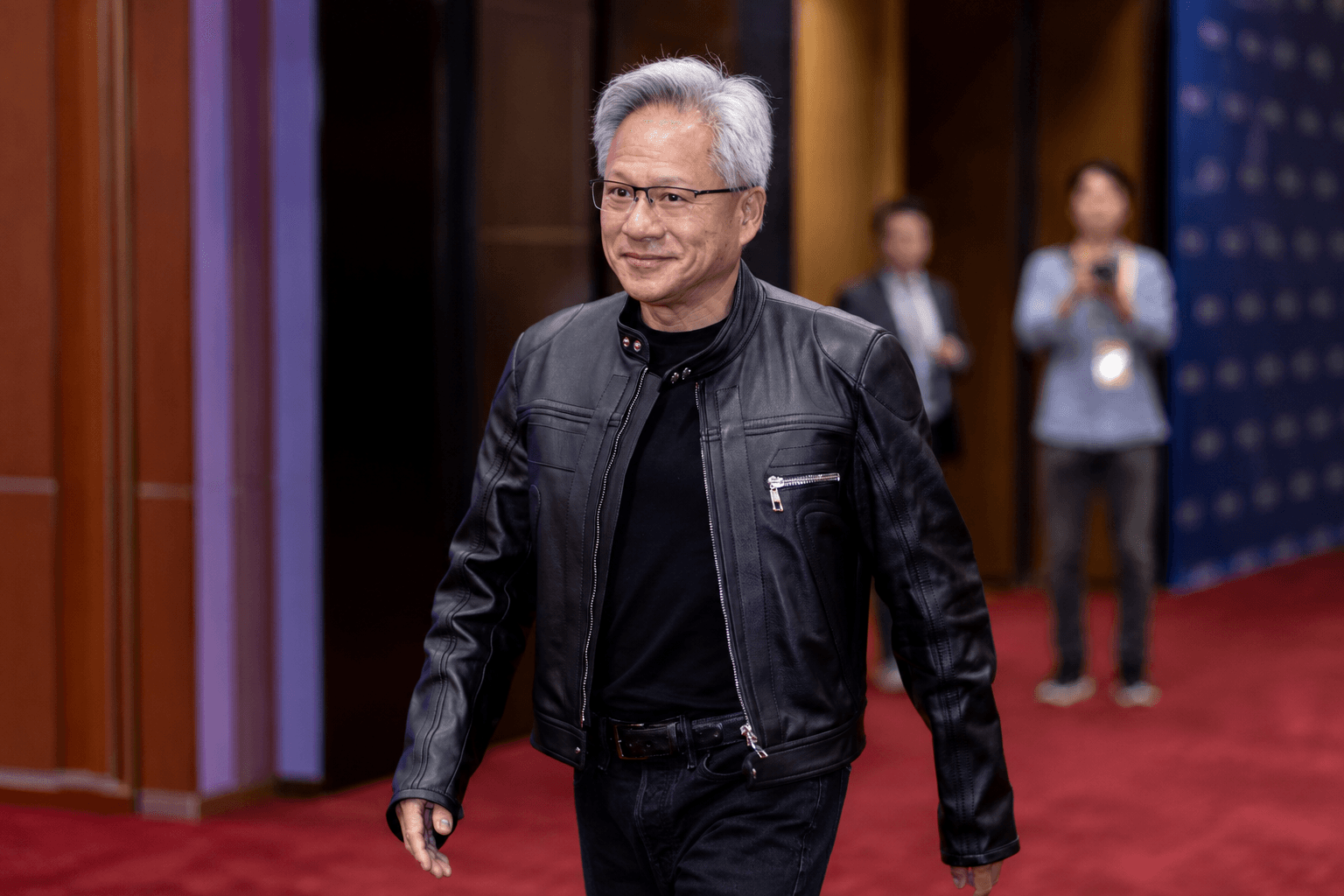
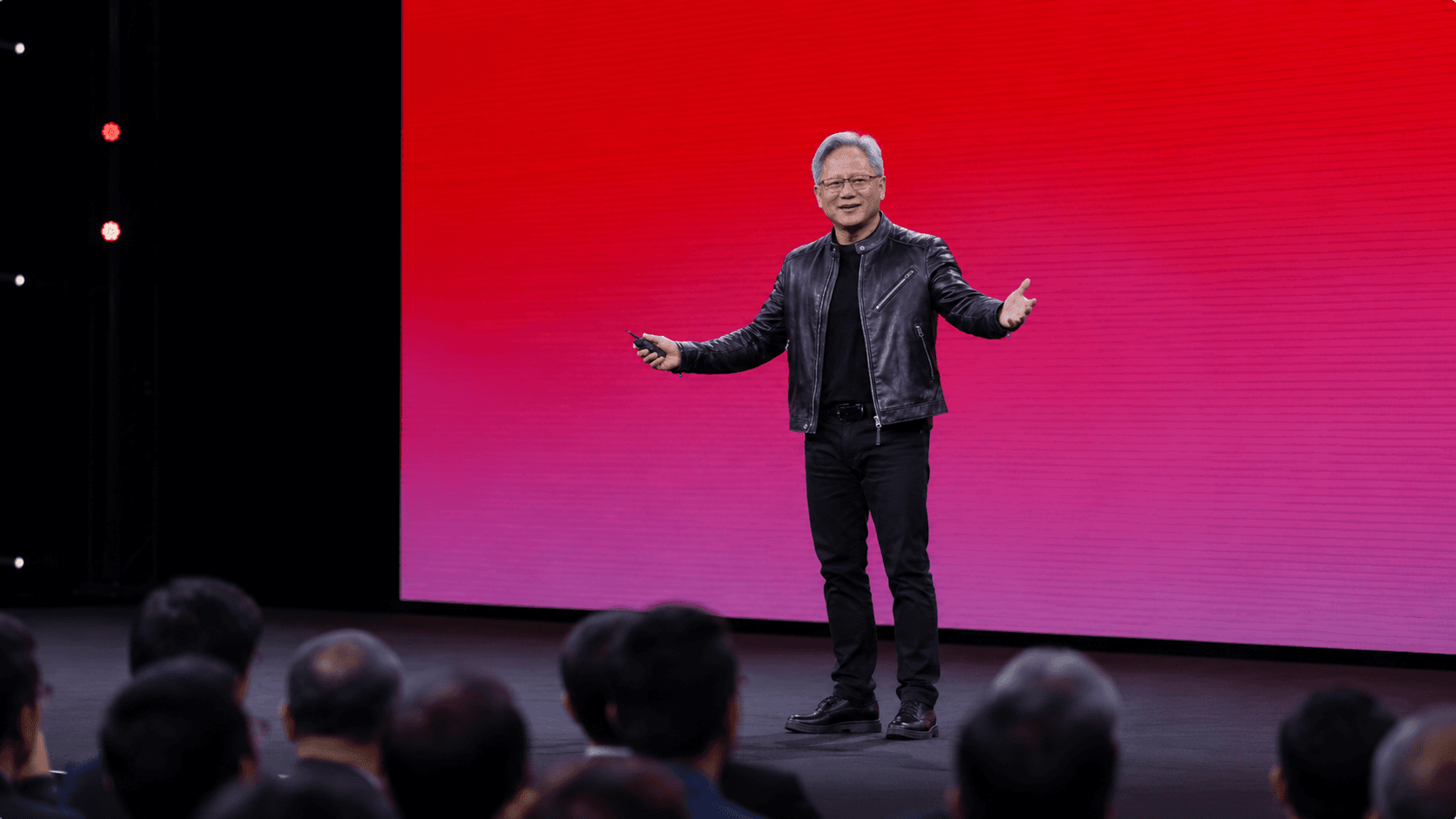
- 05Jensen Huang delivers the GTC Taipei keynote on June 1, 2026 at 11 a.m. Taipei time, where the partnership is being framed.
Doosan Robotics is positioning the work as a shift from being a robot-arm vendor to selling a full-stack robotics solution. Simulation-to-real workflows, physics calibration and AI reasoning are the levers the company says will make collaborative robots more adaptable and easier to deploy at scale. The same physical AI playbook extends to Doosan Bobcat, which plans to fold Nvidia's stack into construction, landscaping, agriculture and material-handling equipment, training world models that let the machines reason about changing environments.
The power-infrastructure angle is where the deal stops looking like a robotics announcement and starts looking like an AI-factory supply agreement. Doosan Enerbility is exploring how its gas turbines, steam turbines and small modular reactors, paired with Doosan Fuel Cell's hydrogen fuel-cell systems, could feed Nvidia DSX AI factories. The companies named power supply design, generation equipment optimization and evaluation of low-carbon sources including SMRs as areas of future collaboration.
That matters because data center power has become the binding constraint on Nvidia's growth in 2026. The DSX platform is Nvidia's reference design for gigawatt-class AI campuses, and pairing it with a Korean industrial supplier that builds nuclear, gas and hydrogen generation gives operators a single conversation for compute and the megawatts behind it. Doosan Enerbility is one of relatively few firms globally with both heavy-turbine manufacturing and SMR work in progress.
The fourth piece, Doosan Corporation Electro-Materials BG, supplies copper clad laminate used in printed circuit boards. CCL sits beneath the AI accelerators, networking switches and server motherboards that Nvidia MGX system builders assemble, and signal integrity at the laminate layer becomes a bottleneck as switch bandwidth and accelerator interconnects scale. Locking in a high-performance CCL partner for the MGX ecosystem is a quiet but load-bearing piece of the announcement.
The strategic logic for Nvidia is consistent with what Huang has been telegraphing across recent keynotes. Physical AI, meaning robotics and autonomous machines trained in simulation, is the next compute market after generative AI, and the DSX-and-MGX reference architectures are how Nvidia plans to sell the data centers that train those systems. Bolting on a Korean partner that does industrial automation, power generation and electronics materials at scale gives Nvidia coverage across all three.
For Doosan, the calculus is access. Each of the four units gets a credible path into the Nvidia ecosystem at a moment when industrial buyers are picking AI infrastructure partners for the next decade. The robotics unit gets a software stack that would take years to build in-house; Enerbility gets a seat at the table on AI factory siting; the materials unit secures positioning inside an MGX supply chain that is still being shaped.
The announcement is light on numbers and timelines, and the language throughout is exploratory rather than committed. No purchase orders, no megawatt figures, no robot unit counts. Investors and customers will want to see which of the four threads produces shipping product first, and whether the Enerbility power work moves from press release into actual DSX site agreements. Korean industrial groups have a history of announcing broad memoranda that narrow significantly in execution.
Strip the corporate gloss and the deal reads as Nvidia continuing to vertically wire itself into the industrial economy ahead of the physical-AI buildout, following a similar pattern visible in the RTX Spark push through Korean PC bangs with KRAFTON, NC and T1 covered here earlier this week. Compute is no longer just a chip sale; it is a robot stack, a power contract and a laminate spec all bundled together. Whichever industrial conglomerate signs first becomes the template for the rest, and Doosan is now in line ahead of most of its peers.

Working on something we should cover, or seeing a story we missed? Send leads, documents, or feedback to hello@aichatdaily.com. For sensitive tips, see our secure tips page for Signal and PGP options.
Spotted an error? Email hello@aichatdaily.com with the URL and the issue, or read our full corrections policy.