Nvidia is turning AI compute into an institutional asset class. The company announced partnerships with Apollo, BlackRock, Blackstone, Brookfield, Goldman Sachs and KKR to build independent financing platforms designed to mobilize over $500 billion of third-party capital for AI factory buildouts over time. CEO Jensen Huang framed the move as a structural shift in how AI infrastructure gets funded — away from balance-sheet-heavy project financing and toward the same long-duration capital pools that back power grids, pipelines and toll roads.
The pricing data Nvidia disclosed is the load-bearing evidence for the pitch. One-year H100 rental pricing rose from about $1.70 per GPU-hour in October 2025 to $2.35 per GPU-hour in March 2026. Cross-provider on-demand median pricing climbed from roughly $2.00 per GPU-hour in October 2025 to $2.70 in June 2026. Blackwell capacity commands a further premium, with B200 cloud rates spanning approximately $5.30 to $7.05 per GPU-hour. Rising rental rates on installed silicon is exactly the profile infrastructure investors underwrite.
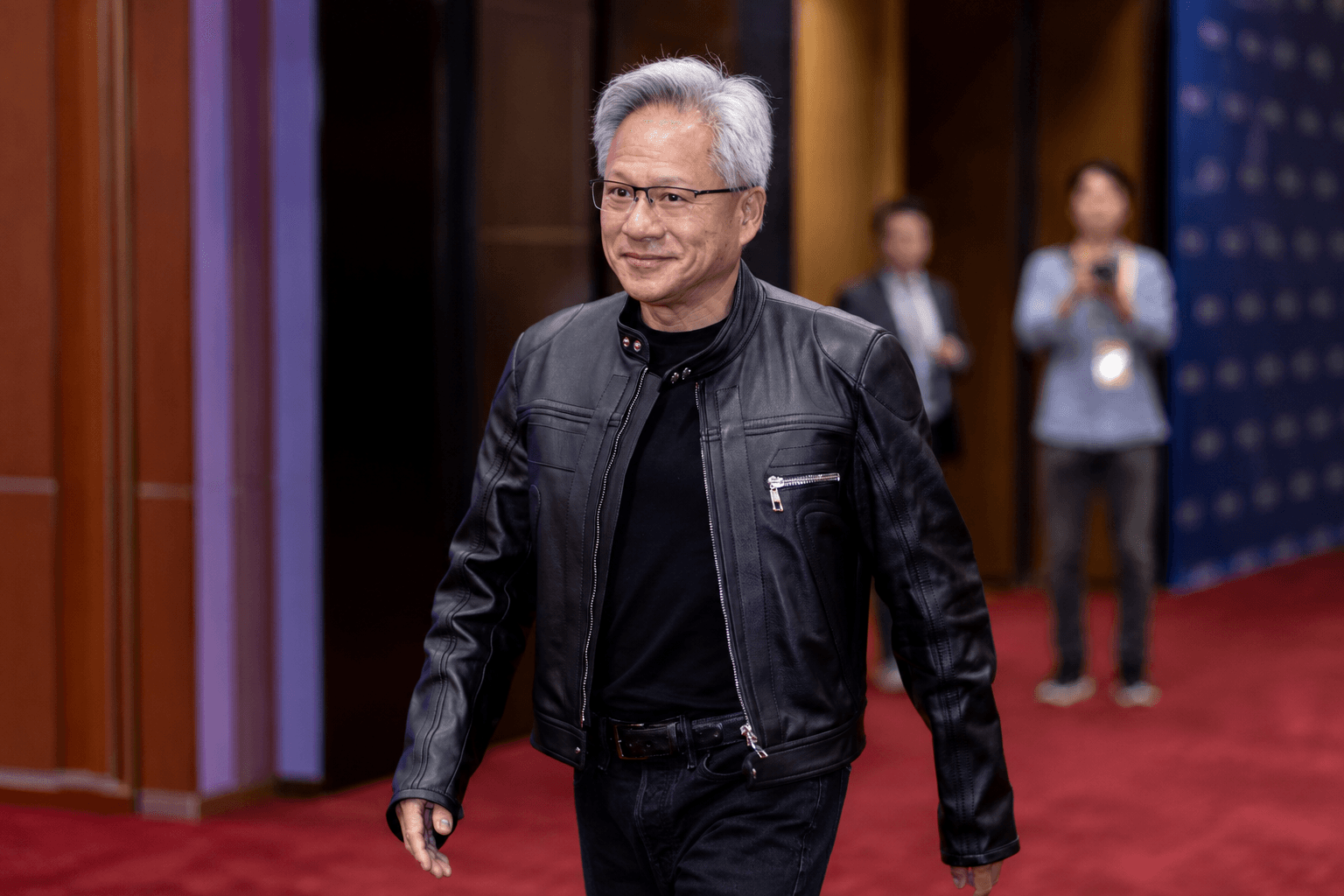
Huang's framing is that GPUs behave less like consumer electronics and more like power plants. "In AI, compute is revenue," he wrote, arguing that a single Nvidia AI factory can serve many customers across language, vision, biology and robotics workloads, making the capacity fungible and redeployable when one tenant's demand shifts.
“We have moved from an era in which companies bought chips and built data centers project by project to one in which AI factories can be financed as productive infrastructure — with repeatable platforms, long-term institutional capital and a diverse customer base that uses compute to create revenue.”— Jensen Huang, Nvidia CEO
Key facts
- 01Nvidia partnered with Apollo, BlackRock, Blackstone, Brookfield, Goldman Sachs and KKR to mobilize over $500 billion of third-party capital for AI infrastructure.
- 02One-year H100 rental pricing rose from about $1.70 per GPU-hour in October 2025 to $2.35 in March 2026.
- 03Blackwell B200 cloud rates now span roughly $5.30 to $7.05 per GPU-hour.
- 04Nvidia will backstop up to 25% of an opportunity via residual-value support, assessed project by project.
- 05The A100, launched in 2020, remains in active commercial use six years later, with capacity commitments extending its economic life toward a decade.
The partner list is the point. Apollo, BlackRock, Blackstone, Brookfield, Goldman Sachs and KKR collectively manage the deepest pool of infrastructure capital in the world, and their presence signals that AI factories are being underwritten with the same discipline as ports and pipelines. Nvidia said each firm will independently assess customer, demand, utilization, cash flow and residual value on a project-by-project basis. Nvidia supplies the platform; the financiers make the credit call.
The circular-financing concern gets a direct answer. Nvidia said it will provide residual-value support on up to 25% of an opportunity, and only where warranted. That is substantially lower than the credit backstops embedded in some earlier compute-financing arrangements. The bulk of the risk sits with the outside investors, who are underwriting AI labs, AI-native startups, enterprises, sovereign buyers and cloud providers as end customers.
Nvidia's argument for residual value leans heavily on the A100. The Ampere-based chip launched in 2020 and remains in active commercial use six years later for training, fine-tuning, inference and HPC workloads. That durability matters because AI infrastructure critics have long assumed a three-year depreciation curve; Nvidia is telling investors the useful life is closer to a decade.
“Customers continue to commit capacity for multi-year deployments, extending A100's economic life toward a decade.”— Jensen Huang, Nvidia CEO
The pitch also leans on CUDA as an ongoing performance upgrade. Every generation of Nvidia software raises throughput on already-installed hardware, which means an AI factory produces more intelligence at lower cost over time rather than degrading. Combined with a globally adopted architecture used across every major cloud, that gives the installed base a deep secondary market of potential offtakers — the kind of exit optionality infrastructure lenders demand.
The scale of the announcement stands out against the broader AI capex conversation. The $500 billion figure is aggregate third-party capital the platforms are designed to mobilize over time — not Nvidia revenue, not a single fund and not a commitment to any one customer. It follows the 800 VDC power standard Nvidia, Google and Microsoft proposed for AI factories, which we covered earlier this month, and points to a coordinated push to treat AI compute as a distinct infrastructure category with its own electrical, financial and operational standards.
The obvious risk is demand concentration. If frontier training compute demand plateaus — or if algorithmic efficiency improves faster than model scale grows — utilization rates on the newest Blackwell capacity could fall well before the debt is amortized. The financing platforms are built to underwrite around that risk through independent diligence and diversified customer bases, but the sector has never absorbed this much capital this quickly. Huang argued the market is disciplined because each partner independently evaluates demand and cash flow, though the true test will be the first downturn.
For Nvidia, the strategic value is unlocking buyers who want compute but cannot raise capital at Microsoft or Meta scale. Sovereign AI programs, mid-market enterprises and specialized AI clouds have all been rate-limited by financing, not by demand. Routing them through institutional debt platforms — with Nvidia backstopping only the residual — expands the addressable buyer set without inflating Nvidia's own balance sheet. If the platforms function as advertised, this is the mechanism that turns the current AI capex cycle from a handful of hyperscaler decisions into a genuine capital market, and the six firms Nvidia named just became the gatekeepers.

Working on something we should cover, or seeing a story we missed? Send leads, documents, or feedback to hello@aichatdaily.com. For sensitive tips, see our secure tips page for Signal and PGP options.
Spotted an error? Email hello@aichatdaily.com with the URL and the issue, or read our full corrections policy.