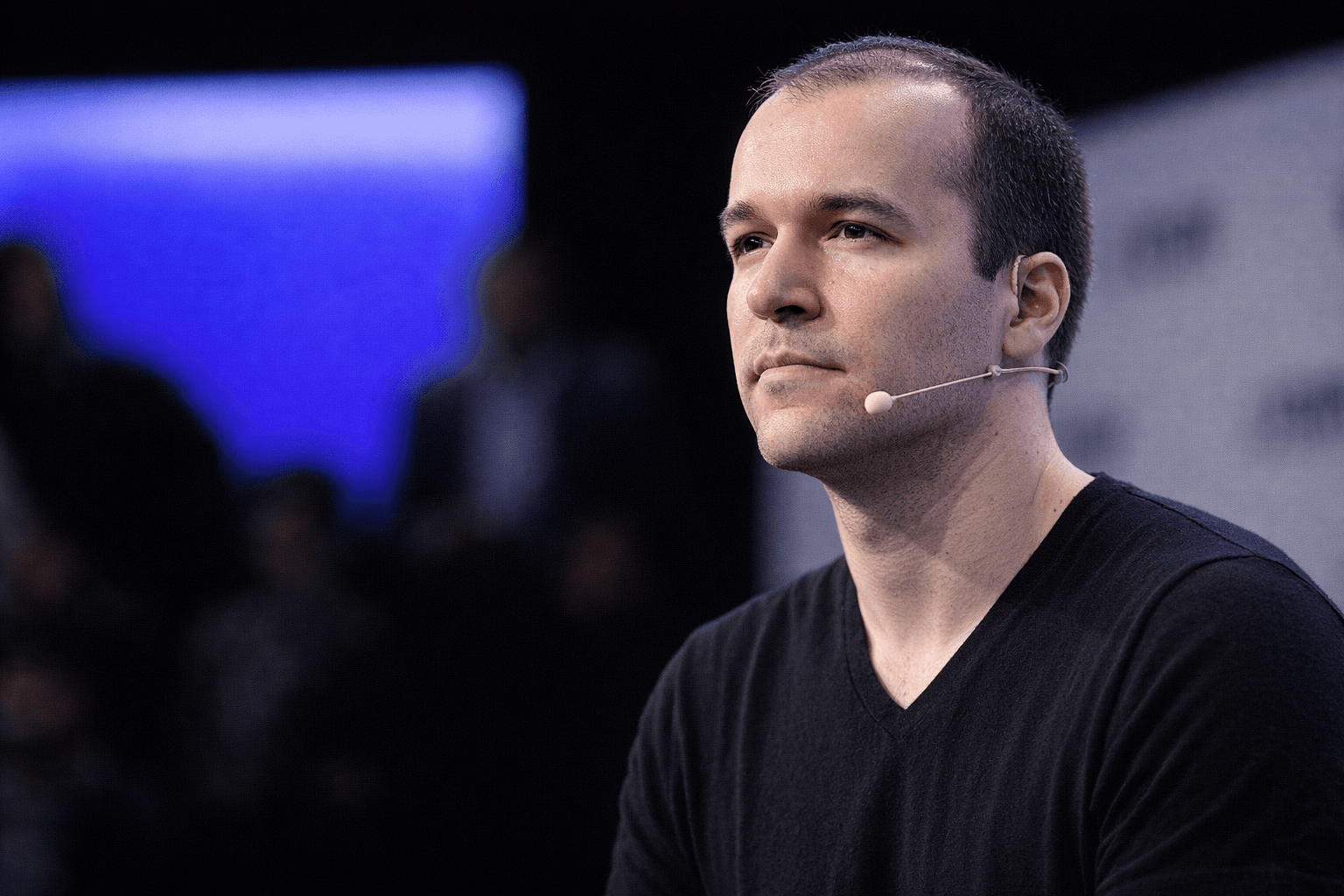
OpenAI has replaced Chief Revenue Officer Denise Dresser after nine months on the job, hiring Wiz president and COO Dali Rajic to take over its top sales role. The swap is the third senior exit at OpenAI in the past month, following the departures of COO Brad Lightcap and AGI deployment CEO Fidji Simo, and it lands as the company weighs a potential IPO with more than 1 billion weekly active users and 2 million businesses on its products.
Co-founder and president Greg Brockman, who has taken a larger management role since Simo's departure, announced Rajic's arrival in a company blog post. Dresser's exit ends one of the shortest CRO tenures at a frontier lab during a period when OpenAI has been aggressively pushing enterprise deployment.
“Denise has led our revenue organization through a formative period for the business and has worked tirelessly to get the team to where it is today.”— Greg Brockman, OpenAI co-founder and president
Rajic joins from Wiz, the cloud security company Google acquired earlier this year for $32 billion — Google's largest acquisition ever. He built out Wiz's go-to-market operation through that run-up, the kind of repeatable enterprise sales machine OpenAI now wants to import.
Key facts
- 01OpenAI replaced CRO Denise Dresser with Wiz president and COO Dali Rajic after nine months on the job.
- 02The move follows the departures of COO Brad Lightcap and AGI deployment CEO Fidji Simo in the last month.
- 03OpenAI says its products reach more than 1 billion weekly active users and 2 million businesses.
- 04The company purchased $7 billion worth of employee shares this week in a tender offer.
- 05OpenAI has filed confidentially with the SEC ahead of a potential IPO, timing undisclosed.
The context for the change is a revenue organization that, by the account of executives speaking both privately and publicly, has not hit all of its internal targets despite explosive user growth. Sam Altman has spent the year steering the company toward enterprise deployment and cutting back on projects viewed as distractions from that focus.
Brockman framed the handoff around execution rather than strategy shift, crediting Dresser with the current shape of the team while signaling that the next phase requires a different operating tempo.
“The way we're deploying this technology is changing rapidly, and Dali will turn what we've learned into repeatable execution as we build out the full system to make AI broadly useful for people and businesses.”— Greg Brockman, OpenAI co-founder and president
The timing matters because OpenAI has filed confidentially with the SEC ahead of a potential IPO, though it has not disclosed when it plans to go public. Private companies routinely tighten up their executive bench before a public markets debut, and the CRO seat is one of the most closely scrutinized by public investors.
OpenAI also purchased $7 billion worth of employee shares this week in a tender offer, letting staff cash in equity compensation. Tender offers of that size often accompany a longer runway to IPO rather than an imminent one — companies use them to relieve internal pressure for liquidity when a public debut is still months or quarters away.
Bloomberg News reported that an earlier version of the OpenAI blog post called for a "relentless focus" on "measurable business impact," language that was removed from the published version. The excised phrasing tracks with the direction Altman has publicly set for the company this year: fewer experimental side bets, more enterprise revenue.
The competitive backdrop is unforgiving. Anthropic is targeting a $2 trillion valuation for its own potential IPO, with investors pricing in a rapid ramp of Claude's enterprise business. Microsoft is now pitching its in-house models against both OpenAI and Anthropic in Copilot deployments. Every dollar of enterprise AI spend is being fought over, and the CRO seat at OpenAI is now the person expected to convert scale into contracted revenue.
What's still unknown is how Rajic will restructure the go-to-market motion he inherits. Wiz's playbook was built on a single, well-defined buyer — the cloud security team — while OpenAI sells across every function in every industry. Translating a repeatable enterprise sales system onto a horizontal product used by 2 million businesses is a different problem than the one Rajic solved at Wiz, and it is the problem Brockman has now handed him.
The bench reshuffle also reframes how OpenAI presents itself to public markets. A company that has swapped its COO, its AGI deployment CEO, and its CRO inside a month is telling investors that the operating model of the last two years is not the one that will carry it through an IPO. Whether Rajic can lock in the revenue predictability public investors demand — while Altman keeps building toward frontier capability — is the single biggest execution question hanging over OpenAI's next twelve months.

Working on something we should cover, or seeing a story we missed? Send leads, documents, or feedback to hello@aichatdaily.com. For sensitive tips, see our secure tips page for Signal and PGP options.
Spotted an error? Email hello@aichatdaily.com with the URL and the issue, or read our full corrections policy.