Palantir is emerging as the primary AI vendor to the Federal Aviation Administration after Elon Musk's Department of Government Efficiency cut 400 FAA employees, delivered no major system upgrades, and left the agency with its worst operational year in over a decade. The company chaired by Peter Thiel is now integrated into the FAA's data stack, holds multiple no-bid contracts, and is positioned to capture a meaningful share of the $12.5 billion in supplemental funding authorized by the One Big Beautiful Bill Act in July 2025 — roughly $5 billion of which is earmarked for software.
The scale of the operational failure is the backdrop. On August 6th, the Minneapolis Air Route Traffic Control Center lost radar and communications for about two hours, disrupting more than 1,100 flights across a 330,000 square mile, nine-state sector. Two days earlier, controllers at Reagan National cleared a takeoff during a Marine One departure that came closer than the minimum safe distance. Across 2025, one in four US flights was delayed, diverted, or canceled — 1.7 million disruptions total — with tarmac delays up 64% year-over-year and 2.4 million checked bags lost or damaged on domestic routes alone.
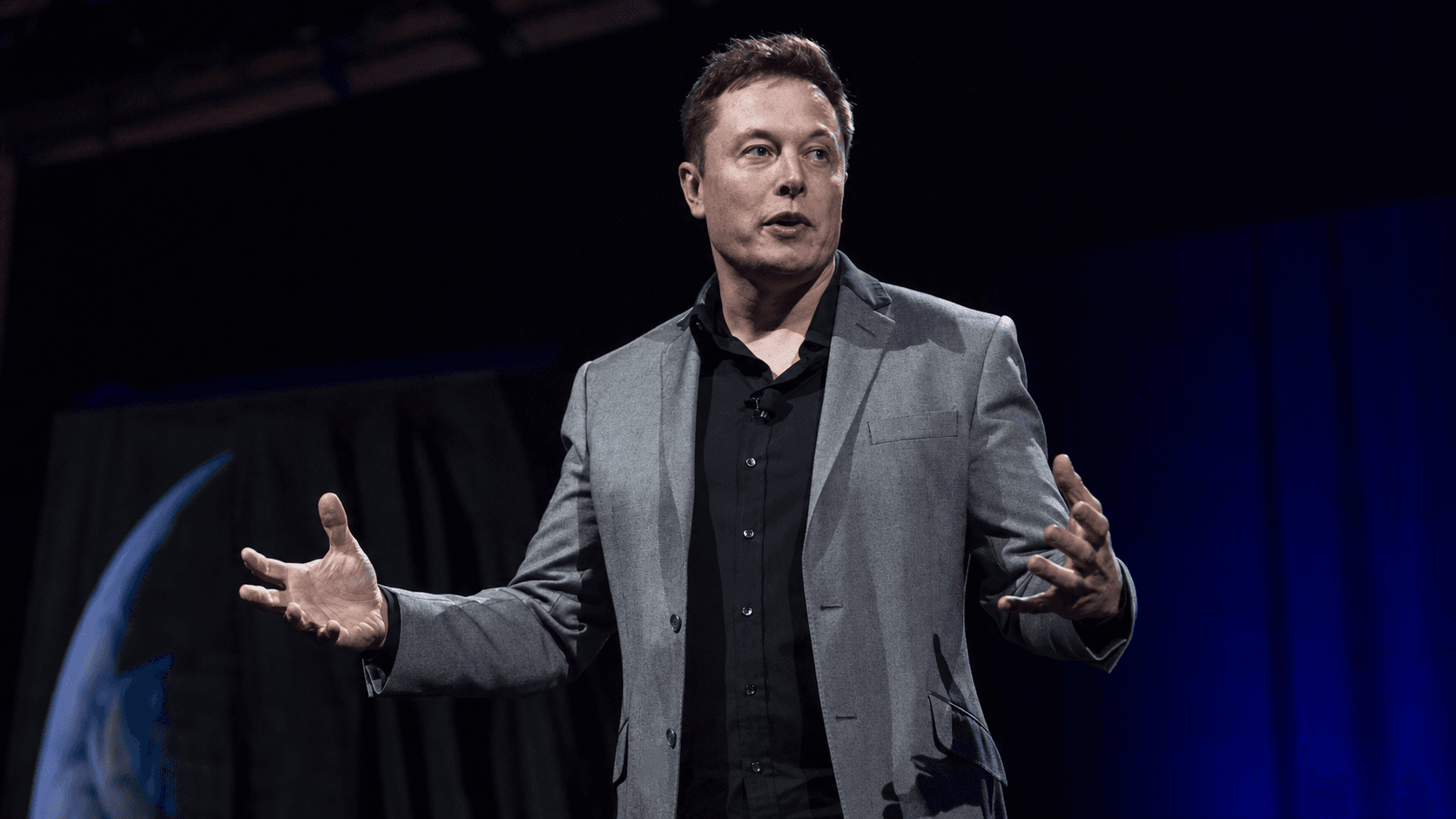
Transportation Secretary Sean Duffy invited Musk and DOGE to overhaul the FAA last February. Musk promised, on X, rapid safety upgrades to the air traffic control system. Instead, DOGE wrongly accused Verizon of running FAA communications, failed to install Starlink as the agency's telecom provider, and terminated maintenance technicians at 18 different centers. Equipment failures followed in Dallas, Denver, and Houston. Fumes drove evacuations in Atlanta, Newark, and Potomac. Staffing shortages hit Boston, New York, Los Angeles, Orlando, and Philadelphia.
“rapid safety upgrades to the air traffic control system”— Elon Musk, DOGE lead and X owner
Key facts
- 01Palantir crossed $1B in federal contracts in 2025 and is on pace for $1.5B in 2026, becoming a top-100 US government contractor.
- 02The One Big Beautiful Bill Act authorized $12.5B for the FAA overhaul, with roughly $5B earmarked for software upgrades — none for personnel.
- 03Musk's DOGE terminated 400 FAA employees, including maintenance technicians at 18 different air traffic control centers.
- 042025 saw 1.7 million flight disruptions, a 64% rise in tarmac delays vs. 2024, and 2.4 million damaged or lost checked bags on domestic flights.
- 05The FAA expects to lose 1,711 controllers — more than 10% of its 14,832-person workforce — to attrition in 2026.
With DOGE's failure well documented, the administration has effectively handed the rebuild to Palantir. The company started at the FAA in 2024 under the prior administration with Foundry, its data integration and analytics platform. All of the agency's data and much of its tech stack now runs through Palantir systems, according to reporting on the buildout. In 2025 Palantir won a no-bid contract for an AI-powered runway collision avoidance tool, and a second no-bid contract to add AI to the FAA's grants system — the program that funds up to 95% of air traffic control improvements at small airports.
This year, the FAA opened bidding for an ontology-driven Foundry operating system to drive AI integration across the agency. Ontology and Foundry are proprietary Palantir products, so Palantir won that contract as well. The company was also one of three finalists on the $875 million SMART national airspace system contract, an AI tool intended to help controllers manage traffic flows and predict disruptions. Palantir lost SMART to Air Space Intelligence, a Boston startup whose executive team includes four Palantir alumni.
Palantir's broader federal footprint is expanding at the same pace. It crossed $1 billion in federal contracts for the first time in 2025 and is on track for $1.5 billion in 2026, making it a top-100 US government contractor. Its Maven targeting system made its wartime debut earlier this year in Iran. It built a real-time mapping tool for ICE, a search system that let DOGE identify and cancel more than $780 million in DEI-linked grants at the Department of Health and Human Services, and a mega-database project for the IRS covering US citizens' financial data. Legislators and watchdogs have flagged data-privacy, accuracy, and legal concerns across those programs.
The staffing problem the money does not touch is what controllers keep flagging. None of the $12.5 billion supplemental goes toward personnel. The FAA finished 2025 with 14,832 controllers and expects to lose 1,711 of them — more than 10% — to retirement, resignation, and other attrition in 2026. The agency's 2026 base budget includes only $239 million in new funds for hiring initiatives. Almost 90% of air traffic control centers were chronically understaffed even before Musk's intervention.
After thunderstorms caused roughly 9,000 delays and 2,000 cancellations in the Northeast on August 7th, Duffy blamed the disruptions on controllers calling out sick. Controllers pushed back on the framing. Duffy's flagship recruitment effort, a Level Up Your Career campaign aimed at gamers, yielded 2,000 applications — a total he called HISTORIC. Thirty percent of candidates wash out during training, and it takes up to three years to become a fully certified controller, so the pipeline will not close the gap this decade.
The competitive lesson for AI vendors selling into federal agencies is that platform lock-in beats domain expertise, at least on the current procurement timeline. Palantir has no meaningful prior experience in air traffic control, yet is positioned to win a large share of the $5 billion software budget because its Foundry and Ontology systems are already the substrate the agency's data sits on. Air Space Intelligence's SMART win — driven in part by an executive bench of Palantir alumni — reinforces the same dynamic: the winning bidders are the ones fluent in Palantir's data model. For AI infrastructure companies eyeing federal work, the FAA rebuild is a live case study in how quickly a single vendor's schema can become the buying criterion, and how slowly the underlying operational problem gets fixed when the budget flows to software and not to the people who use it.

Working on something we should cover, or seeing a story we missed? Send leads, documents, or feedback to hello@aichatdaily.com. For sensitive tips, see our secure tips page for Signal and PGP options.
Spotted an error? Email hello@aichatdaily.com with the URL and the issue, or read our full corrections policy.