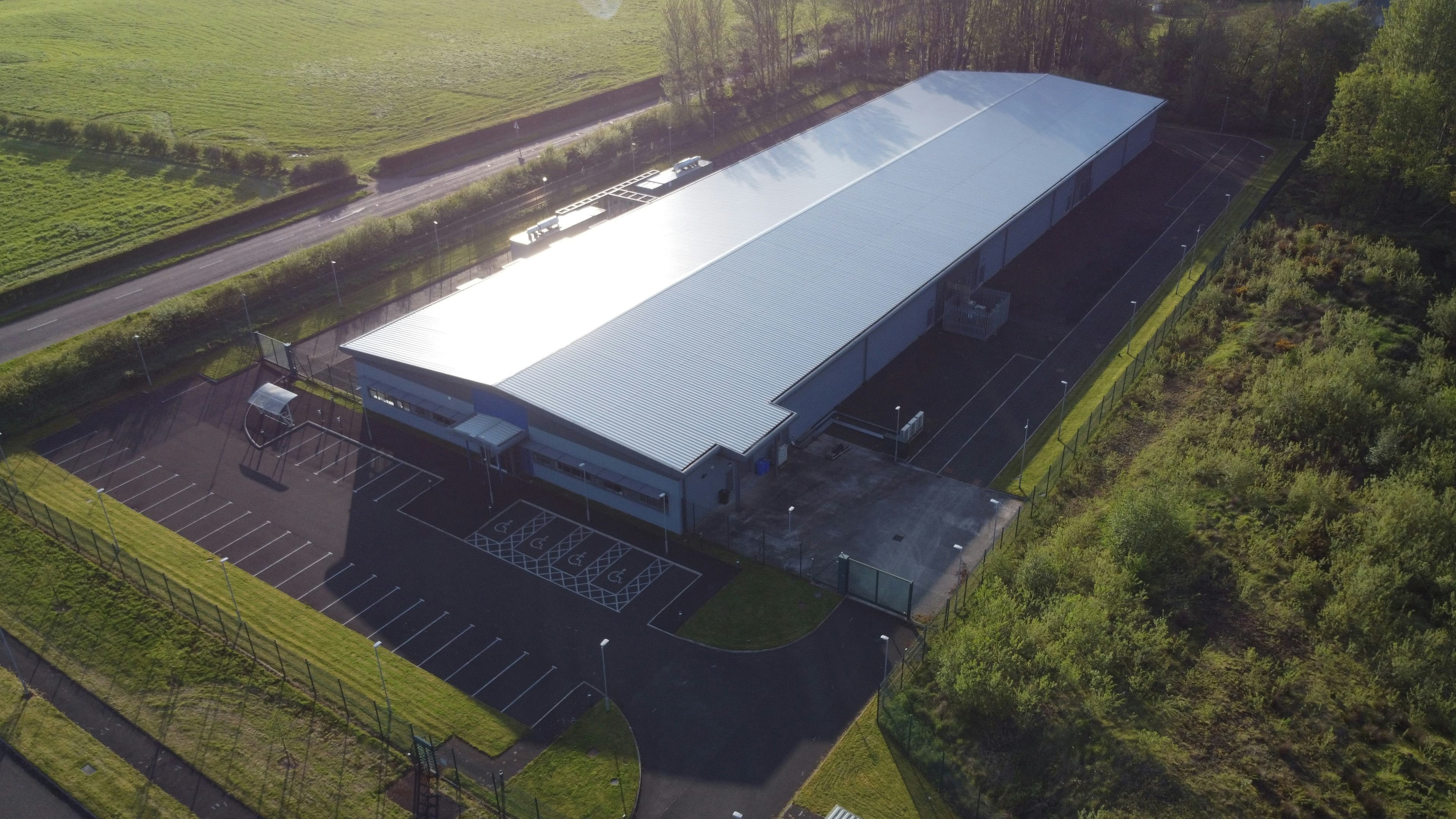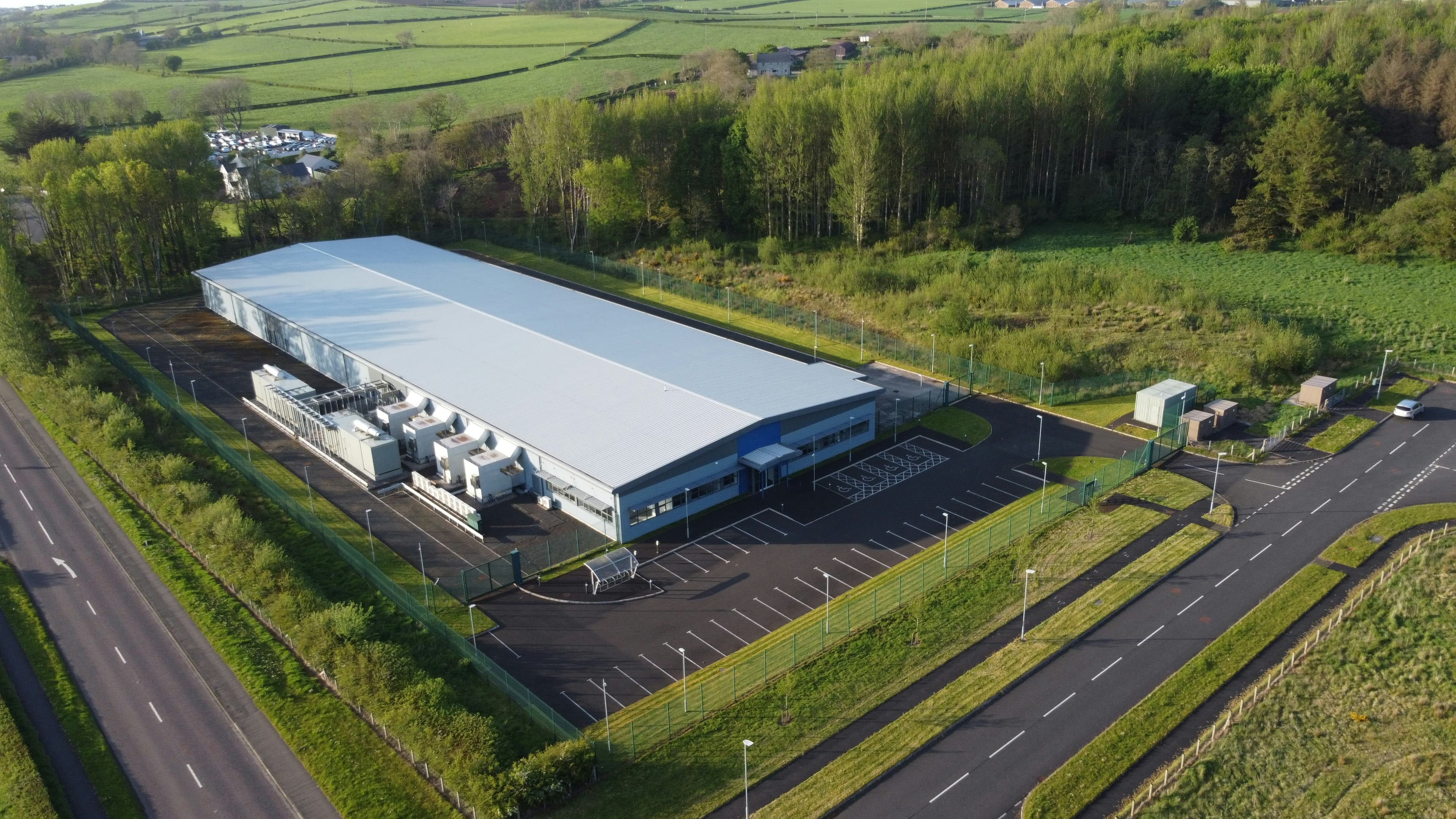
Runware launched the Sonic Inference Pod on Tuesday, a modular, transportable AI data center designed to sit anywhere there is power and to network with other pods as a single distributed inference fabric. The startup already has 10 pods deployed across the US, Europe, and Asia-Pacific, and says it has lined up 160 additional sites where new pods can be dropped in. The pitch: skip the multi-year buildout of a fixed hyperscale facility and add inference capacity in days.
Runware raised a $50 million Series A in December to build out image-generation infrastructure, and it is now framing the pod as the delivery vehicle for that mission rather than a side product. Existing customers running on the network include Higgsfield AI and Wix. Co-founder and CEO Flaviu Radulescu says the economics work because pods deploy near end users, cut latency, and add capacity in parallel rather than as one giant lump.
“We believe distributed compute, positioned closer to end users for faster inference, is what will win in the long term.”— Flaviu Radulescu, Co-founder and CEO of Runware
The pods use a closed-loop cooling system with no water draw, which Runware says lets a new unit come online in days rather than the months or years a traditional data center takes to permit, build, and power. Each pod can also adopt new GPU generations faster than a fixed facility that has to be retrofitted around existing racks. That hardware-refresh cadence matters in a market where model inference cost curves are moving quarterly.
Key facts
- 01Runware has 10 Sonic Inference Pods deployed across the US, Europe, and Asia-Pacific, with 160 additional sites lined up for power.
- 02The pods use closed-loop cooling with no water, and can be built in days versus the months or years required for a traditional data center.
- 03Runware raised a $50 million Series A in December and already provides inference to customers including Higgsfield AI and Wix.
- 04The pitch lands as [OpenAI](/openai) closes in on a reported $500 billion deal to build a data center in Ohio.
- 05CEO Flaviu Radulescu argues distributed, edge-local compute will beat fixed hyperscaler facilities on latency, resilience, and time-to-capacity.
The context here is a race that Runware is not trying to win on Runware's terms. OpenAI is reported to be close to a $500 billion deal to build a data center in Ohio, and hyperscalers are pouring capital into a small number of enormous facilities tied to specific power contracts. Runware's argument is that concentrated builds create concentrated fragility — one facility going down, one grid interconnect being delayed, one permitting fight — while a fleet of pods spreads that risk.
Radulescu also frames the topology as a product feature for enterprise customers. Requests route to whichever pod has capacity closest to the user, and dedicated customers can take a whole pod for isolated workloads. That is a different sales motion than renting a slice of a shared GPU cluster inside a hyperscaler region, and it lines up with a broader industry move toward edge-local inference as models get deployed into latency-sensitive products.
The obvious question is whether other infrastructure companies simply copy the pod design. Radulescu says the moat is not the concept but the execution — circuit-board design mistakes cost months across redesign, simulation, fabrication, testing, and delivery, and the pool of engineers who understand the full stack of components is small. In other words, the schematic is not the hard part; keeping a fleet of 10, then 100, then 1,000 units running is.
Data center siting is politically loaded right now. Communities near new AI facilities have reported rising utility costs, and grid interconnect queues in the US have stretched into multi-year backlogs. Runware's counter is that its pods use existing power and no water for cooling, so a pod dropped onto stranded or underutilized capacity does not require new transmission or new grid buildout.
Radulescu's read on the demand curve is blunt: AI power use is going to rise regardless of who supplies it, so the question is how efficiently the marginal watt gets converted into inference. The Runware argument is that closed-loop, distributed compute at existing power sites is a lower-friction way to serve that demand than commissioning a new gigawatt-scale campus.
“No transmission losses, no water in cooling, and we're using power that already exists instead of asking for new grid capacity to be built. More inference built this way means less new grid, less water, for the same amount of compute.”— Flaviu Radulescu, Co-founder and CEO of Runware
There are real caveats. Ten pods is a demonstration, not a fleet at hyperscaler scale, and the 160 sites are opportunities rather than committed builds. Serving frontier training workloads — the thing OpenAI's rumored Ohio facility is presumably built for — is a different problem than serving inference, and Runware is explicitly not competing for training. Whether enterprise customers accept a distributed network as a substitute for named hyperscaler regions is also unproven at volume.
The bet worth watching is topological. If inference demand keeps growing faster than fixed facilities can be permitted and powered — and everything about the last twelve months of grid-queue data suggests it will — then the arbitrage between a $500 billion single-site build and a fleet of modular pods dropped onto existing power becomes the interesting business. Runware is not trying to out-hyperscaler the hyperscalers. It is trying to make their model look slow.

Working on something we should cover, or seeing a story we missed? Send leads, documents, or feedback to hello@aichatdaily.com. For sensitive tips, see our secure tips page for Signal and PGP options.
Spotted an error? Email hello@aichatdaily.com with the URL and the issue, or read our full corrections policy.