Orbital, a new space data center startup founded by former Spin CEO Euwyn Poon, emerged from a16z's Speedrun accelerator in May 2026 with a $5 million seed round and a plan to put 10,000 satellites carrying Nvidia GPUs into orbit. The pitch: a distributed gigawatt of inference compute in space, with each satellite rated at 100 kW of power. The catch: none of it works at scale until SpaceX's Starship is flying commercial payloads at a price that closes the business case.
The round drew Basis Set, Human Element, Wayfinder, Antler, Anti Fund, Ascent, Rubik, Zero Knowledge Ventures, LYVC, Feld Ventures, New Legacy, FNDR, UpHonest, and Asterisk alongside a16z. Poon has no prior space background — he founded the e-scooter company Spin in 2017 and sold it to Ford a year later — but a16z partner Andrew Chen said Poon worked through several ideas inside Speedrun before settling on orbital data centers. The team is roughly a dozen people in Los Angeles, with hires drawn from Amazon's Project Kuiper-era LEO group, SpaceX, and Northrop Grumman.
The economic argument for putting GPUs in orbit is familiar by now: AI compute demand is effectively bottomless, Earth-side deployment is slowed by permitting and grid constraints, and space offers continuous solar power and minimal environmental review. The blocker is launch cost.
“We will get to full scale when Starship comes online”— Euwyn Poon, Orbital founder and CEO
Key facts
- 01Orbital raised a $5M seed round out of a16z's Speedrun accelerator, led by founder Euwyn Poon, who previously sold e-scooter company Spin to Ford.
- 02The company plans to deploy 10,000 satellites delivering a distributed gigawatt of compute, with each satellite rated at 100 kW.
- 03A demo flight will fly an Nvidia Blackwell chip on a partner satellite; the first dedicated spacecraft is targeted for 2028 using Nvidia Space-1 Vera Rubin-class GPUs.
- 04Andrew Chen estimates the full buildout could take a decade and $5 billion or more.
- 05Rivals include Starcloud, which already has a GPU in orbit, and Cowboy Space Company, which is building its own rockets rather than waiting on Starship.
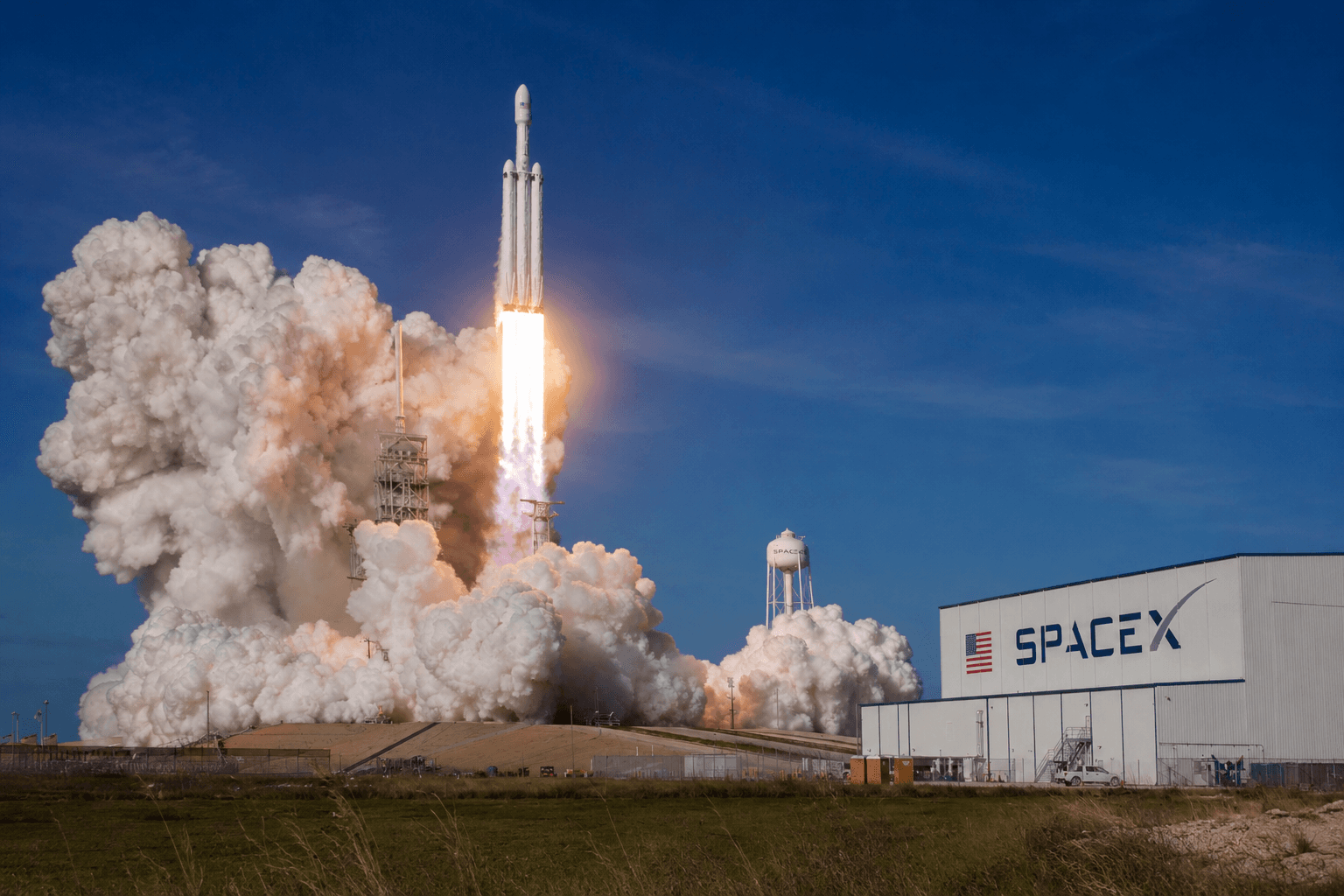
Poon is candid that today's launch market does not support the plan. SpaceX's Falcon 9, the current workhorse, is too expensive per kilogram to make orbital inference pencil out at scale. Starship — assuming it reaches full commercial cadence — is the only vehicle on the horizon that gets the cost curve where Orbital needs it.
Near term, Orbital is building toward a demo mission that will fly an Nvidia Blackwell chip as a hosted payload on a partner's satellite, primarily to validate the company's radiation shielding and thermal management. The first dedicated Orbital spacecraft is targeted for 2028 and will carry Nvidia's Space-1 Vera Rubin-class GPUs. From that point, the company wants to start earning revenue by handling piece-wise inference jobs on each satellite as it goes up, rather than waiting for a complete constellation.
That phased-revenue approach mirrors rival Starcloud, which already has a GPU in orbit and intends to launch additional units to generate income ahead of Starship-enabled scale. Starcloud is planning larger 200 kW-rated spacecraft, and Elon Musk has said SpaceX's own AI satellites will produce up to 150 kW per unit — putting Orbital's 100 kW design at the smaller end of the emerging field.
“This kind of thing would have sounded crazy 10 years ago when we were all building mobile apps”— Andrew Chen, a16z partner
Not every entrant is willing to wait on Starship. Cowboy Space Company, another a16z-backed space data center startup, recently decided to build its own rockets rather than depend on SpaceX's schedule. Jeff Bezos's Blue Origin has separately said it intends to loft data centers using its New Glenn launch vehicle. Poon argues the addressable market is large enough to support multiple architectures — different workloads, different power envelopes, different orbital designs all coexisting.
Chen frames the bet in venture-portfolio terms. Scaling Spin to 250,000 scooters across 100 cities, he argues, is a credible proof point that Poon can manage capital-intensive physical deployment. The full Orbital buildout, by Chen's estimate, could take a decade and $5 billion or more — a timeline that would have been disqualifying for a seed-stage software investor in 2016 but that fits the current appetite for long-horizon hard-tech bets.
The skepticism writes itself. Orbital has not flown hardware. Starship has not reached commercial cadence at the price points the orbital-compute thesis requires. Nvidia's Space-1 Vera Rubin GPUs are not yet shipping. Radiation hardening, thermal dissipation in vacuum, and on-orbit servicing are unsolved at gigawatt scale. And the competitive field — Starcloud, Cowboy, Blue Origin, SpaceX itself — is crowded with companies chasing the same launch-cost inflection. A 2028 first launch leaves a long window in which any of those variables can move against the plan.
What Orbital really illustrates is how far the capital-markets appetite for AI infrastructure has stretched. A founder with no aerospace background can raise $5 million from a tier-one accelerator to chase a project that, on the founder's own admission, only works once a rocket that has not yet entered commercial service is flying reliably. That is either the clearest signal yet that orbital compute is becoming a real category — or that the seed market is willing to underwrite the option value of being early to it. The 2028 demo flight, and Starship's cadence between now and then, will decide which.

Working on something we should cover, or seeing a story we missed? Send leads, documents, or feedback to hello@aichatdaily.com. For sensitive tips, see our secure tips page for Signal and PGP options.
Spotted an error? Email hello@aichatdaily.com with the URL and the issue, or read our full corrections policy.