Starcloud has raised a $250 million extension to its Series A, valuing the orbital data center startup at $2.3 billion and giving it the capital to build satellites that run AI inference in space. The extension comes just five months after the company closed a $170 million round in March, and it lands as launch capacity — the single largest cost line for any space business — is getting harder to book. Manhattan West Ventures led the round, with Nvidia writing a $25 million check and Cisco, Benchmark, EQT, Soma, NFX, 776, Cedar Capital, Goanna Capital, and Standard Capital also participating.
The company is building toward Starcloud-3, its largest orbital data center spacecraft, which is designed to ride SpaceX's Starship. In the near term, Starcloud plans to launch two 8 kW compute satellites — Starcloud-2 — on rideshare flights in 2027, running orbital inference for customers including U.S. government agencies. CEO Philip Johnston told TechCrunch he is already stockpiling capital specifically to secure rocket rides through the end of the decade.
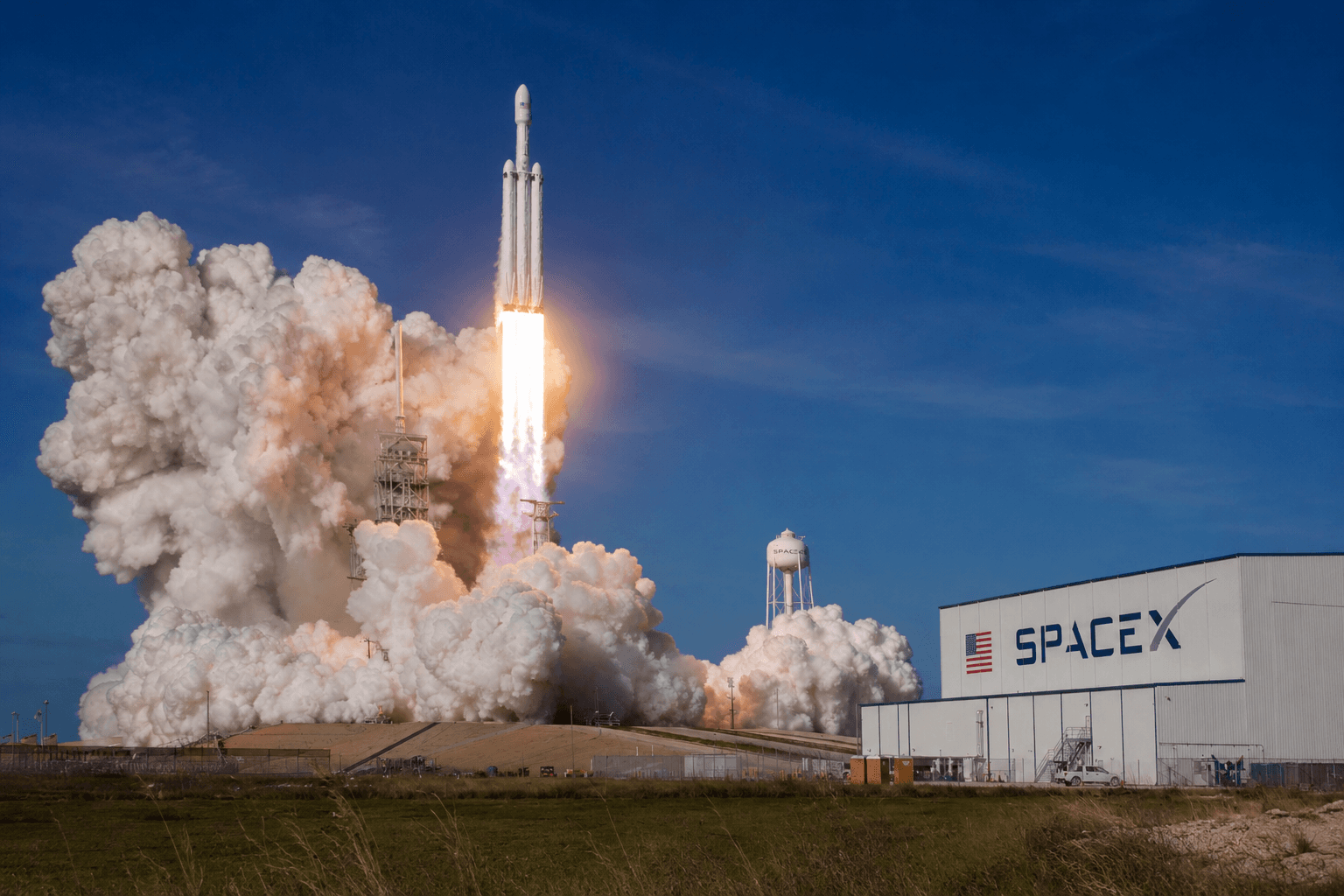
Starcloud has requested FCC permission to operate 88,000 spacecraft, a fleet size that only makes sense if a heavy-lift reusable rocket like Starship starts flying at cadence. That's the crux of the business: orbital compute economics only work if launch costs fall the way SpaceX has promised. Every part of Starcloud's roadmap — the chips, the radiators, the satellite bus — is priced against that assumption.
Key facts
- 01Starcloud added a $250M extension to its March $170M Series A, valuing the company at $2.3B.
- 02Nvidia contributed $25M to the round and is developing the Vera Rubin Space-1, its first purpose-built GPU for space, targeted for a late 2028 orbital launch.
- 03The company has requested FCC permission to operate 88,000 spacecraft and plans to fly two 8 kW Starcloud-2 satellites on rideshare missions in 2027.
- 04SpaceX plans to phase out Falcon 9 in 2028, tightening launch capacity as Starcloud lines up contracts for Starship.
- 05Starcloud employs 25 people and is building production lines at a 100,000-square-foot facility in Woodinville, Washington.
The timing is awkward. SpaceX plans to phase out Falcon 9 in 2028 in favor of Starship, which has not yet demonstrated rapid reusability. Elon Musk said this week that SpaceX will delay its next attempt to catch a returning Starship by a few months and will try to re-fly the vehicle for the first time at the end of the year or early 2027. Competing rockets aren't picking up the slack: Blue Origin's New Glenn and ULA's Vulcan aren't flying regularly, and Rocket Lab's Neutron hasn't reached the pad.
Starcloud is hedging by considering a dedicated Falcon 9 buy for additional Starcloud-2 spacecraft and by signing contracts with multiple providers. Johnston said the company remains confident in Starship but acknowledged the risk plainly: if SpaceX capacity isn't available in 2029, Starcloud's plans get complicated. That is a live variable, not a resolved one.
The Nvidia investment is the more strategically interesting piece of the round. Starcloud is the only company known to be operating an Nvidia H100 GPU in orbit and the first to have trained a model on one there. Most other space-based GPU efforts are aimed at edge processing, not full training or heavy inference workloads. Starcloud has been sharing telemetry from its H100 with Nvidia as the chipmaker designs the Vera Rubin Space-1, its first purpose-built GPU for space.
Johnston said Nvidia did deeper technical diligence than any of the VCs on the cap table, which tracks with the chipmaker's broader posture of picking a small number of strategic infrastructure partners rather than spraying capital. The Vera Rubin Space-1 hasn't been built yet. Starcloud aims to fly it in late 2028, and the engineering work now centers on the thermal envelope, radiation shielding placement, and ruggedizing the silicon to survive launch vibration.
The operational footprint is still modest. Starcloud has 25 employees and is standing up production at a 100,000-square-foot facility in Woodinville, Washington, geographically wedged between the SpaceX and Amazon satellite factories that supply Starlink and Project Kuiper. That neighborhood provides a supplier base and an engineering labor pool that Starcloud would otherwise have to bootstrap.
The obvious skepticism is that orbital data centers are a bet on multiple unproven variables compounding — Starship reusability, radiation-hardened AI accelerators, launch economics falling far enough to beat terrestrial power and cooling, and demand for inference where the latency and jurisdictional case actually holds up. If any one of those falls short, the fleet math collapses. Johnston is candid about the 2029 launch-capacity risk, and the Vera Rubin Space-1 is still a chip on paper.
Nvidia's willingness to write a direct check reframes Starcloud from a speculative space startup into a designated launch customer for a chip line Nvidia is now committing engineering resources to build. That is a meaningful signal about where Nvidia thinks inference workloads eventually go, and it hands Starcloud a moat that other orbital compute startups will find expensive to close. Whether the physics and the launch market cooperate is the harder question, and the 2028 Falcon 9 sunset is the deadline the entire sector is now planning against.

Working on something we should cover, or seeing a story we missed? Send leads, documents, or feedback to hello@aichatdaily.com. For sensitive tips, see our secure tips page for Signal and PGP options.
Spotted an error? Email hello@aichatdaily.com with the URL and the issue, or read our full corrections policy.