Sunrun, the residential solar and battery company, is launching a pilot to place AI compute nodes inside customer homes and pay those customers for the privilege. The program, branded 'distributed AI compute,' would spread inference and training workloads across Sunrun's 1.1 million-customer footprint rather than concentrate them in a single warehouse-scale facility. The company says it will resell that aggregated capacity to 'enterprise compute buyers,' explicitly naming AI companies as the target market.
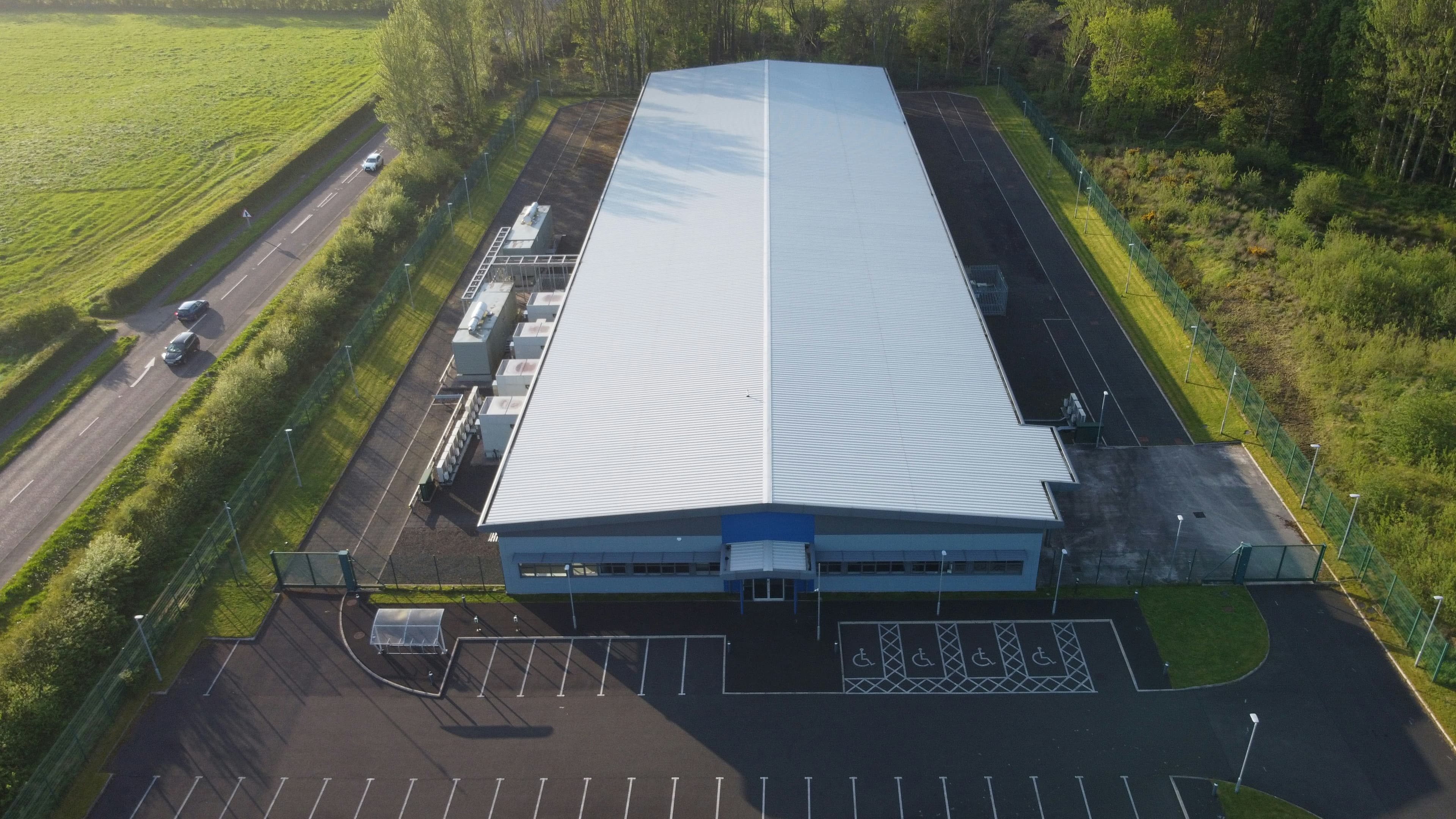
The pitch lands directly into a permitting problem. A survey released in May 2026 showed that more than 70% of Americans oppose construction of new data centers in their area, citing pollution, noise, and water and electricity consumption. Anthropic just signed a 20-year lease for a Kentucky data center earlier this month, and OpenAI, Meta, and Google are all racing to secure land, power, and cooling for sites that routinely draw local opposition.
“place numerous compute nodes in homes equipped with Sunrun solar and battery storage systems.”— Sunrun, company statement
Sunrun's proposition inverts that model. Instead of one hyperscale campus drawing hundreds of megawatts from a single substation, thousands of small nodes would run behind residential meters, powered in part by rooftop solar and buffered by home batteries. Customers get compensated for hosting the hardware. Sunrun gets a compute product to sell without having to permit, build, or cool a data center of its own.
Key facts
- 01Sunrun is piloting a 'distributed AI compute' program that places compute nodes inside customer homes with solar and battery systems.
- 02The company has 1.1 million customers eligible to join the pilot waitlist and will pay participants to host nodes.
- 03A May 2026 survey found 70% of Americans oppose new data center construction in their area, citing pollution, noise, water, and electricity use.
- 04Sunrun plans to resell the aggregated compute to enterprise buyers, including AI companies, after completing the pilot over the coming months.
The company says it has already run what it calls a 'successful' proof of concept, though it has not disclosed node counts, per-home power draw, latency figures, or which AI workloads the network can realistically serve. Distributed inference at the edge is technically plausible for smaller models and batch jobs; training frontier models across residential broadband is not. Sunrun has not specified where on that spectrum its offering sits.
There are open questions Sunrun will need to answer before enterprise buyers write checks. Utilization economics on residential hardware are unforgiving — a node that sits idle most of the day is expensive per useful FLOP. Home internet uplinks vary wildly. Physical security, thermal management inside a garage or utility closet, warranty exposure, and the customer-service load of explaining a humming box to homeowners are all non-trivial. The company says it 'expects to complete the pilot over the coming months and will assess results' before any wider rollout.
For Sunrun, the strategic logic is clearer than the technical one. The company is a solar installer whose growth has been squeezed by shifting net-metering rules and higher interest rates. Turning its installed base of batteries into a revenue-sharing compute grid gives it a second product line that piggybacks on assets already in the ground. If AI compute demand keeps rising and hyperscale siting keeps getting harder, distributed capacity could command a premium.
For AI buyers, the appeal depends on price and predictability. Anthropic, OpenAI, and other labs are chasing every gigawatt they can contract, and much of the industry conversation — including Sequoia's David Cahn arguing the sector needs $3 trillion in revenue to justify the 2026 buildout — assumes centralized capacity remains the constraint. A distributed network changes the math only if it can deliver reliable, low-cost cycles for workloads that tolerate variable latency and residential-grade uptime.
The regulatory picture is also unwritten. Home-hosted commercial compute sits awkwardly between residential utility tariffs, telecom rules, and building codes, and it is not obvious how state public utility commissions will treat a customer whose home is simultaneously drawing power for their family and selling compute cycles to a hyperscaler. Sunrun has not detailed how it will handle metering, taxation, or liability for the nodes.
The pilot is worth watching because it tests a real question: is the constraint on AI infrastructure the raw supply of electrons and silicon, or the political and physical difficulty of concentrating them in one place? If it is the latter, Sunrun's model — or something like it — becomes a plausible complement to the hyperscale buildout rather than a curiosity. If it is the former, distributed compute will remain a niche play for latency-sensitive edge workloads, and the megasites will keep winning. Either way, the industry is now visibly exploring what happens when the data center is no longer a building.

Working on something we should cover, or seeing a story we missed? Send leads, documents, or feedback to hello@aichatdaily.com. For sensitive tips, see our secure tips page for Signal and PGP options.
Spotted an error? Email hello@aichatdaily.com with the URL and the issue, or read our full corrections policy.