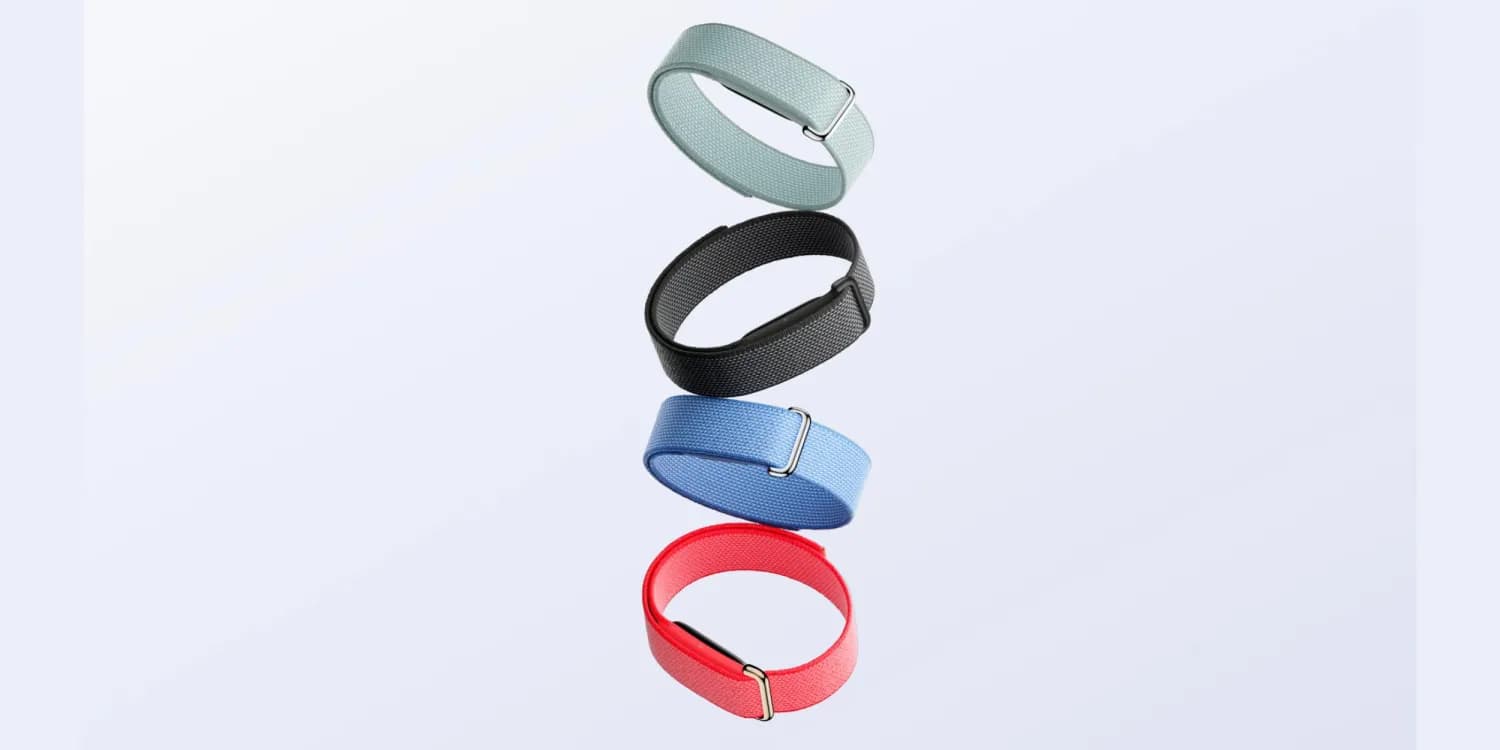
Google launched the Pixel Watch 5 at $399, a $50 increase over the Pixel Watch 4, and put nearly all of the year's new work into software rather than the case. The hardware upgrade amounts to a slightly faster Qualcomm processor, a small battery bump, a new satin pyrite finish, and a Steph Curry Special Edition. The substance is in Gemini running offline on the wrist, a new Breathing Emergency Detection trigger set to fire at roughly 83% SpO2, and month-over-month wellness trends for blood pressure and insulin resistance rolling out in September.
The pricing move follows Google's May 2026 launch of the Fitbit Air, which telegraphed a broader shift toward AI-driven health features across the wearables lineup. Owners of the Pixel Watch 3 and Pixel Watch 4 do not need to upgrade to get most of what is new — the health features are backward-compatible to the Pixel Watch 3 and the Fitbit Air. That reframes the Pixel Watch 5 not as a hardware release but as the flagship carrier for a software roadmap Google is spreading across its installed base.
“It's all software this year, baby. Plus a $50 price hike.”— Victoria Song, Senior Reviewer, Wearable Tech
Gemini on the watch now handles simple offline tasks such as starting timers and launching apps, though early hands-on impressions describe it as noticeably slower without a connection. The assistant is also more proactive: an incoming text asking about availability surfaces a Google Calendar prompt directly on the wrist, and a new watchface icon streams real-time context like Uber ETAs, timers, and active workouts. Pinch and wrist-flick gestures, which shipped to Pixel Watches via software update in December, are now more deeply integrated with WearOS 7.
Key facts
- 01Google Pixel Watch 5 launches at $399, a $50 hike over last year's Pixel Watch 4.
- 02Breathing Emergency Detection triggers a 911 call when SpO2 drops to roughly 83% for an extended period, and disables after 30 minutes of sleep.
- 03Blood Pressure Trends and Insulin Resistance Trends roll out in September, need a week of data, and flag monthly trends without direct readings.
- 04The insulin resistance algorithm was validated against blood draws in a peer-reviewed Nature study.
- 05Gemini now runs offline on the watch for basic tasks, and AI post-processes GPS data using Google Maps 3D building models.
The AI watchface generator uses the Nano Banana model to produce custom designs from a text prompt, though results are uneven — a request for "fat cats and an elegant font" returned cat-shaped clock numbers rather than illustrated characters. It is a demonstration of on-device generative AI more than a killer feature, and Google is treating it as such.
Breathing Emergency Detection is the marquee health addition and an extension of the Loss of Pulse feature Google shipped last year. When the watch detects a sustained SpO2 drop to roughly 83%, combined with heart rate, motion, and altitude signals, it calls emergency services and designated contacts. The feature disables after 30 minutes of detected sleep to avoid false alarms from sleep apnea or side sleeping, and it is not intended for people with chronic respiratory conditions. It launches in Europe with the Pixel Watch 4 and 5, and is pending FDA clearance in the US.
“There's little reason for Pixel Watch 3 or 4 owners to upgrade. Most of the new health software updates will be backward-compatible.”— Victoria Song, Senior Reviewer, Wearable Tech
Blood Pressure Trends and Insulin Resistance Trends are the harder scientific bets, and Google is explicit that neither is diagnostic. Both require at least a week of data, produce monthly trend flags rather than live readings, and are pitched as check-engine-light warnings. Blood Pressure Trends uses the optical heart rate sensor and motion data fed into an AI model that estimates pulse-wave shape and speed to infer directional movement — no systolic or diastolic numbers are returned.
The insulin resistance feature is the more novel of the two. It estimates monthly trends from heart rhythm, sleep quality, and daily movement, and Google says its algorithm was validated against blood draws in a peer-reviewed Nature study. Insulin resistance can remain asymptomatic for years and often goes undetected in routine metabolic panels, making a passive wearable signal potentially useful as a nudge to get formal testing. Both trend features roll out in September to Pixel Watch 3 and later, plus the Fitbit Air.
On fitness, Google is claiming the Pixel Watch 5 will outperform the Garmin Fenix 8 and Apple Watch Ultra 3 on GPS accuracy by combining dual-frequency GPS with satellite feeds, weather station data, and 3D building models from Google Maps, with AI correcting the track in post-processing. AI-generated strength training plans, previously tethered to a phone through Google Health Premium, now run on the watch itself for logging reps and advancing exercises — a sensible bet given how much strength work has moved to the center of fitness routines during the GLP-1 era.
The counterweight is that AI health remains early, and the Google Health app's AI coach — which requires a Google Health Premium subscription — has been described by early reviewers as the best of the current crop while still operating against a low bar. Trend features that fire monthly are inherently slow to prove out, and non-invasive insulin resistance estimation is genuinely new territory that will need real-world validation beyond a single Nature paper. False positives on Breathing Emergency Detection would erode trust fast; the 83% threshold and 30-minute sleep cutoff are Google's opening calibration, not the last word.
“Google's AI coach is the best of the lot — but that is a remarkably low bar at the moment.”— Victoria Song, Senior Reviewer, Wearable Tech
The strategic read is that Google is turning the Pixel Watch into a distribution channel for a health AI stack it wants to sell as a service. Charging $399 for a watch whose novelty lives in monthly-trend algorithms and a Premium-gated coach only works if the algorithms earn the subscription. If Blood Pressure Trends and Insulin Resistance Trends prove useful over the next two quarters, Google will have built the first mainstream consumer wearable whose primary value is inference rather than sensors — and a recurring-revenue moat around Fitbit that Apple has not yet matched.

Working on something we should cover, or seeing a story we missed? Send leads, documents, or feedback to hello@aichatdaily.com. For sensitive tips, see our secure tips page for Signal and PGP options.
Spotted an error? Email hello@aichatdaily.com with the URL and the issue, or read our full corrections policy.