Google launched the Fitbit Air on June 5, 2026 at $100, a screenless fitness tracker built around a Gemini-tuned AI Health Coach that summarizes, suggests, and praises whether the wearer asks or not. The hardware is a small puck with a single status LED, no display, no speaker, and a vibration motor reserved for alarms. The companion Google Health app — which replaces the Fitbit app — defaults every new Air buyer into three months of Health Premium, making the AI Coach the out-of-the-box experience.
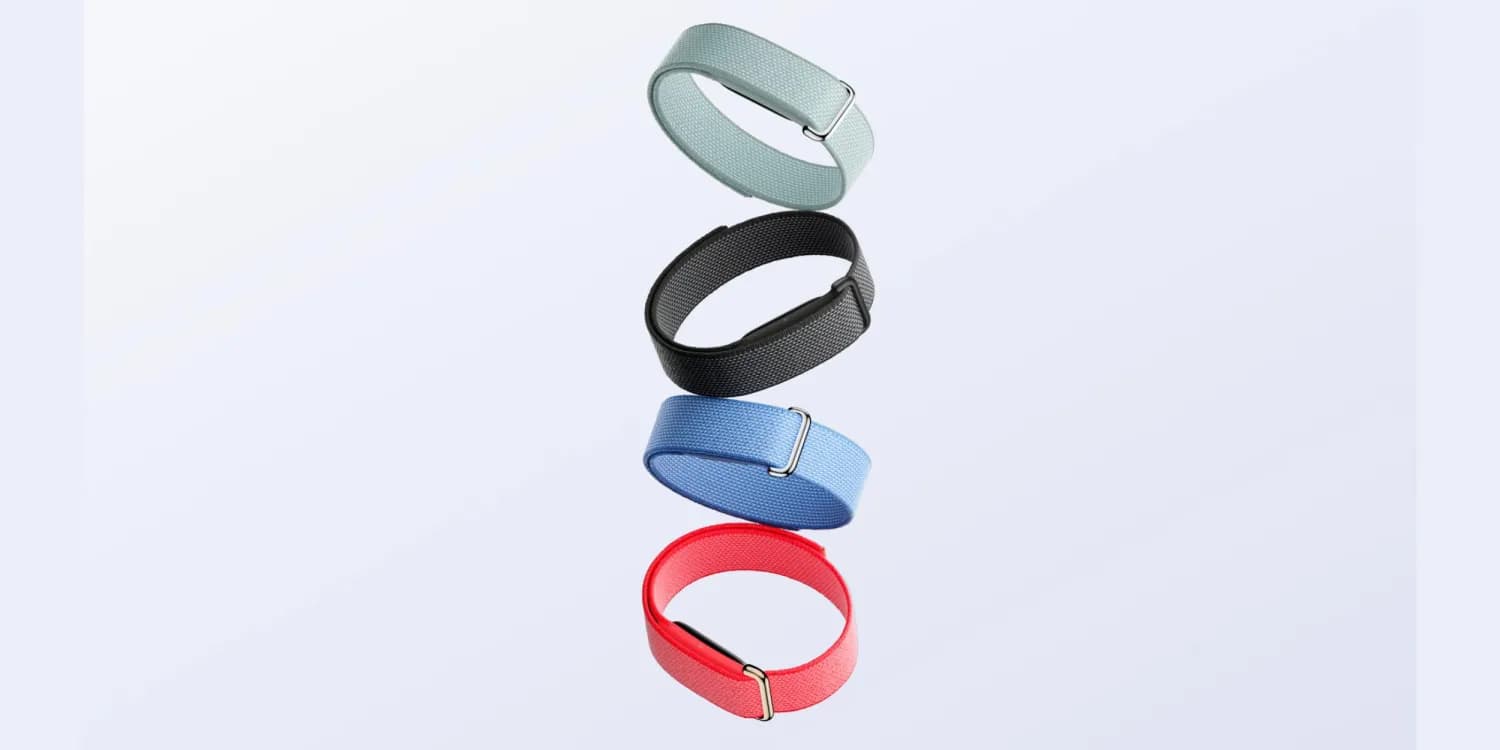
The Air tracks steps, heart rate, blood oxygen, and skin temperature, feeding those metrics into derived scores like readiness and sleep phases. Battery life is one week. There is no ECG and no on-wrist display, so any live workout data has to be pulled up in the app. The stock Performance Band ships in the box; the silicone Active Band runs $35, and the polyurethane Elevated Band costs $50 — half the price of the tracker itself.
“You will not, however, forget that Google's new health platform is built around AI.”— Ryan Whitwam, Ars Technica reviewer
Pricing puts the Air directly against Whoop, the other notable screenless wearable, which requires a minimum $200 annual subscription. A Stephen Curry special edition lists at $130. Google is also selling the Air as a lower-friction alternative to its own Pixel Watch 4, the 45 mm version of which dwarfs the Air on the wrist and carries a much shorter battery life.
Key facts
- 01The Fitbit Air launched June 5, 2026 at $100, with a Stephen Curry special edition priced at $130.
- 02Every Air ships with three months of Health Premium, making the Gemini-powered AI Health Coach the default experience.
- 03Battery life runs one week per charge, and the screenless puck has no display, speaker, or notification sync.
- 04Add-on bands cost $35 for the Active Band and $50 for the Elevated Band — half the tracker's price for a strap.
- 05Whoop, the closest screenless competitor, requires a minimum $200 annual subscription versus the Air's optional Premium tier.
The hardware itself reviews well. The puck is light enough to forget about, sleep tracking matches perceived timing, and the readiness score tracks how users actually feel day-to-day. Long-time Fitbit users will notice missing features — blood pressure tracking and custom meal creation are gone in the new Google Health app — and Google says updates are coming. As a no-nonsense tracker, the Air does what it advertises.
The AI Health Coach is where the product gets complicated. Google built the Coach on a Gemini variant tuned specifically for health summarization and grounded in the wearer's own sensor data. It generates daily rundowns, proactive insights, and pep talks, and it cites the data sources behind its claims — a meaningful guardrail given Gemini's general-purpose reputation for confident error.
Even tuned and grounded, the Coach hallucinates. In Ars Technica's review, it invented workouts that never happened based on stray step counts or brief heart-rate spikes, and at other moments it claimed data didn't exist when the same metric was visible one tab over. It also leans heavily on what some in the AI community call vibemarking — outputs tuned to make users feel good rather than to be maximally useful. Hit a goal and the Coach delivers grandiose praise; miss one and it offers a spirited pep talk that often boils down to suggesting a light walk.
“But no amount of health-focused tuning will change the fundamental issues with generative AI.”— Ryan Whitwam, Ars Technica reviewer
There are real strengths. The Coach follows custom instructions well: tell it you have a newborn waking you at 2 a.m. or a dog demanding a 5 a.m. walk, and its sleep advice adjusts. Tell it you're traveling and it factors the schedule shift into proactive insights, then knows when to stop weighting it. In AI-prompting terms, it respects context as well as any consumer chatbot on the market.
The verbosity is the problem. The Coach takes up a large share of the app's real estate with wordy summaries of workouts, sleep, and routine activity, and Google buries the kill switch. Disabling it requires navigating to profile, then Your data in Google Health, then Feature Control, then Google Health Coach — four taps deep. Even after disabling, an Ask Coach button remains in the app and offers to reactivate the feature on tap.
“It's always there, always talking.”— Ryan Whitwam, Ars Technica reviewer
Free users get a denser, less chatty interface. Several Google One plans now bundle Health Premium, which means many buyers will be opted into the AI experience without choosing it explicitly. The pattern echoes how Google has rolled Gemini into Workspace and Search — surface the AI by default, make opting out a multi-step exercise.
Skeptics of wearable health AI have a clean test case here. The Coach's core failure modes — inventing activities from noisy sensor data, missing real signals, and substituting affirmation for analysis — are not edge cases. They are what a generalist LLM does when handed sparse time-series data and asked to be encouraging. Grounding helps but does not eliminate the pattern, and the user is left to verify claims against the same raw metrics the model just summarized.
The Fitbit Air is the clearest expression yet of Google's strategy of using consumer hardware as a Gemini distribution channel. The tracker is good; the AI layer is the company's bet that wrapping commodity sensor data in a friendly chatbot is worth a Premium subscription. For the AI tools market, the more interesting question is whether grounded, narrow-purpose Gemini deployments like this one move the needle on user trust — or whether shipping a hallucinating coach as the centerpiece of a $100 health product trains a generation of buyers to tune AI features out by default.

Working on something we should cover, or seeing a story we missed? Send leads, documents, or feedback to hello@aichatdaily.com. For sensitive tips, see our secure tips page for Signal and PGP options.
Spotted an error? Email hello@aichatdaily.com with the URL and the issue, or read our full corrections policy.