Google unveiled the Fitbit Air today, a $99.99 screenless tracker that ships May 26, 2026, alongside a rebranded Google Health app and an AI Health Coach built on Gemini. It is Fitbit's first new hardware in nearly four years and the clearest signal yet that Google intends to absorb the brand it bought for $2.1 billion in 2021 into a single, AI-fronted health platform.
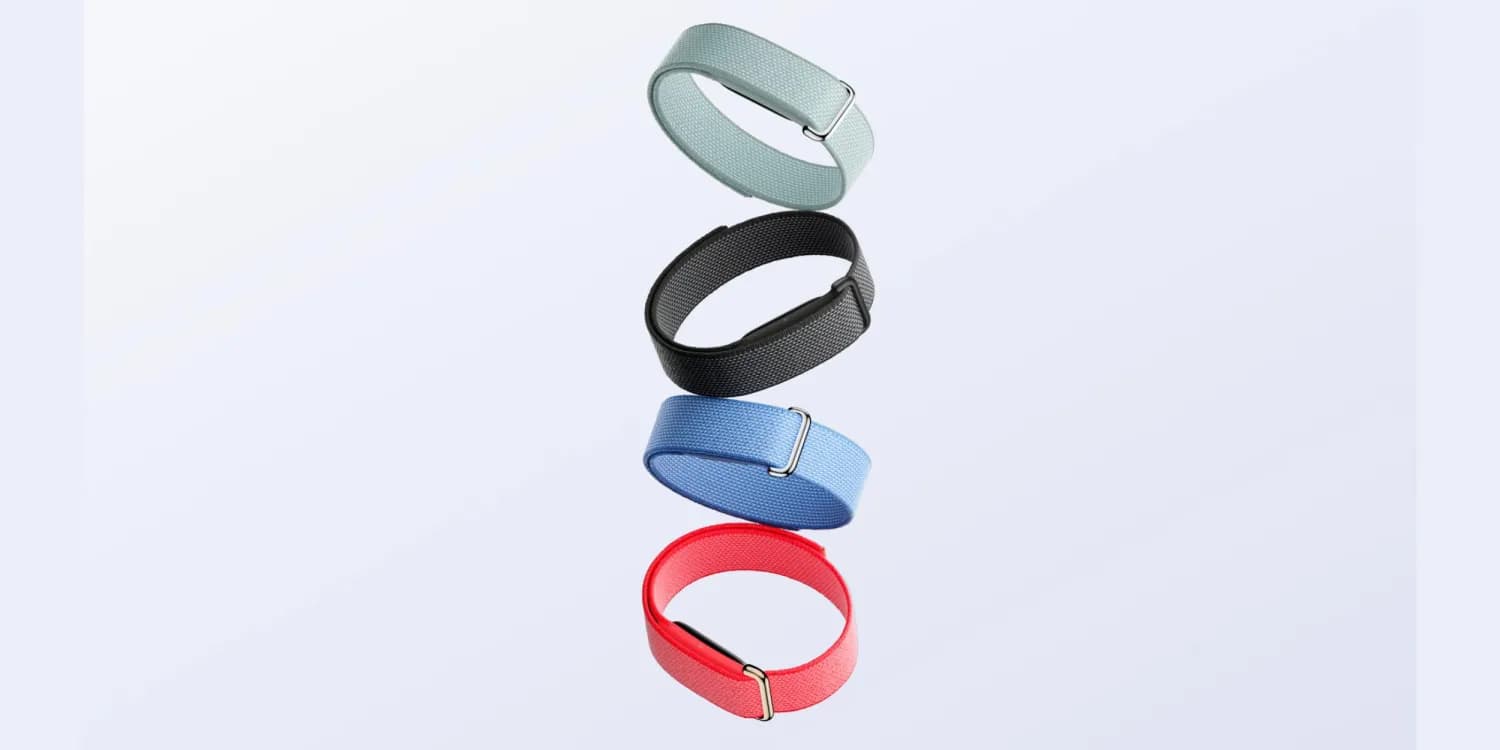
The Air is a 1.4-inch by 0.7-inch plastic puck that snaps into a band from the bottom, hiding the sensors against the wrist. It weighs 12g with the band and 5.2g without, runs for 7 days per charge, recovers a full day of battery in 5 minutes, and survives 50 meters of water. Google says it is 25% smaller than the Luxe and 50% smaller than the Inspire.
Sensors include optical heart rate, accelerometer, gyroscope, SpO2, and skin temperature for sleep tracking. There is no display and no smartwatch-style notifications, only a haptic motor for silent alarms. Bands start at $34.99, with silicone Performance Loop, fabric Performance Loop, Elevated Modern, and a special-edition Steph Curry version.
Key facts
- 01Fitbit Air launches May 26, 2026 at $99.99 with the Performance Loop band; preorders open today.
- 02The screenless tracker weighs 12g, lasts 7 days per charge, and gains a full day of battery from a 5-minute top-up.
- 03Fitbit and Health Connect collapse into one Google Health app on May 19, 2026, ending the Fitbit app brand.
- 04Google Health Premium replaces Fitbit Premium at $10/month or $100/year, bundling a Gemini-tuned AI Health Coach.
- 05Nearly 500,000 users joined the public preview beta since October 2025, generating over 1 million pieces of feedback.
The bigger move is software. On May 19, 2026, the Fitbit app and Android's Health Connect collapse into a single Google Health app, with iOS support and eventual third-party device support for Garmin, Whoop, and Oura. Fitbit Premium becomes Google Health Premium at the same $10 per month or $100 per year, bundled into AI Pro and AI Ultra subscriptions. Every Fitbit Air ships with three months of Premium included.
“The Fitbit Air is 25% smaller than the Luxe and 50% smaller than the Inspire, weighs 12g with the band, and lasts seven days on a charge — Fitbit's first new hardware in four years.”— Jaeden Schafer
Premium's headline feature is the AI Health Coach, a Gemini-tuned chatbot that ingests workouts, sleep, and nutrition data to generate adaptive plans, answer health questions, and log meals from phone photos. Google says the model was validated with a panel of health experts and that Steph Curry's performance team also shaped its responses. It rolls out later this month after running in public preview since October 2025.
Google said nearly 500,000 users joined that beta and submitted more than 1 million pieces of feedback. The shipping version restores cycle tracking, adds a more accurate sleep algorithm, gives users more control over which metrics surface on the dashboard, and tones down what testers said was an overly chatty coach.
Rishi Chandra, Google's vice president of Health and Home, framed the Air as a deliberate retreat from smartwatch complexity. "The reality is right now, wearables have made huge advancements, but for a lot of people, they're still either too complicated, too bulky, or too expensive," he told The Verge. "That's where the Fitbit Air came in. We wanted something you could give to your kids and parents that they could just put on their arms."
The trade-off is positioning. Whoop and Hume have built brands around screenless, subscription-driven tracking, and the Air is plainly chasing that segment while letting customers also pair an Air with a Pixel Watch — the first time Fitbit has supported concurrent devices in years. Google Fit, the company's other surviving health app, shuts down later this year and forces users to migrate to Google Health.
Chandra was direct about the cost of the rebrand to the existing Fitbit base, which has churned through outages, deprecated features, and the layoff of Fitbit's original leadership in early 2024. "I know it will be hard for people. It was hard for us internally," he said. "The health app is not going to be specific to Fitbit hardware … We want to be a health coach to an Apple Watch user, too. That's why we had to make the brand change."
The harder problem is the AI itself. Health-grade chatbots have a track record of hallucinated advice and generic summaries dressed up as personalization, and Google is asking users to pipe heart rate, sleep, and meal data into a cloud model. The company says Fitbit data stays out of its ad business and that AI training on health data is opt-in and off by default — a posture that will be tested the first time the Health Coach gives someone a confidently wrong answer.
"This is a very hard problem," Chandra conceded. "The reason why we did the public preview is that we need to make sure we didn't make big mistakes. The rigor here is absolutely critical … but we are going to make mistakes."
Google is the only company besides Apple with the distribution, the model, and the data pipes to make a unified health platform stick, and the Air is the cheapest on-ramp it has ever offered. The risk is that the Gemini coach has to be meaningfully better than the AI fitness apps already on the market — not just chattier — to justify the $100-a-year subscription that now carries the entire economic weight of what used to be Fitbit. If it works, Google quietly turns a stalled hardware acquisition into the default front end for personalized health on Android and iOS. If it doesn't, the screenless puck will join Google Fit on the long list of health bets the company started and abandoned.

Working on something we should cover, or seeing a story we missed? Send leads, documents, or feedback to hello@aichatdaily.com. For sensitive tips, see our secure tips page for Signal and PGP options.
Spotted an error? Email hello@aichatdaily.com with the URL and the issue, or read our full corrections policy.