Meta is retooling its AI chatbot into a productivity assistant, adding calendar access, daily briefings, in-flight steerable research, and persistent recurring tasks — features that put Meta AI in direct competition with ChatGPT, Gemini, and Claude. The update rolled out July 24, 2026 in select markets on the Meta AI app and web, with WhatsApp and additional geographies to follow in the coming weeks. It runs on Muse Spark 1.1, Meta's newly released model.
The functional shift is concrete. Meta AI can now generate a daily summary from a user's calendar, browse Facebook Marketplace for used furniture within a stated budget, pick restaurants for an event and cross-check open dates against the calendar, and hold multi-step plans in memory. Users configure a recurring task once — a weekly meal plan, a restock alert, a morning briefing — and Meta AI executes it without re-prompting.
The company also added mid-response steering, letting users redirect Meta AI while it is generating an answer. That mirrors an interaction pattern already in ChatGPT and closes an obvious usability gap. Meta says the assistant is also better at compiling web research into structured deliverables like reports, presentations, and plans.
Key facts
- 01Meta AI now reads user calendars to generate daily briefings, plan events, and browse Facebook Marketplace on the user's behalf.
- 02The update runs on Muse Spark 1.1, Meta's newly released model, and rolls out July 24, 2026 in select markets.
- 03Meta calls the release its 'next step toward personal superintelligence,' a phrase Mark Zuckerberg has used to frame the company's AI roadmap.
- 04The pivot reverses Chris Cox's guidance last year that Meta AI should prioritize entertainment over productivity, unlike OpenAI, Google, and Anthropic.
- 05Users configure recurring tasks once and Meta AI executes them without re-prompting — weekly meal plans, restock alerts, morning briefings.
The strategic reversal here is the actual news. Meta CPO Chris Cox told employees last year that Meta AI should "focus on entertainment" and "connection with friends," explicitly contrasting that with what he described as OpenAI, Google, and Anthropic "focusing obsessively on productivity." Twelve months later, Meta is shipping precisely the productivity feature set Cox said would not be the priority.
“focus on entertainment”— Chris Cox, Meta Chief Product Officer
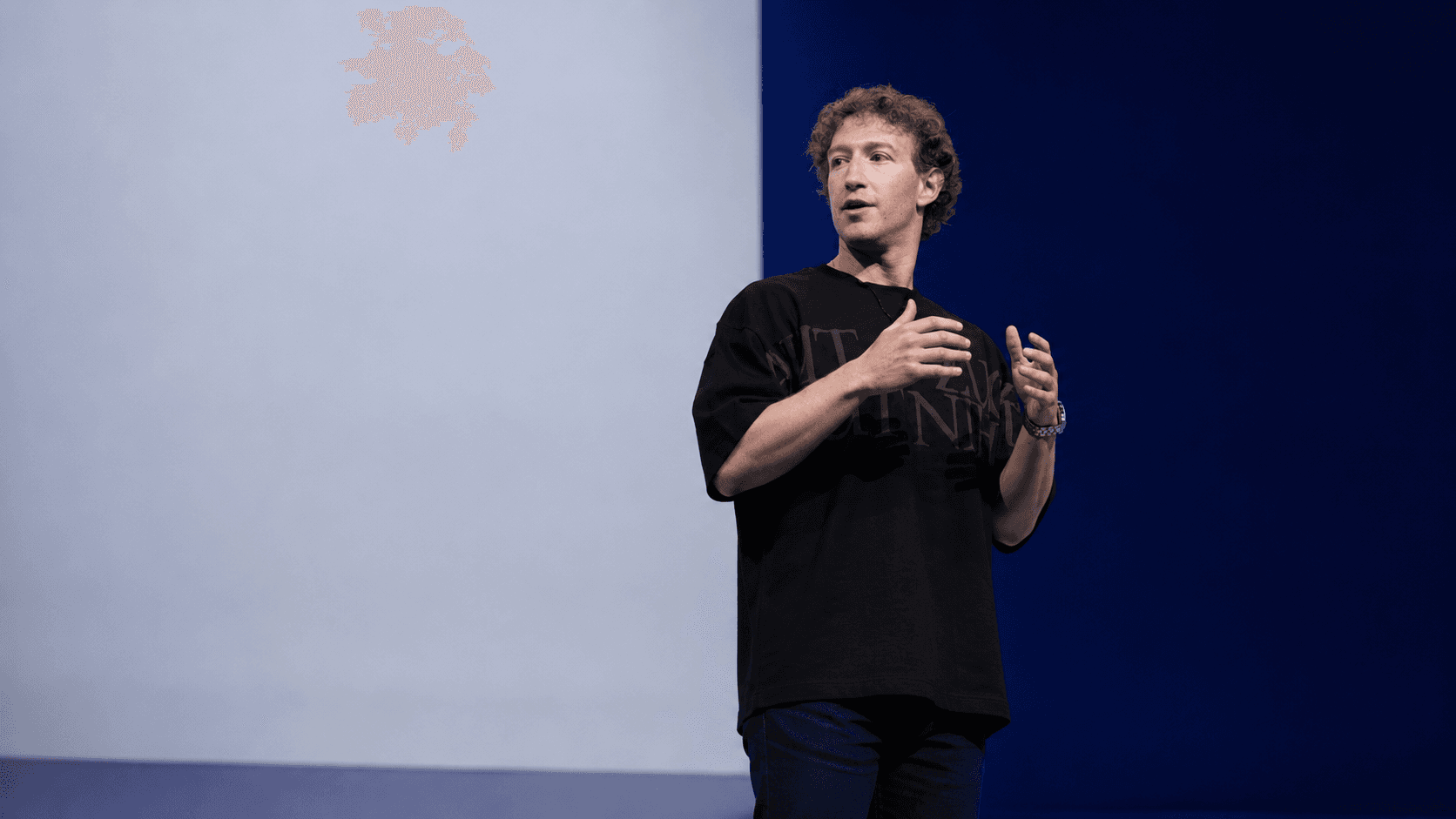
Meta framed the release in its blog post as the "next step toward personal superintelligence," the phrase Mark Zuckerberg has adopted as the north star for the company's AI work. The rhetoric is aspirational; the shipping surface is a calendar-aware task assistant. Both can be true — but the near-term product bet is that users want an agent that handles logistics, not a companion that entertains.
The competitive backdrop explains the pivot. Gemini crossed 950 million monthly users, ChatGPT sits at the front of consumer mindshare, and Anthropic has been pushing Claude deeper into agentic workflows. A social-first, entertainment-first Meta AI was a differentiation play; a productivity-first Meta AI is a market-share play. The company appears to have concluded that the addressable value in day-to-day task automation is larger than the value in AI-generated fun.
Distribution remains Meta's structural advantage. WhatsApp alone reaches roughly three billion users, and Meta AI is already surfaced inside Instagram, Messenger, and Facebook. If the productivity features work reliably at scale, Meta does not need to convince users to install a new app — the assistant is already inside the apps they open every day. That is a materially different go-to-market posture than OpenAI or Anthropic, both of which run standalone apps and web properties.
Muse Spark 1.1 is the piece with the least detail attached. Meta has not published benchmark numbers, agentic task success rates, or comparisons to peer models alongside the launch. The rollout is also staged rather than global on day one, and the WhatsApp integration — the piece that would matter most for reach — is deferred to "the coming weeks." Until the model surfaces on WhatsApp and users test the recurring-task reliability in the wild, the launch is a statement of direction more than a proof of parity.
Meta's pivot reshapes the assistant race into a straight four-way fight between Meta AI, ChatGPT, Gemini, and Claude, all now optimizing for the same job: handle the user's schedule, research, shopping, and recurring workflows. The entertainment lane Cox described a year ago is effectively vacated at the frontier tier. That has consequences beyond Meta — it signals that even the platform with the strongest social-graph moat concluded productivity is where consumer AI monetizes and retains. The interesting question for the next two quarters is whether Muse Spark 1.1 can execute long-horizon tasks reliably enough to justify the strategy shift, or whether Meta ends up with an also-ran productivity assistant and a diminished entertainment story.

Working on something we should cover, or seeing a story we missed? Send leads, documents, or feedback to hello@aichatdaily.com. For sensitive tips, see our secure tips page for Signal and PGP options.
Spotted an error? Email hello@aichatdaily.com with the URL and the issue, or read our full corrections policy.